Yellow Fever: Symptoms, Vaccination, and Why the Certificate Matters
Most people searching for yellow fever in Nigeria are trying to sort out a travel requirement, not a current illness. Airlines and immigration desks ask to see a yellow fever vaccination certificate before they let a traveller through, and that requirement exists because yellow fever is a real, sometimes serious, mosquito-borne disease that Nigeria's health authorities monitor closely. This article starts with the vaccine and the certificate, since that is what most readers need, then covers the symptoms and diagnosis for the smaller group dealing with a possible infection rather than a booking.
Yellow fever is a mosquito-borne viral illness, and Nigeria sits inside the zone the World Health Organization classifies as having risk of yellow fever transmission
Yellow fever is caused by the yellow fever virus, a flavivirus spread mainly by the Aedes aegypti mosquito, the same species behind dengue fever. It is endemic across tropical Africa and parts of South America, and Nigeria falls inside the zone the World Health Organization classifies as having risk of yellow fever transmission. Nigeria's Centre for Disease Control and Prevention (NCDC) tracks yellow fever as a notifiable disease and has responded to confirmed cases and localized outbreaks in several states in recent years.
A single dose of the yellow fever vaccine gives lifelong protection, according to the World Health Organization
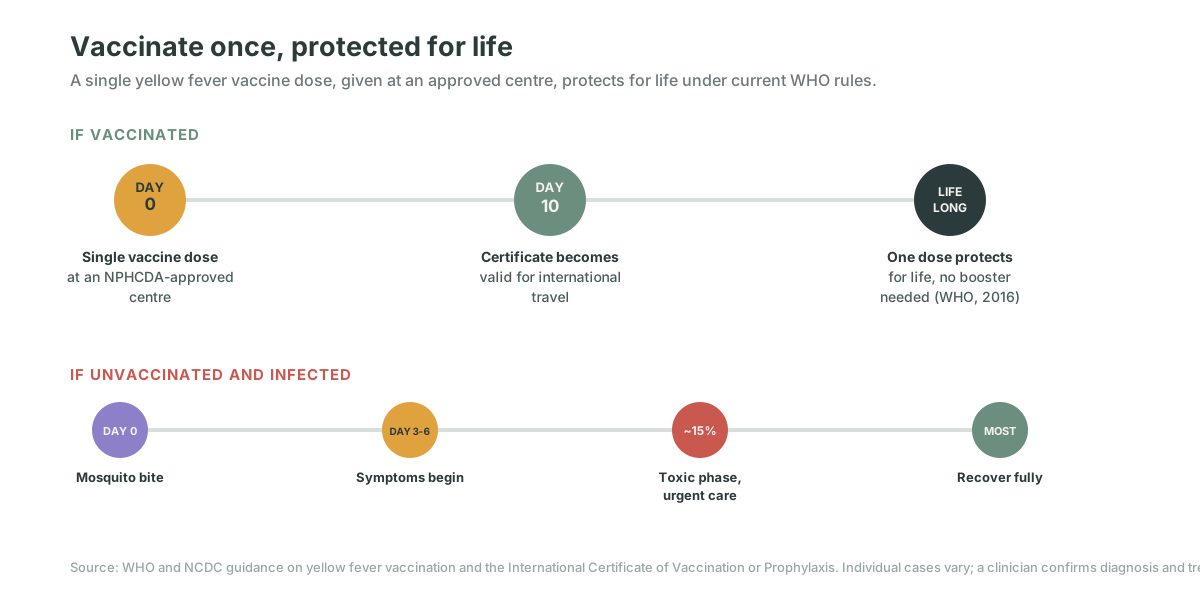
The yellow fever vaccine is a live, weakened form of the virus, and one dose is enough for almost everyone who receives it. WHO updated its position in 2016 after evidence showed that a single dose protects for life, which is why the older advice about a booster every ten years no longer applies. The vaccine is highly effective, and protection develops in most people within about ten days.
In Nigeria, the vaccine is part of the routine national immunization schedule, given to infants at 9 months alongside the measles vaccine. Older children and adults, including anyone preparing for international travel, can get vaccinated at a designated centre as well. A few groups need a clinician's judgment before vaccination: infants under 9 months, pregnant or breastfeeding women outside an active outbreak, people with a severe egg allergy, and anyone with a weakened immune system. That does not make the vaccine risky for most people. It means these specific groups should be assessed individually rather than vaccinated as a matter of routine.
The International Certificate of Vaccination or Prophylaxis, Nigeria's yellow card, is a legal requirement for international travel under WHO rules
The certificate most Nigerians call a yellow card is officially the International Certificate of Vaccination or Prophylaxis (ICVP). It exists under the WHO International Health Regulations, the framework that lets countries require proof of vaccination at their borders. Nigeria asks travellers arriving from other yellow-fever-risk countries to show one, and because Nigeria itself sits inside that risk zone, many countries in turn ask Nigerian travellers to show proof of vaccination before entry.
The certificate becomes valid 10 days after vaccination, not on the day of the injection itself, so build that window into travel planning. Since the 2016 rule change, one certificate now covers a person for life instead of expiring after 10 years. Keep the physical card safe and photograph it, since immigration and port health officials at Nigerian airports can ask to see the original.
Yellow fever vaccination happens at NPHCDA-approved centres and travel clinics in Nigeria, not as part of a routine blood test
Nigeria's National Primary Health Care Development Agency (NPHCDA) designates specific centres authorised to give the yellow fever vaccine and issue the official certificate, since not every hospital or clinic can do this. These include selected government hospitals, port health offices at major airports, and private travel clinics. Anyone planning international travel should confirm a vaccination centre with NPHCDA or their airline well ahead of the trip, since same-day vaccination at the airport is not always possible.
BetterHealth Africa does not administer vaccines
BetterHealth Africa runs home blood testing and health screening, not vaccination services. We do not give the yellow fever vaccine or issue the International Certificate of Vaccination or Prophylaxis. For vaccination, contact an NPHCDA-approved yellow fever vaccination centre or a travel clinic directly. Where we can help is testing for the common fevers, such as malaria and typhoid, that yellow fever's early symptoms can resemble.
Yellow fever symptoms usually start 3 to 6 days after a mosquito bite, and most infections stay mild
The incubation period for yellow fever is 3 to 6 days, according to WHO. Many infections cause no symptoms at all, or a mild illness that could pass for an ordinary viral fever. When symptoms do appear, this first phase typically lasts three to four days and then eases on its own for most people, who develop:
- Fever
- Chills
- Severe headache
- Back pain and general muscle aches
- Loss of appetite
- Nausea and vomiting
- Fatigue
Most people recover fully after this first phase and develop lasting immunity. That is the outcome for the large majority of people who catch the virus, and it is worth holding onto alongside the section below on severe disease, which affects a minority.
About 15% of yellow fever cases progress to a severe toxic phase with jaundice and bleeding, and this needs urgent hospital care
In a minority of cases, symptoms appear to improve and then return within 24 hours, more severe than before. This is the toxic phase, and it is where yellow fever gets its name: bilirubin build-up from liver damage turns the skin and the whites of the eyes yellow (jaundice). Other signs include dark urine, abdominal pain with continued vomiting, and bleeding from the gums, nose, eyes, or stomach, sometimes described as black vomit when blood mixes with stomach contents. The kidneys and liver can fail in the most severe cases.
Seek urgent hospital care for these signs
Jaundice, dark urine, bleeding from the gums, nose, eyes or stomach, or a fever that returns after appearing to improve are signs of the toxic phase of yellow fever, and they need immediate hospital evaluation. WHO estimates that among people who reach this stage, roughly 20% to 50% do not survive, which is why urgent care, not a wait-and-see approach, is the right response.
Doctors confirm yellow fever with laboratory testing, because its early symptoms look like malaria, typhoid, and other common fevers
Fever, headache, and body aches describe the early stage of yellow fever, malaria, typhoid, and several other illnesses common in Nigeria, including Lassa fever. That overlap is exactly why a doctor confirms yellow fever in a laboratory rather than by symptoms alone. Early in the illness, while the virus is still circulating in the blood, RT-PCR can detect it directly. Later on, antibody tests such as IgM ELISA pick up the immune response instead. Because yellow fever is a notifiable disease under NCDC surveillance, suspected cases are confirmed at designated public health or reference laboratories rather than a routine private lab.
If you have a fever and have not travelled to or lived in a yellow-fever-risk area recently, malaria and typhoid remain the far more common explanations, and both are straightforward to test for. Save concern about yellow fever specifically for a fever that follows travel to or residence in a risk area, or a known local outbreak.
Malaria testing: RDT vs blood film, and how to read the result
Typhoid and the Widal test: what a positive result really means
Lassa fever: symptoms, testing, and how it differs from malaria
There is no specific antiviral treatment for yellow fever, which is why vaccination matters more than treatment once someone is sick
No antiviral drug cures yellow fever. Hospital care for a confirmed case is supportive: fluids, fever and pain control, monitoring for organ involvement, and treatment of complications such as bleeding or kidney failure as they arise. Because treatment options are limited once the toxic phase begins, prevention carries far more weight than it does for illnesses with a direct cure, and vaccination is the single most effective preventive step available. Avoiding mosquito bites helps too, particularly in the days before a vaccine takes full effect or in situations where vaccination is not possible:
- Use insect repellent containing DEET or a similar approved active ingredient
- Wear long sleeves and trousers, especially at dawn and dusk when mosquitoes are most active
- Sleep under a treated mosquito net if you are in an at-risk area without reliable window screening
- Empty or cover standing water around the home, since Aedes aegypti breeds in clean stored water as often as in dirty water
Getting vaccinated well ahead of travel and knowing the warning signs of severe disease are the two most useful things to take from this article
- If you are travelling internationally, check the yellow fever vaccination requirement for your destination and get vaccinated at an NPHCDA-approved centre well before your trip.
- Get vaccinated at least 10 days before travel, since that is when the certificate becomes valid.
- Keep your physical yellow card safe and keep a photo of it, since Nigerian and destination-country immigration or port health officials can ask to see it.
- If you develop a fever after a mosquito bite in a risk area, get tested for malaria and typhoid first, since they are far more common and easier to test for.
- Seek immediate hospital care for jaundice, bleeding, dark urine, or a fever that returns after seeming to improve, rather than waiting to see if it passes.
- Reduce mosquito exposure at home by covering stored water and using repellent, particularly during daylight hours when Aedes mosquitoes bite.
See the fever and infectious disease panel BetterHealth Africa tests
Frequently asked questions
Does BetterHealth Africa test for yellow fever or give the vaccine?+
No. Yellow fever vaccination happens at NPHCDA-approved vaccination centres and travel clinics, and confirming an active infection needs specialised laboratory testing at a designated public health facility, not a routine home blood draw. BetterHealth Africa's home testing covers common conditions like malaria and typhoid, which are the realistic first tests for most fevers. If you need the vaccine or suspect yellow fever, go to an approved vaccination centre or hospital directly.
How long is the yellow fever certificate valid?+
Since a 2016 update to the WHO International Health Regulations, a single dose of the yellow fever vaccine gives lifelong protection, and the certificate no longer expires after 10 years the way it used to. One valid certificate, issued at least 10 days before travel, covers you for life.
Do I need the yellow fever vaccine for travel inside Nigeria?+
No, domestic travel within Nigeria does not require a yellow fever certificate. The requirement applies to international travel: entering Nigeria from other yellow-fever-risk countries, and leaving Nigeria for countries that ask for proof of vaccination from travellers coming from a risk country.
How soon after vaccination am I protected?+
The certificate becomes valid 10 days after vaccination, which is also roughly when full protection develops. Plan to get vaccinated at least 10 days, ideally longer, before you travel.
What are the first symptoms of yellow fever?+
The first phase usually brings fever, chills, a severe headache, back and muscle pain, loss of appetite, and nausea or vomiting, starting 3 to 6 days after an infected mosquito bite. Most people improve within three to four days and recover fully.
Is yellow fever curable?+
There is no specific antiviral treatment. Most infections are mild and resolve on their own, and severe cases are managed with supportive hospital care rather than a cure. This is why prevention through vaccination matters more for yellow fever than it does for illnesses that have a direct treatment.
This article is general health education, not medical advice. It is not a substitute for diagnosis, treatment, or vaccination guidance from a qualified healthcare professional or an approved vaccination centre. Yellow fever can be a serious, life-threatening illness in its severe form. If you notice jaundice, bleeding, or a fever that returns after improving, seek hospital care immediately rather than waiting or self-managing at home.