Lassa Fever: Symptoms, Testing, and How It Differs From Malaria
Lassa fever is a serious illness, and Nigeria carries more of its burden than any other country. It is also, in its first few days, one of the easiest fevers to mistake for something else. Most people who catch Lassa virus have a mild illness or none at all, but a minority go on to develop severe disease, and knowing the difference between an ordinary fever and one that needs urgent hospital attention can matter a great deal. This article covers what causes Lassa fever, how it spreads, what the symptoms look like at each stage, and how doctors actually confirm it.
Lassa fever is a viral illness spread mainly through contact with the urine or droppings of infected Mastomys rats, and it can also pass between people
Lassa fever is caused by Lassa virus, carried by the Mastomys natalensis rat, often called the multimammate rat, a rodent species common across West Africa. People usually catch the virus through contact with food, household surfaces, or dust contaminated by an infected rat's urine or droppings, which is why homes where rats have access to stored grain or food scraps carry the highest risk.
Human-to-human transmission happens too, through direct contact with the blood, urine, faeces, or other bodily fluids of someone who is infected. This route is a major reason hospitals and clinics treating a suspected case use strict infection-control precautions, including gloves, gowns, and careful handling of samples and waste. Lassa fever does not spread through casual contact or through the air the way a cold does.
Symptoms of Lassa fever typically start 6 to 21 days after exposure
This 6-to-21-day window is the incubation period cited by the World Health Organization, the US CDC, and Nigeria's own Centre for Disease Control and Prevention (NCDC). It means someone can be exposed to the virus, feel completely well for days or even close to three weeks, and then start showing symptoms. That gap is part of why contact tracing after a confirmed case matters so much, since a person who has been exposed will not necessarily know anything is wrong until well after the exposure itself.
About 80% of Lassa virus infections are mild or cause no symptoms at all, and the ones that do often look like malaria or typhoid at first
WHO estimates that roughly 4 out of 5 people infected with Lassa virus have a mild illness, or none they would notice. When symptoms do appear, they usually start unremarkably: fever, general weakness, and malaise, the kind of tired, unwell feeling that could point to almost anything.
In cases that progress further, the picture becomes more specific but still overlaps heavily with other common fevers in Nigeria. A person may develop:
- High fever that persists rather than settling after a day or two
- Headache and sore throat
- Muscle pain and general body aches
- Vomiting, diarrhoea, and abdominal pain
- A cough that is not explained by a cold or chest infection
None of this list, on its own, points specifically to Lassa fever. That is exactly the problem, and exactly why testing rather than guessing matters once a fever does not settle the way an ordinary viral illness would.
Severe Lassa fever can progress to facial swelling, bleeding, and low blood pressure, and these signs need immediate hospital care
A smaller share of people with Lassa fever go on to develop severe disease. This is the stage where the illness stops resembling an ordinary fever and becomes a medical emergency. Recognising these signs, and acting on them without delay, is the single most useful thing to take from this article.
Seek urgent hospital care for these warning signs
Facial swelling, bleeding from the mouth, nose, gums, or eyes, very low blood pressure, or signs of shock (confusion, cold clammy skin, a racing but weak pulse) mean a person needs emergency hospital evaluation immediately, not a wait-and-see approach. If these symptoms appear after possible rodent exposure or contact with someone diagnosed with Lassa fever, tell the hospital about that exposure as soon as you arrive.
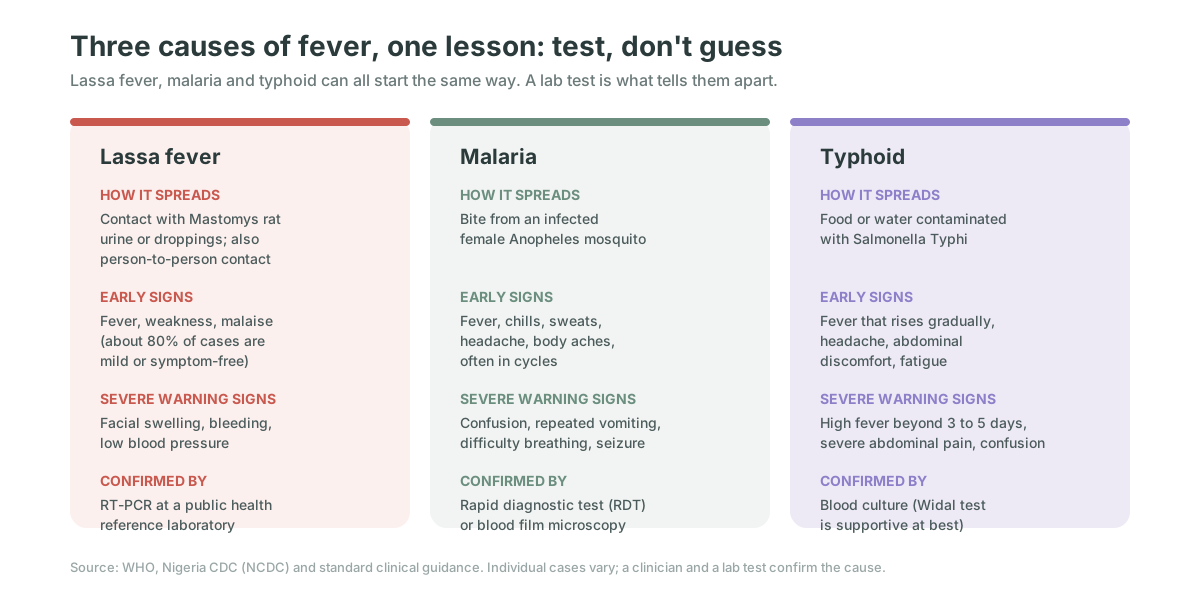
Lassa fever, malaria and typhoid all start with fever in Nigeria, and a laboratory test, not symptoms alone, is what tells them apart
Fever is the most common reason people in Nigeria see a doctor, and the three conditions most often behind it, malaria, typhoid, and, less commonly but seriously, Lassa fever, can look nearly identical for the first several days. Headache, body aches, fatigue, and a fever that will not settle show up in all three. Treating a fever as "probably malaria" without a test is a habit that delays the right diagnosis whichever of the three is actually responsible.
Malaria and typhoid are also, by far, the more common explanations for fever day to day, and both are readily testable. That makes ruling them out with a straightforward test the sensible first step for most fevers, while reserving concern about Lassa fever for situations where there has been plausible rodent exposure, contact with a confirmed case, or symptoms that keep worsening despite negative malaria and typhoid results.
Malaria testing: RDT vs blood film, and how to read the result
Typhoid and the Widal test: what a positive result really means
Confirming Lassa fever requires an RT-PCR test carried out at a designated public health laboratory, not a routine walk-in blood test
Lassa fever is confirmed in the laboratory, primarily with RT-PCR, a test that detects the virus's genetic material directly and works best during the acute phase of illness. Later in the illness, or for surveillance purposes, antibody tests such as ELISA can detect the immune response the body has mounted against the virus. A rapid diagnostic test also exists, but PCR remains the gold-standard confirmatory test doctors rely on.
These tests are not something a general private lab or a routine blood draw offers. In Nigeria, suspected Lassa fever samples are handled through NCDC-coordinated reference laboratories, because working safely with a virus this dangerous requires biosafety precautions well beyond what a standard blood test needs. A doctor who suspects Lassa fever arranges this testing directly, as part of hospital-based evaluation, not as something a patient books ahead of time.
The antiviral ribavirin can help when it is started early, and WHO puts the overall case-fatality rate at around 1%, rising to as much as 15% among patients hospitalised with severe disease
The antiviral drug ribavirin has shown benefit against Lassa fever, and WHO and NCDC guidance both point to early treatment as the factor that matters most for how well it works. Exactly how and when it is used is a decision a treating clinician or hospital makes based on the individual case, not something to self-manage or estimate from an article. Supportive care, meaning careful management of fluids, blood pressure, and any complications as they arise, plays just as large a role in outcomes as the antiviral itself.
On the numbers: WHO states that Lassa virus infections overall carry a case-fatality rate of around 1%, a figure that includes the large share of infections that are mild. Among patients who are hospitalised with severe disease, WHO cites a case-fatality rate of up to around 15%. Read together, those two figures tell a consistent story: most people who catch Lassa virus recover, and severe disease, while genuinely dangerous, is the exception rather than the rule and responds better the earlier it reaches hospital care.
Lassa fever cases in Nigeria rise every dry season, roughly November to April, when Mastomys rats move closer to homes
Nigeria records a seasonal rise in Lassa fever cases nearly every year, with NCDC surveillance typically showing numbers climbing from around November and peaking somewhere between January and April before tapering off. This pattern tracks the dry season, when Mastomys rats move into homes and stored food in search of water and shelter, increasing the chance of contact between people and infected rodents.
Reducing that contact is the most practical prevention available, and none of it requires special equipment:
- Store food, especially grains and dried goods, in rodent-proof containers with tight lids
- Keep the home and kitchen clean, and clear food scraps promptly rather than leaving them out overnight
- Dispose of household waste well away from living and sleeping areas
- Avoid handling rats, and take care around dead rodents rather than touching them directly
- Anyone caring for a person with suspected or confirmed Lassa fever should use gloves and protective precautions, and follow guidance from health workers
Recognising Lassa fever symptoms early and getting a fever tested for its common, treatable causes gives a person the best chance of timely care
- If you have a fever that will not settle, get tested for malaria and typhoid first, since they are far more common and both are readily testable.
- If fever continues despite negative malaria and typhoid results, especially with a plausible rodent exposure or contact with a confirmed Lassa fever case, tell your doctor so they can consider Lassa fever specifically.
- Seek immediate hospital care for facial swelling, unexplained bleeding, very low blood pressure, or any sign of shock, rather than waiting to see if symptoms pass.
- Do not attempt to source ribavirin or manage suspected Lassa fever at home. Treatment decisions belong to a hospital and a treating clinician.
- During the dry season, take basic rodent-control steps at home: rodent-proof food storage, prompt clean-up, and keeping food away from sleeping areas.
- If you work in healthcare or care for someone with suspected Lassa fever, follow standard infection-control precautions, including gloves and careful handling of bodily fluids and waste.
Health screening in Nigeria: what to test for and when
See the fever and infectious disease panel BetterHealth Africa tests
Frequently asked questions
How long after exposure do Lassa fever symptoms appear?+
Symptoms typically appear 6 to 21 days after exposure to Lassa virus. This incubation period, cited by WHO, the CDC, and Nigeria's NCDC, means a person can feel well for up to three weeks after exposure before any symptoms begin.
Can Lassa fever spread from person to person?+
Yes. While most infections come from contact with an infected Mastomys rat's urine or droppings, Lassa fever can also spread between people through direct contact with an infected person's blood, urine, faeces, or other bodily fluids. This is why hospitals use strict infection-control precautions around suspected or confirmed cases.
How is Lassa fever different from malaria?+
In the first few days, they can look very similar: both cause fever, headache, and body aches. Malaria comes from a mosquito bite and is confirmed with a rapid test or blood film available at most clinics. Lassa fever comes mainly from Mastomys rat exposure, is far less common than malaria, and is confirmed with RT-PCR at a designated public health laboratory rather than a routine test. A minority of Lassa fever cases also progress to specific warning signs, such as facial swelling and bleeding, that malaria does not typically cause.
Is Lassa fever curable?+
Most infections, around 80% according to WHO, are mild and resolve without needing specific antiviral treatment. For more severe cases, the antiviral ribavirin can be effective, particularly when started early, alongside supportive hospital care. A treating clinician or hospital determines the right approach for each patient.
Why does Lassa fever peak in Nigeria during certain months?+
Nigeria typically sees Lassa fever cases rise from around November, peaking between January and April, tracking the dry season. Mastomys rats move closer to homes in search of food and water during this period, increasing the chance of contact with contaminated food, surfaces, or dust.
Does BetterHealth Africa test for Lassa fever?+
No. Suspected Lassa fever needs immediate hospital evaluation and testing through NCDC-coordinated public health reference laboratories, not a scheduled home blood draw, because of the biosafety precautions the virus requires. BetterHealth Africa's home testing covers routine screening and common conditions, including malaria and typhoid, which is the realistic first step for most fevers. If Lassa fever is suspected, go to a hospital directly.
This article is general health education, not medical advice. It is not a substitute for diagnosis or treatment by a qualified healthcare professional. Lassa fever can be a serious, life-threatening illness. If you suspect Lassa fever, have symptoms after contact with rodents or a confirmed case, or notice any warning signs such as bleeding or facial swelling, seek hospital care immediately rather than waiting or self-managing at home.