Urinalysis: How to Read a Routine Urine Test
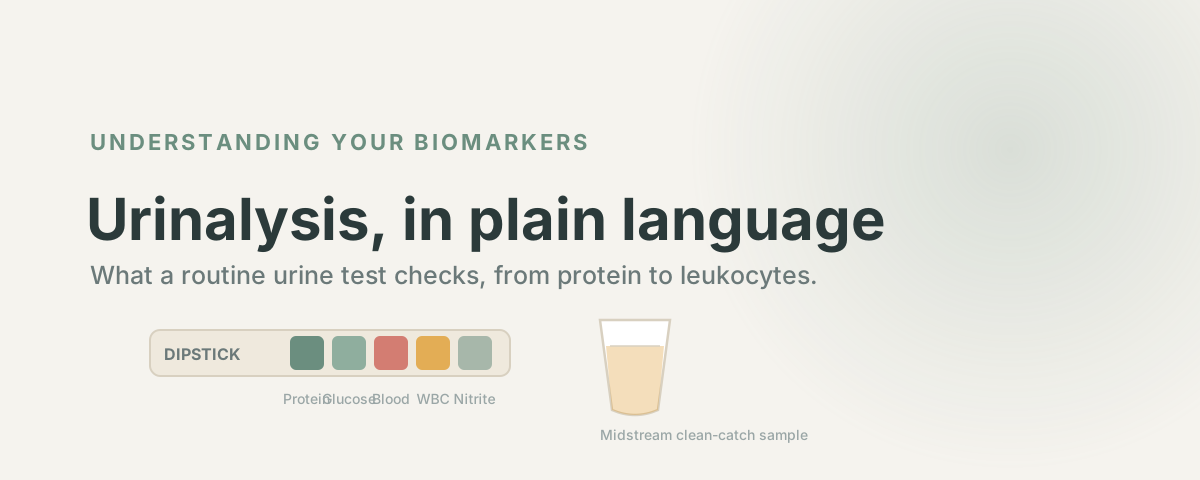
A urine test is one of the fastest, cheapest tests in medicine, and it is also one of the most misunderstood. Most people have watched a strip of coloured pads dip into a small cup and had no idea what any of the squares meant. That short list of results, protein, glucose, blood, leukocytes, nitrites, pH and specific gravity, can point to a kidney problem, a urinary infection, undiagnosed diabetes, or a pregnancy complication, often before any symptoms show up.
This guide walks through what each part of a routine urinalysis measures, what a normal urine test results chart looks like, and what it means when a result comes back outside that range.
What a urine test checks for
A routine urinalysis screens urine for protein, glucose, blood, leukocytes, nitrites, pH, and specific gravity in a single sample, giving an early window into kidney health, infection, hydration, and metabolic status.
Most labs run this as a dipstick test: a plastic strip with small reactive pads that change colour on contact with urine. A machine or a trained technician reads the colour change against a reference chart within about a minute. When a result looks abnormal, or when more precision is needed, the same sample can go under a microscope for a closer look at cells, crystals, and casts, which is usually called microscopic urinalysis.
- Protein: a possible early sign of kidney damage
- Glucose: sugar spilling into urine, usually linked to high blood sugar
- Blood: can come from infection, kidney stones, or other causes
- Leukocytes (white blood cells): raised with infection or inflammation
- Nitrites: a by-product of certain bacteria, used to flag a likely urinary infection
- pH: how acidic or alkaline the urine is
- Specific gravity: how concentrated or diluted the urine is, a rough marker of hydration
How a urine test is done: sample collection and procedure
A urinalysis needs a small midstream clean-catch urine sample collected into a sterile container, and how the sample is collected affects how reliable the result is.
The midstream clean-catch method means washing your hands, cleaning the genital area, starting to urinate into the toilet, then moving the container into the stream partway through and closing it before you finish. This avoids picking up skin bacteria or cells from the very start of the stream, which is the most common reason a result comes back looking like an infection when there is not one. Most clinics and testing services provide a sterile cup and simple instructions for this at the time of the appointment.
You do not usually need to fast before a urine test. A first-morning sample is often preferred where possible, because it tends to be more concentrated and gives a clearer picture, but a sample taken at any time of day is generally acceptable for a routine check. Try to avoid heavy fluid loading right before the test, since diluted urine can mask a genuine abnormality.
How to read a normal urine test results chart
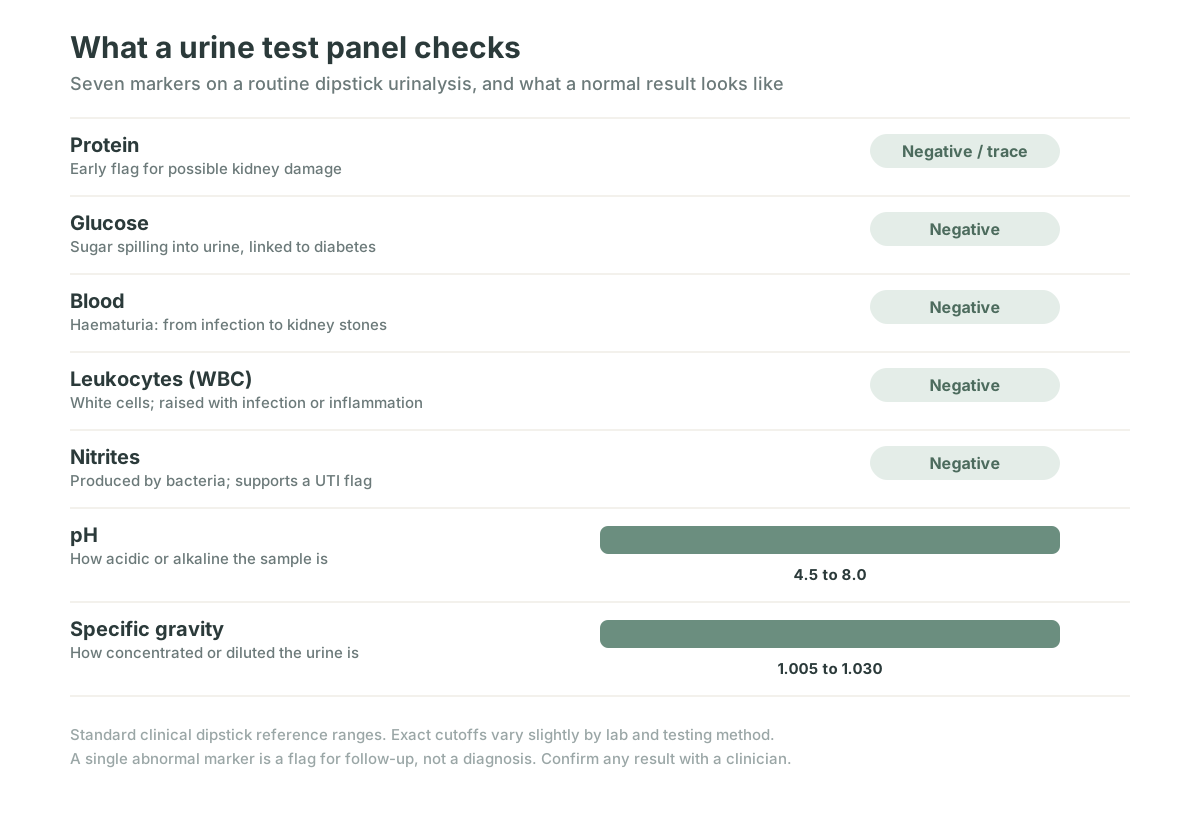
Most reference charts call a urinalysis normal when protein, glucose, blood, leukocytes, and nitrites are all negative or trace, urine pH sits between about 4.5 and 8, and specific gravity falls between about 1.005 and 1.030.
These figures are standard clinical dipstick reference ranges, and the exact cutoff can vary slightly between labs and testing methods, so it is always worth checking the range printed on your own report rather than a generic chart online. A trace amount of protein or a mildly acidic or alkaline pH is not automatically abnormal on its own; it is read in context, alongside the rest of the panel and your symptoms.
Protein in urine: what it can mean
Protein in urine, called proteinuria, is one of the earliest lab signs that the kidneys' filtering units may be leaking, and it is a marker doctors watch closely in both general checkups and pregnancy.
Healthy kidneys filter blood but hold on to most protein rather than letting it pass into urine. When the filtering units, called glomeruli, are damaged, protein starts to leak through. A small, trace amount can appear after strenuous exercise, dehydration, fever, or standing for long periods, and is usually harmless on a one-off test. Persistent or higher-level protein is different: it is one of the reasons doctors pair a urine test with a blood-based kidney function test, since kidney damage from conditions like high blood pressure and diabetes can show up in urine before it shows up as a fall in eGFR.
Creatinine and eGFR: how to read your kidney function test
Glucose in urine: what it can mean
Glucose is not normally present in urine, so finding it usually means blood sugar has risen high enough to spill past the kidneys' reabsorption limit, most often pointing toward diabetes.
Healthy kidneys reabsorb essentially all the glucose that passes through them, so a dipstick reading of glucose in urine is a flag worth following up with a proper blood sugar test, such as a fasting blood sugar or HbA1c. Glucose can occasionally appear in urine during pregnancy, from certain medications, or from rare kidney conditions unrelated to blood sugar, which is why a positive result on its own is a starting point for further testing rather than a diagnosis.
Fasting blood sugar explained: what your glucose result means
Blood in urine: what it can mean
Blood in urine, called haematuria, can come from causes as minor as a urinary infection or as significant as kidney stones or, rarely, a tumour, so it is always worth a doctor's review even without pain.
Sometimes blood is visible to the eye, turning urine pink, red, or tea-coloured. More often it shows up only on the dipstick as microscopic haematuria, invisible without testing. Common causes include urinary tract infections, kidney stones, vigorous exercise, and, in women, menstrual blood contaminating the sample. A doctor typically wants to rule out infection first, then consider imaging or further tests if blood keeps showing up on repeat testing without an obvious explanation.
Leukocytes and nitrites in urine: signs of a urinary tract infection
Leukocytes (white blood cells) and nitrites on a urine test are the two markers most often used together to flag a likely urinary tract infection.
Leukocytes rise when the immune system is responding to inflammation or infection somewhere in the urinary tract. Nitrites appear because certain bacteria, most commonly the kind that cause urinary tract infections, convert nitrates naturally present in urine into nitrites. A positive result for both, especially alongside symptoms like burning on urination, urgency, or lower abdominal discomfort, is a strong indicator of infection. Either marker can also appear on its own without the other, which is why the full clinical picture, not just one line on the strip, guides the diagnosis. A urine culture is often used to confirm the infection and identify which antibiotic will work before treatment is decided.
CRP and inflammation: what a raised result can mean
Urine tests in pregnancy: screening for preeclampsia and gestational diabetes
Routine urine protein and glucose screening is a standard part of antenatal checkups across Africa, used to help flag preeclampsia risk and gestational diabetes early.
At most antenatal visits, a quick dipstick check is done alongside a blood pressure reading. Protein in urine combined with raised blood pressure in the second half of pregnancy is one of the warning signs doctors look for with preeclampsia, a condition that needs prompt medical attention. Glucose in urine during pregnancy can be an early clue toward gestational diabetes, which is usually confirmed with a dedicated glucose tolerance test rather than the dipstick alone. Because both conditions can develop with few or no symptoms in the early stages, this simple, low-cost test is one of the reasons regular antenatal visits matter, wherever in Africa a pregnancy is being followed.
A urine test is a screening flag, not a pregnancy diagnosis
A single abnormal dipstick result in pregnancy is a prompt for closer monitoring, not a diagnosis on its own. Preeclampsia and gestational diabetes are confirmed with additional checks, such as repeated blood pressure readings or a glucose tolerance test, and are managed by an antenatal care team.
Abnormal urine test results: what happens next
An abnormal result on a single urinalysis is a flag for further testing, not a diagnosis on its own, and a doctor interprets it alongside symptoms, history, and sometimes a repeat or confirmatory test.
Depending on which marker is out of range, the next step could be a repeat urine test to see if it was a one-off, a urine culture to confirm infection, a blood-based kidney function test if protein or blood persists, or a blood sugar test if glucose shows up. Very concentrated or very dilute urine, reflected in the specific gravity reading, can also affect how the other markers look, which is one reason a clinician reviews the whole panel together rather than reacting to a single line.
What to do with your urine test result
- Read your result against the range printed on your own report rather than a generic chart, since exact cutoffs vary slightly by lab.
- Collect the sample properly. A midstream clean-catch sample gives the most reliable result and avoids false alarms from contamination.
- If protein or blood shows up more than once, ask your doctor whether a blood-based kidney function test is needed alongside it.
- If glucose shows up, ask for a fasting blood sugar or HbA1c test to check whether blood sugar is the underlying cause.
- If leukocytes and nitrites are both positive, especially with burning or urgency when urinating, see a doctor promptly rather than waiting it out.
- If you are pregnant, keep to your scheduled antenatal visits, since routine urine and blood pressure checks are how preeclampsia and gestational diabetes are usually caught early.
- Do not interpret one abnormal marker in isolation. Bring the full result to a clinician who can read it alongside your symptoms and history.
See the urine and kidney panels BetterHealth Africa offers
Frequently asked questions
What does a urine test check for?+
A routine urinalysis checks for protein, glucose, blood, leukocytes, nitrites, pH, and specific gravity in a urine sample. Together these markers can flag kidney problems, urinary tract infections, diabetes, dehydration, and, in pregnancy, warning signs of preeclampsia or gestational diabetes.
Do I need to fast before a urine test?+
No. A routine urine test does not require fasting. A first-morning sample is sometimes preferred because it is more concentrated, but a sample given at any time of day is usually acceptable. Avoid drinking unusually large amounts of fluid right before the test, since very diluted urine can mask an abnormal result.
What does protein in urine mean?+
Protein in urine, called proteinuria, can be a sign that the kidneys' filtering units are leaking more protein than they should. A small trace can appear after exercise, dehydration, or fever and is usually harmless. Protein that shows up repeatedly is usually followed up with a blood-based kidney function test, since it can be an early sign of kidney damage, often linked to high blood pressure or diabetes.
What does blood in urine mean?+
Blood in urine, called haematuria, can be caused by a urinary tract infection, kidney stones, vigorous exercise, or, less commonly, more serious conditions. It can be visible to the eye or detected only on the dipstick. Any blood in urine, with or without pain, is worth discussing with a doctor, who will usually check for infection first and consider further tests if it persists.
What are leukocytes and nitrites in urine, and do they mean I have a UTI?+
Leukocytes are white blood cells that rise when the immune system responds to infection or inflammation in the urinary tract. Nitrites appear when certain bacteria convert nitrates in urine into nitrites. A positive result for both, especially with symptoms like burning or urgency, strongly suggests a urinary tract infection, though a urine culture is often used to confirm it before treatment.
How should I collect a urine sample for testing?+
The most reliable method is a midstream clean-catch sample. Wash your hands, clean the genital area, start urinating into the toilet, then move the sterile container into the stream partway through and close it before you finish. This reduces the chance of skin bacteria or cells contaminating the sample and causing a misleading result.
What is a normal urinalysis result?+
A normal urinalysis usually shows protein, glucose, blood, leukocytes, and nitrites all negative or trace, a pH between about 4.5 and 8, and a specific gravity between about 1.005 and 1.030. Exact reference ranges can vary slightly by lab, so always check the range printed on your own report.
This article is general health education, not medical advice. It is not a substitute for diagnosis or treatment by a qualified healthcare professional. Urine test results depend on individual factors including hydration, sample collection technique, medications, and underlying health conditions. Always discuss your results with your doctor.