CRP and ESR: What Inflammation Markers Tell You
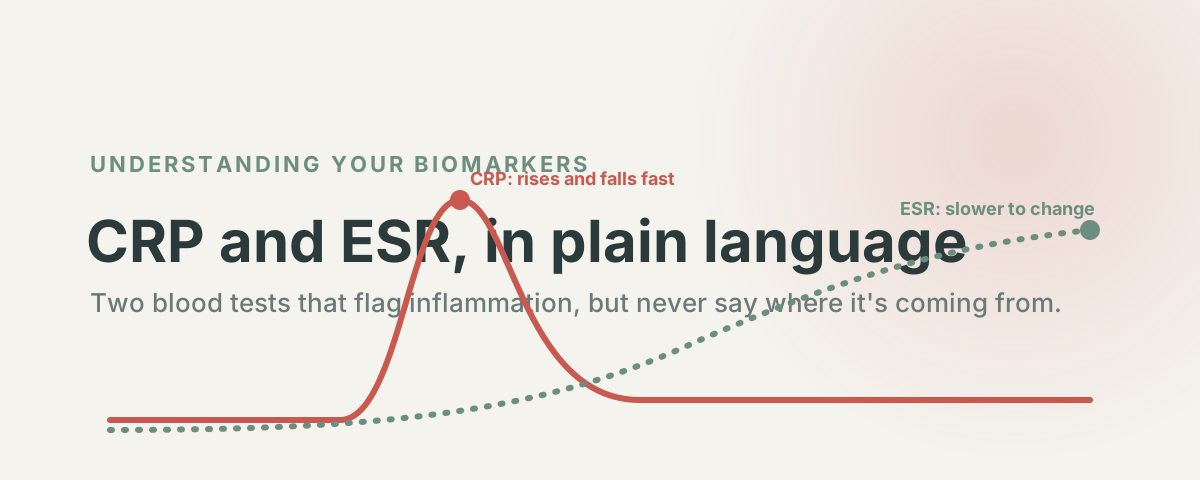
A c-reactive protein test, usually just called a CRP test, is one of the most commonly ordered blood tests in medicine. So is its older cousin, the ESR test. Both come back as a single number, and both tell a doctor the same basic thing: something in your body is inflamed. Neither one says what that something is. That gap between what these tests can and cannot tell you is where most of the confusion starts, so it is worth clearing up before you look at your own result.
CRP and ESR both detect inflammation, but neither one identifies its cause.
CRP is a protein made by the liver that rises sharply when the body triggers an inflammatory response anywhere at all: a chest infection, a sprained ankle, a flare of an autoimmune condition, even recent surgery. ESR, short for erythrocyte sedimentation rate, measures something different but related: how quickly red blood cells settle to the bottom of a test tube over one hour. Inflammation changes the proteins in blood plasma in a way that makes red cells clump and fall faster, so a raised ESR is another, older signal of the same broad process.
Across African clinical practice, both tests are ordered often, and rarely alone. A CRP or ESR test is a routine part of a fever workup, a check on how a known infection is responding to treatment, or a way to monitor chronic inflammatory conditions such as rheumatoid arthritis over time. As a general inflammation blood test, either one is useful precisely because it is sensitive. That sensitivity is also its main limitation: it reacts to almost any inflammatory trigger, so the result has to be read alongside your symptoms, your history, and often other tests before it means anything specific.
CRP rises and falls within hours to days, while ESR moves more slowly and stays elevated longer.
The practical difference between a CRP test and an ESR test comes down to timing and specificity, and it is why doctors sometimes order both rather than picking one.
- Speed: CRP starts rising within 6 to 8 hours of an inflammatory trigger and can climb a thousandfold in severe infection. It also falls back down quickly once the trigger resolves, often within days.
- ESR moves more slowly in both directions. It can take several days to rise and can stay elevated for weeks after the underlying problem has settled, which makes it a poorer choice for tracking a fast-changing illness.
- Specificity: CRP is a more direct measure of active inflammation. ESR is affected by other factors unrelated to inflammation, including age, anaemia, and pregnancy, which can push it up or down regardless of what is happening in the body.
- Clinical use: CRP is generally preferred for tracking how quickly an infection or flare is responding to treatment. ESR is still useful for some chronic conditions, including certain autoimmune and rheumatic diseases, where its slower trend adds information CRP alone can miss.
- Cost and availability: ESR is an older, simpler, and typically cheaper test, which is part of why it remains widely used across African labs and clinics alongside newer CRP testing.
A standard c-reactive protein normal range sits under about 10 mg/L, but the chart your own lab prints is the one that applies to your result.
Most labs report a standard CRP test in milligrams per litre (mg/L). A separate, more sensitive version of the test, hs-CRP, is measured on a different, lower scale and used for a different purpose, covered further down. For a standard c-reactive protein range, the general pattern most labs follow looks like this:
- Normal: below roughly 10 mg/L, though exact lab cutoffs vary slightly by method
- Mild to moderate elevation: roughly 10 to 40 mg/L, often seen with viral infections, mild inflammation, or minor injury
- Marked elevation: roughly 40 to 200 mg/L, typically associated with bacterial infection or active inflammatory disease
- Severe elevation: above 200 mg/L, usually seen in serious bacterial infection, major trauma, or severe systemic inflammation
A c-reactive protein level chart is a guide, not a diagnosis
These bands describe how CRP tends to behave, not what caused it. Two people with the same CRP level can have completely different underlying problems, from a common cold to a flare of rheumatoid arthritis. Your own lab's reference range, read by a clinician alongside your symptoms, is what matters for your result.
A high CRP means active inflammation is present somewhere in the body, and finding the cause is the next step, not the result itself.
When a c-reactive protein high result comes back, the first question is not how high but why. A handful of causes account for most raised CRP results, though this is not an exhaustive list, and a clinician needs the fuller clinical picture to narrow it down.
- Infection: bacterial infections tend to push CRP up sharply and to a higher level than viral ones, which is part of why doctors use the test to help judge how likely a bacterial cause is.
- Autoimmune and rheumatic conditions: rheumatoid arthritis and similar conditions where the immune system attacks the body's own tissue commonly produce a persistently raised CRP, and the test is often used to track disease activity over time. Lupus is a notable exception. CRP often stays normal or only mildly raised even during an active flare, so doctors usually lean on ESR instead, and a sharply raised CRP in someone with lupus more often points to a separate infection than to the lupus itself.
- Obesity: fat tissue itself produces low-grade inflammatory signals, so CRP tends to run mildly higher in people carrying more body fat, even without any illness.
- Smoking: tobacco use is consistently linked with a mildly raised CRP, reflecting ongoing low-grade inflammation in the airways and blood vessels.
- Recent injury or surgery: any tissue damage, including a scheduled operation, triggers a normal, expected inflammatory response and a temporary CRP rise that settles as healing progresses.
- Chronic conditions: some long-term illnesses, including certain kidney and inflammatory bowel conditions, keep CRP mildly elevated on an ongoing basis.
A high-sensitivity CRP test, or hs-CRP, is used as one factor among several when a doctor is assessing cardiovascular risk, never as a standalone diagnostic cutoff.
hs-CRP measures the same protein as a standard CRP test but at far lower concentrations, which makes it useful for a different job. Low-grade inflammation inside blood vessel walls is thought to play a role in how cholesterol plaques form and become unstable, so a persistently mildly raised hs-CRP, read alongside a lipid profile and other risk factors, can add information to a cardiovascular risk assessment.
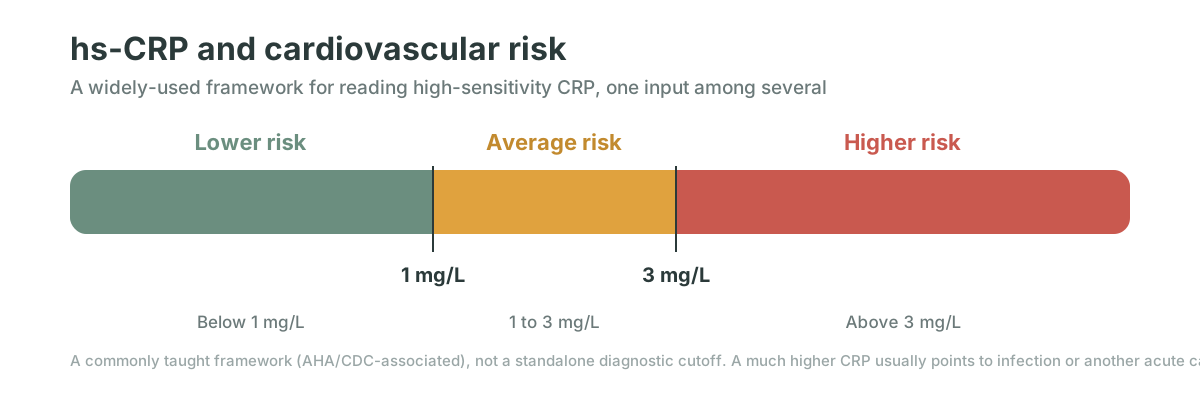
A commonly taught framework, associated with guidance from bodies such as the American Heart Association and the US CDC, reads hs-CRP roughly as follows: below 1 mg/L suggests lower cardiovascular risk, 1 to 3 mg/L suggests average risk, and above 3 mg/L suggests higher risk. Clinical guidance on the exact cutoffs and how much weight to give them varies, and this framework is only ever meant to sit alongside blood pressure, cholesterol, blood sugar, smoking status, family history, and age, not to replace any of them. A single hs-CRP result well above these bands more often points to an active infection or other acute cause than to heart disease risk specifically, which is another reason it is read in context rather than alone.
Lipid profile: the test hs-CRP is usually read alongside for heart disease risk
High blood pressure: another marker in the same cardiovascular risk picture
A normal CRP makes significant inflammation less likely but does not rule it out completely.
CRP is sensitive but not perfect. Some inflammatory and autoimmune conditions produce only a mild or inconsistent CRP rise even during active disease, and levels can also shift depending on exactly when in the course of an illness the blood was drawn. A normal result is reassuring, particularly when it fits with how you are feeling, but it does not override a doctor's clinical judgment if your symptoms strongly suggest an inflammatory process is still underway. This is one more reason CRP and ESR work best as part of an overall assessment rather than as a stand-alone test that settles the question either way.
What to do with a CRP or ESR result depends on how high it is, how you feel, and what else your doctor already knows about your health.
- Do not interpret a raised CRP or ESR in isolation. Bring the result to a doctor who knows your symptoms and history, since the same number can mean very different things in different people.
- If you feel generally well and the result is only mildly raised, ask whether a repeat test after a short interval makes sense, since many mild elevations settle on their own once a minor trigger resolves.
- If you have a fever, unexplained pain, swelling, or other symptoms alongside a raised result, see a doctor promptly rather than waiting to see if it changes.
- If you are being monitored for a known chronic inflammatory or autoimmune condition, keep track of your CRP or ESR trend over time. A single number matters less than the direction it is moving.
- If hs-CRP was ordered as part of a cardiovascular risk check, look at it alongside your lipid profile, blood pressure, and blood sugar rather than on its own.
See the inflammation and cardiovascular panels BetterHealth Africa tests
View BetterHealth Africa test pricing
Frequently asked questions
What is a CRP test?+
A CRP test measures c-reactive protein, a substance the liver produces when the body triggers an inflammatory response anywhere at all, from an infection to an injury to a flare of an autoimmune condition. It is one of the most widely used general markers of inflammation, but it does not identify the cause on its own.
What is the difference between CRP and ESR?+
CRP rises and falls quickly, often within hours to days, and responds more specifically to active inflammation. ESR, the erythrocyte sedimentation rate, rises and falls more slowly, can stay elevated for weeks after the trigger has resolved, and is more easily affected by factors unrelated to inflammation, such as age and anaemia. Doctors sometimes order both because each adds slightly different information.
What does a high CRP mean?+
A high CRP means the body is mounting an inflammatory response somewhere, but it does not say where or why on its own. The level, combined with your symptoms and other test results, helps a doctor narrow down the likely cause, which can range from a common infection to an autoimmune condition to recent surgery.
What causes high CRP?+
The most common causes of a raised CRP include infection, especially bacterial infection, autoimmune and rheumatic conditions such as rheumatoid arthritis, obesity, smoking, and recent injury or surgery. Several chronic conditions can also keep CRP mildly elevated on an ongoing basis. Lupus is an exception worth knowing: CRP often stays normal even during a flare, so ESR is usually the more useful marker there.
What is hs-CRP and how is it used for heart disease risk?+
hs-CRP, or high-sensitivity CRP, measures the same protein at much lower concentrations and is used as one factor in assessing cardiovascular risk. A commonly taught framework reads below 1 mg/L as lower risk, 1 to 3 mg/L as average risk, and above 3 mg/L as higher risk, but this sits alongside your lipid profile, blood pressure, blood sugar, and other risk factors rather than standing alone as a diagnostic cutoff.
Does a normal CRP rule out inflammation?+
Not completely. A normal CRP makes significant inflammation less likely and is generally reassuring, but some conditions produce only a mild or inconsistent rise, and timing during an illness can affect the result. A doctor will weigh a normal CRP against your symptoms rather than treating it as the final word.
This article is general health education, not medical advice. CRP and ESR are nonspecific markers of inflammation and cannot by themselves diagnose any condition. It is not a substitute for diagnosis or treatment by a qualified healthcare professional. Always discuss your own results and symptoms with your doctor.