Low Testosterone: Symptoms, Testing, and What Actually Helps
Search for testosterone online and the results skew heavily toward supplements promising to boost it, restore it, or unlock it. That noise crowds out the more useful and much less exciting version of this topic: low testosterone is a real, testable medical condition with a known set of symptoms, a specific way the blood test should be done, and a short list of things that move the number in a meaningful way. None of that short list is a bottle you can buy off a shelf.
This article covers what low testosterone (hypogonadism) is, the symptoms worth paying attention to, how the test works and why timing matters, what causes levels to drop, and what evidence-based sources support for raising testosterone, alongside a plain warning about over-the-counter boosters.
Low testosterone, or hypogonadism, means the testes are not producing enough testosterone to meet the body's needs, and it can develop gradually enough that people mistake it for normal ageing.
Testosterone is the main sex hormone in men, made mainly in the testes, and it also plays a smaller but genuine role in women's health, made in the ovaries and adrenal glands. It supports muscle mass, bone density, red blood cell production, sex drive, mood and energy. Hypogonadism is the clinical term for testosterone levels that are low enough, and symptoms significant enough, to warrant treatment.
It is not a single disease with one cause. Some men are born with a condition that affects testosterone production from a young age. Far more commonly, levels decline gradually over decades, and the decline can be accelerated by weight gain, poor sleep, chronic illness or certain medications. Because the drop is usually slow, many people attribute the symptoms to ageing, stress or a demanding season of life rather than recognising them as a treatable hormonal issue.
The most consistent symptoms of low testosterone are persistent fatigue, reduced sex drive, low mood or poor concentration, and a drop in muscle mass, with erectile changes as an additional marker in men.
None of these symptoms is unique to low testosterone. Each one overlaps with depression, thyroid problems, poor sleep, chronic stress and several other conditions. That overlap is exactly why a blood test matters rather than guessing from symptoms alone.
- Persistent fatigue or low energy that does not improve with rest
- Reduced sex drive or interest in sex
- Low mood, irritability or difficulty concentrating
- Loss of muscle mass or noticeably reduced strength, even with regular activity
- Increased body fat, particularly around the abdomen
- In men specifically: erectile changes, fewer spontaneous morning erections, or reduced facial or body hair over time
This symptom list is not a diagnosis
These symptoms are common to many conditions, not just low testosterone. Fatigue and low mood alone are far more often explained by poor sleep, stress, depression or thyroid issues than by a hormone problem. The symptom list is a reason to test, not a reason to assume the result before testing.
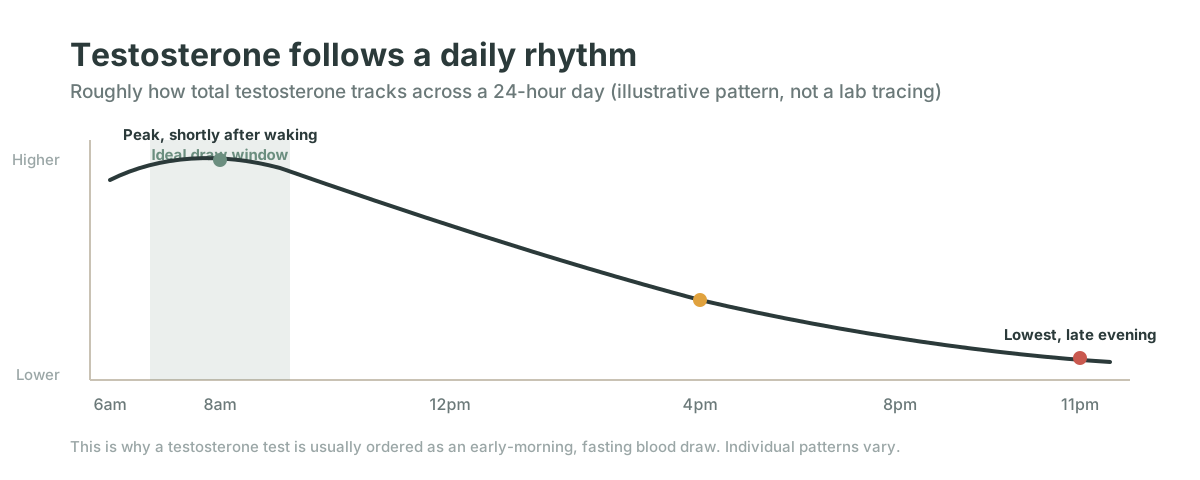
A testosterone test is most accurate as a morning, fasting blood draw, because testosterone follows a daily rhythm and is highest shortly after waking.
Two versions of testosterone show up on a typical report. Total testosterone measures all the testosterone in the blood, including the portion bound tightly to a carrier protein called SHBG (sex hormone-binding globulin) and the portion that is free to act on tissue. Free testosterone measures only that unbound, biologically active portion. Total testosterone is usually the first test ordered; free testosterone (or a calculated free testosterone using SHBG) becomes useful when total testosterone sits near a borderline result, or when SHBG itself is likely to be abnormal, such as with obesity, thyroid disease or certain medications.
Timing changes the result in a real way. Testosterone follows a diurnal rhythm: it peaks in the early morning, not long after waking, and drifts lower across the day, reaching its lowest point in the evening. A sample drawn at 4pm can read meaningfully lower than the same person's blood drawn at 7am, even with nothing else different. For that reason, testosterone is best tested in the morning, generally before 10am, and typically after an overnight fast, since food intake can also shift the result slightly.
A single low testosterone reading is usually repeated on a separate morning before a doctor confirms a diagnosis, because levels can vary from day to day and can dip temporarily from illness, poor sleep or stress.
This is the same caution that applies to thyroid results, blood pressure readings and most single hormone tests: one number is a data point, not a verdict. A short illness, a bad night of sleep, unusual stress or even an early-morning workout can temporarily lower a testosterone reading without reflecting an ongoing hormonal problem. Guidance from major endocrine bodies generally recommends confirming a low result with a second morning sample before making a diagnosis or starting treatment, especially when the first result is only mildly low or the symptoms are not clear-cut.
One low result is not a diagnosis
If your first testosterone result comes back low, the next reasonable step is usually a repeat morning test, not an immediate treatment decision. A doctor will weigh the repeat result alongside your symptoms, your overall health, and sometimes other hormone levels such as LH, FSH and SHBG before confirming hypogonadism.
Total testosterone reference ranges vary by lab and by the assay used, so a result should always be read against the specific range printed on that report, not a number found online.
Different labs use different measurement methods, and normal ranges shift accordingly. Age also matters: testosterone naturally declines with age in men, so what counts as a reasonable result for a 60-year-old differs from what is expected in a 25-year-old. Because of this variation, quoting a single universal 'normal number' would be misleading. The more reliable approach is to read your result against the reference range printed directly on your own lab report, and to have a clinician interpret it alongside your symptoms, age and any other hormone results, rather than comparing it to a number pulled from a general internet search.
Ageing, obesity, untreated sleep apnea, chronic illness and certain medications are the most common drivers of low testosterone.
Testosterone falls gradually with age in most men, but several other conditions can push levels down faster or further than ageing alone would explain.
- Ageing: a slow, gradual decline is a normal part of getting older for most men, roughly in the range of about 1% a year after age 30
- Obesity: excess body fat, particularly around the abdomen, is strongly linked to lower testosterone, partly through its effect on SHBG and hormone conversion
- Untreated obstructive sleep apnea: disrupted sleep and repeated drops in oxygen overnight are linked to lower testosterone, and treating the sleep apnea can improve levels
- Chronic illness: poorly controlled diabetes, chronic kidney disease, liver disease and other long-term conditions can all suppress testosterone production
- Certain medications: some opioid painkillers, some steroid medications and a few other drug classes can lower testosterone as a side effect
- Testicular or pituitary conditions: less common, but a doctor will consider these when the cause is not obvious from the more common drivers above
The lifestyle changes with genuine evidence behind them for raising low testosterone are better sleep, weight loss where relevant, regular resistance exercise, treating underlying conditions like sleep apnea or diabetes, and limiting excess alcohol, while most over-the-counter testosterone booster supplements have little to no quality evidence behind them.
This is the question behind most searches for 'how to increase testosterone,' and it is worth answering honestly rather than pointing to a product. The evidence supports a short list of changes, all of which work by addressing something that is suppressing testosterone in the first place, rather than artificially forcing the number up.
- Improve sleep: poor or insufficient sleep, especially consistently under 5 to 6 hours a night, is linked to measurably lower testosterone. Prioritising sleep is one of the more evidence-backed, low-risk changes available.
- Manage weight: losing excess weight, particularly abdominal fat, is associated with meaningful improvements in testosterone in men who are overweight or living with obesity.
- Do resistance exercise: regular strength training has a more consistent evidence base for supporting healthy testosterone levels than cardio alone, alongside its other well-established health benefits.
- Treat sleep apnea if present: if snoring, gasping at night, or daytime sleepiness suggest sleep apnea, a proper diagnosis and treatment (such as CPAP) can improve testosterone as a side benefit of treating the underlying condition.
- Manage diabetes and metabolic health: keeping blood sugar well controlled supports hormonal health broadly, testosterone included.
- Limit excess alcohol: heavy, regular alcohol use is linked to lower testosterone; cutting back matters more than any supplement marketed alongside it.
A plain word on over-the-counter testosterone boosters
Most over-the-counter testosterone booster supplements have little to no quality clinical evidence showing they meaningfully raise testosterone in people with normal or low levels. Some contain ingredients with a small amount of preliminary research behind them, but robust, well-controlled trials showing a real, clinically useful effect are largely absent for the category as a whole. If you are concerned about low testosterone, a blood test and a conversation with a doctor will tell you far more than a supplement label will, and will point you toward a treatment that works if a real deficiency is confirmed.
For men with a confirmed, symptomatic diagnosis of hypogonadism, testosterone replacement therapy (TRT) is a real medical option, but it is a prescription treatment that requires a doctor's supervision, not a self-directed decision. TRT needs baseline blood work, an assessment of risks and benefits specific to the individual, and ongoing monitoring of testosterone levels, red blood cell count and other markers over time, since it carries real risks if unmonitored. It is not something to start based on symptoms alone, and it is not something an over-the-counter product can substitute for.
PSA test: prostate screening, and what a raised result means for men considering hormone therapy
Testosterone matters for women's health too, though normal ranges are far lower than in men and low levels are interpreted differently.
Testosterone is often framed as a male-only hormone, but women produce it too, in smaller amounts, in the ovaries and adrenal glands. It contributes to bone density, muscle mass, mood and sex drive in women just as it does in men, though normal reference ranges sit far lower. Testing in women is less standardised than in men and is typically considered in the context of specific symptoms, such as a marked drop in sex drive, alongside other hormone tests such as estradiol, progesterone, FSH, LH and DHEA-S, rather than as a routine standalone check.
Perimenopause and menopause testing: why a single hormone reading needs the same caution
BetterHealth Africa tests total and free testosterone as part of its Men's Panel and its broader 10-marker Hormone Panel, alongside the other hormones needed to interpret a result properly.
Testosterone rarely tells a complete story on its own, which is why it is usually tested alongside other markers rather than in isolation. BetterHealth Africa's Men's Panel includes testosterone alongside PSA, a lipid profile, full blood count, HbA1c, urine analysis, ESR and calcium, drawn from a home blood-draw appointment. For a fuller hormonal picture, the 10-marker Hormone Panel covers total and free testosterone together with estradiol, progesterone, DHEA-S, SHBG, FSH, LH and AMH. Testosterone levels fall by roughly 1% a year after age 30 in most men, and a number of symptoms often waved away as 'just getting older,' including fatigue, low mood and reduced muscle mass, can in fact be treatable hormonal changes worth checking rather than accepting by default.
See the Men's Panel and full Hormone Panel BetterHealth Africa tests
- If you have persistent fatigue, low libido, mood changes or reduced muscle mass, consider a testosterone test rather than assuming it is just stress or ageing.
- Book the test for the morning, and ask whether a fasting sample is needed, since timing changes the result.
- If your first result comes back low, expect a repeat morning test before any diagnosis or treatment decision.
- Read your result against the reference range on your own report, not a number from a general search, and discuss it with a doctor.
- If you are looking to raise testosterone naturally, prioritise sleep, weight management, resistance exercise, and treating any underlying condition like sleep apnea or diabetes, ahead of any supplement.
- If a doctor confirms hypogonadism and discusses testosterone replacement therapy with you, treat it as a monitored medical treatment, not a self-directed decision.
View BetterHealth Africa test pricing
Frequently asked questions
Is a testosterone test only for men?+
No. Testosterone testing is relevant to both men and women, though the clinical picture and reference ranges differ substantially. In men it is usually tested when symptoms like fatigue, low libido or erectile changes appear. In women it is tested less routinely and usually alongside other hormones such as estradiol and DHEA-S when specific symptoms warrant it.
What is the name of a testosterone test?+
The two most common tests are total testosterone and free testosterone. Total testosterone measures all the testosterone in the blood, including the portion bound to a carrier protein called SHBG, while free testosterone measures only the active, unbound portion. A doctor may also test SHBG, LH and FSH alongside these to interpret a result properly.
What is the normal range for a testosterone test?+
There is no single universal number, since reference ranges vary by lab, by the assay used, and by age. The reliable approach is to compare your result to the specific range printed on your own lab report and to have a clinician interpret it alongside your symptoms and age, rather than relying on a number found in a general search.
How much does a testosterone test cost?+
Testosterone is included in BetterHealth Africa's Men's Panel and in the 10-marker Hormone Panel, both priced on the pricing page. Check current pricing there rather than relying on a figure quoted elsewhere, since panel pricing can change.
Can I get a testosterone test near me, or does it have to be at a clinic?+
BetterHealth Africa does not operate walk-in test centres. It is a home-collection service: a phlebotomist comes to you, which works well for a test like this one where a morning, fasting sample matters and getting to a lab queue by 7am is not always realistic.
Can I do a testosterone test online?+
You can book a testosterone test online through BetterHealth Africa's platform, with a trained phlebotomist collecting the blood sample at home at an agreed time, rather than the test itself being performed remotely. The blood still needs to be drawn and processed by a lab.
Does taking a testosterone booster supplement raise testosterone?+
For most over-the-counter testosterone booster products, the honest answer is that quality clinical evidence supporting a meaningful effect is thin to absent. If you are concerned about low testosterone, a blood test and a doctor's assessment will do far more for you than a supplement, and will point toward treatment that is proven to work if a deficiency is confirmed.
This article is general health education, not medical advice. It is not a substitute for diagnosis or treatment by a qualified healthcare professional. Testosterone reference ranges vary by lab, age and the assay used, and a single result should not be treated as a diagnosis. Always discuss your own results, symptoms and any treatment decisions, including testosterone replacement therapy, with your doctor.