Syphilis Test (VDRL/RPR): What a Positive or Negative Result Means
Syphilis is a bacterial infection, caused by Treponema pallidum, and it is passed on mainly through sexual contact. That single fact matters more than it might seem: bacteria can be killed with antibiotics, and caught early, syphilis is fully curable. Left untreated, it moves through stages over months and years and can eventually damage the heart, brain, and nervous system, which is exactly why testing and early treatment matter so much.
Testing for syphilis is routine, confidential, and available to anyone, regardless of relationship status or sexual history. There is no group of people this test is reserved for, and no shame attached to asking for it.
What a syphilis test checks for
A syphilis test looks for either antibodies your immune system produces in response to Treponema pallidum, or, less commonly, direct evidence of the bacteria itself from a sore or lesion.
Most routine syphilis testing works from a blood sample and looks for antibodies, not the bacteria directly. That is an important distinction from something like a swab test for gonorrhoea. Because antibody levels change as an infection develops, responds to treatment, or in some cases persists long after a past infection is cured, no single antibody test tells the whole story on its own. That is the reason clinical practice uses two different tests together rather than one.
Syphilis test names: VDRL, RPR, TPHA, and FTA-ABS
The four test names you will most often see on a syphilis panel are VDRL, RPR, TPHA, and FTA-ABS, and they fall into two different categories that work together rather than interchangeably.
- VDRL (Venereal Disease Research Laboratory test): a non-treponemal screening test, measuring a general antibody response rather than one specific to the syphilis bacteria.
- RPR (Rapid Plasma Reagin): another non-treponemal screening test, similar in purpose to VDRL and often used interchangeably with it depending on the lab.
- TPHA (Treponema Pallidum Haemagglutination Assay): a treponemal test, specific to antibodies made against the syphilis bacteria itself.
- FTA-ABS (Fluorescent Treponemal Antibody Absorption test): another treponemal test, also specific to Treponema pallidum, sometimes used instead of or alongside TPHA.
The two-step testing logic: screen first, then confirm
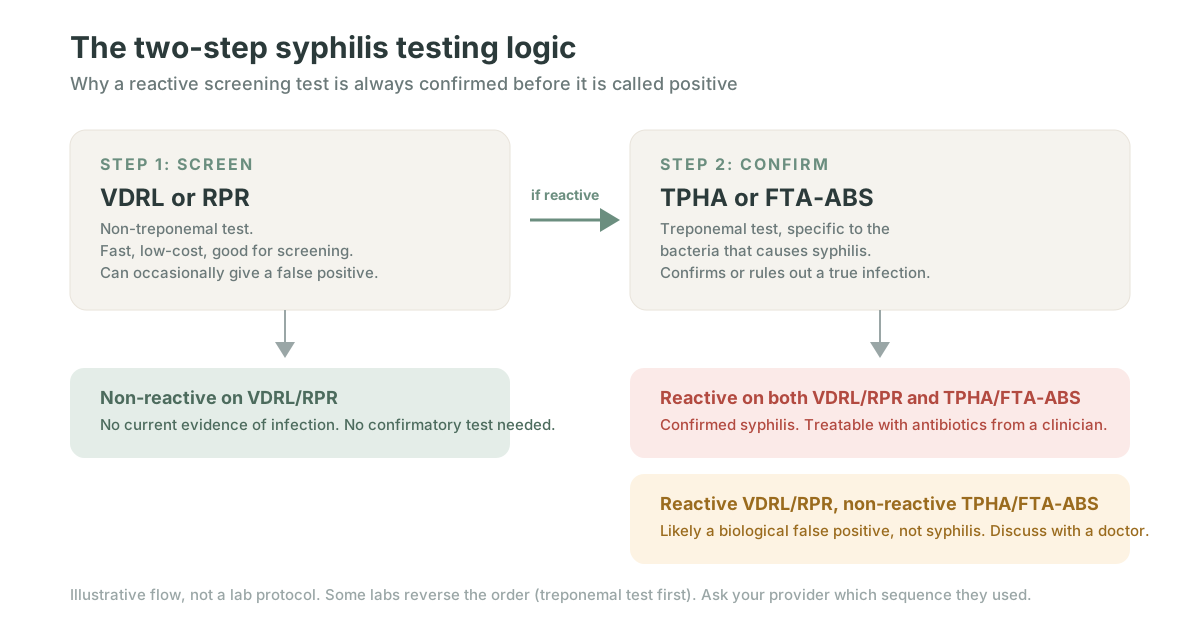
Syphilis testing is usually done in two steps: a non-treponemal test (VDRL or RPR) screens first, and if that comes back reactive, a treponemal test (TPHA or FTA-ABS) confirms whether it is truly syphilis.
VDRL and RPR are cheap, fast, and widely available, which makes them well suited to screening large numbers of people. Their tradeoff is specificity: they can occasionally come back reactive for reasons that have nothing to do with syphilis, a pattern doctors call a biological false positive. TPHA and FTA-ABS are more specific to the syphilis bacteria itself, but they are typically slower and less suited to mass screening on their own. Running the specific, confirmatory test only on samples that already screened reactive is what gives an accurate result without needing the more involved test on everyone.
See the Infectious Diseases panel, including syphilis testing, BetterHealth Africa offers
How to read your syphilis test results
Reading a syphilis test result means looking at both parts of the panel together, not just the screening line, since the combination of VDRL/RPR and TPHA/FTA-ABS is what tells you what is going on.
- Non-reactive VDRL/RPR: no current evidence of syphilis. No confirmatory test is usually needed.
- Reactive VDRL/RPR, reactive TPHA/FTA-ABS: syphilis is confirmed. This is treatable with antibiotics.
- Reactive VDRL/RPR, non-reactive TPHA/FTA-ABS: this pattern suggests a biological false positive rather than true syphilis, though your doctor may want to repeat testing to be sure.
- Reactive TPHA/FTA-ABS after previously treated syphilis: treponemal antibodies can stay detectable for years, sometimes life, even after a past infection was fully cured. This is why your treatment history matters when a clinician interprets the result, and why VDRL/RPR titres, not TPHA alone, are typically used to track response to treatment.
A lab report is not the same as a diagnosis
Your result sits alongside your symptoms, history, and, where relevant, prior treatment. A reactive line on a lab report is a starting point for a clinician's assessment, not the final word by itself.
What a positive syphilis test result means
A confirmed positive syphilis result, reactive on both the screening and the confirmatory test, means an active or recent Treponema pallidum infection, and it is treatable with antibiotics prescribed by a clinician.
Syphilis moves through stages if it is not treated, starting with a painless sore that can be easy to miss, then a rash and flu-like symptoms weeks later, then a long quiet period with no symptoms at all before late-stage complications can appear years on. The stage a person is in when they test can affect the exact treatment plan, which is a decision for the clinician managing your care, not something to work out from a lab report alone. What matters most is that syphilis caught and treated early responds very well to treatment, and getting tested is what makes early treatment possible in the first place.
Why VDRL/RPR can occasionally be falsely positive
A reactive VDRL or RPR result does not always mean syphilis, because these non-treponemal tests measure a general antibody response that a handful of other conditions can occasionally also trigger.
Conditions that have been associated with a biological false positive VDRL/RPR result include malaria and certain other infections, pregnancy, and some autoimmune conditions. This caveat matters particularly across malaria-endemic parts of Africa, where a reactive screening test in someone with an active or recent malaria infection may not reflect syphilis at all. This is precisely why the confirmatory treponemal test exists: a reactive screen paired with a non-reactive TPHA or FTA-ABS points away from true syphilis rather than toward it. If your screening result comes back reactive, try not to treat it as a diagnosis until the confirmatory step is done.
Syphilis testing in pregnancy: protecting mother and baby
Routine syphilis screening is a standard part of antenatal care because untreated syphilis in pregnancy can pass from mother to baby, and treating it early in pregnancy is what prevents that from happening.
Congenital syphilis, passed from mother to baby during pregnancy, can lead to serious outcomes including stillbirth, low birth weight, and lasting health problems in the baby if the infection is not treated in time. This is why syphilis testing is usually bundled into the standard antenatal blood work offered at a first pregnancy visit across Africa, alongside tests like blood group, HIV, and hepatitis B. A reactive result in pregnancy is not a reason to panic; it is a reason to start treatment promptly, under the guidance of the antenatal care team, since treating the mother early in pregnancy is highly effective at protecting the baby.
Antenatal blood tests: the full first-visit panel explained
Partner testing and syphilis: why couples test together
Because syphilis is passed on through sexual contact, a confirmed result in one partner is a reason for the other partner to test too, so that both can be treated if needed and reinfection does not slip back and forth between them.
This is also why syphilis screening sits inside most premarital and pre-family-planning testing panels across Nigeria, Ghana, and elsewhere on the continent, usually alongside HIV and hepatitis testing. Testing together before marriage or before trying to conceive gives a couple accurate, shared information rather than one partner guessing at the other's status. None of this needs to carry stigma. Syphilis is a bacterial infection like many others, and it responds well to treatment when it is caught.
Premarital screening: the tests every couple should do before marriage
HIV testing explained: window periods, test types, and reading your result
Syphilis test kits and where to get tested
Syphilis testing is usually done with a blood sample drawn at a clinic or lab, though rapid point-of-care kits using a finger-prick sample are also used in some settings, particularly for antenatal screening where a fast result matters.
A rapid test kit typically gives a preliminary screening result in a matter of minutes, which is useful for getting a first read quickly, but a reactive rapid test still needs the same confirmatory treponemal testing described above before it is treated as a diagnosis. Pricing for syphilis testing varies by lab, by whether it is bundled into a wider panel such as premarital or antenatal screening, and by location, so it is worth checking current pricing directly with your testing provider rather than relying on a figure quoted elsewhere.
What to do with your syphilis test result
- If your VDRL/RPR is non-reactive, no further action is usually needed unless you have ongoing symptoms or a recent known exposure, in which case ask your doctor about retesting.
- If your VDRL/RPR is reactive, do not treat it as a diagnosis on its own. Ask for or confirm the follow-up TPHA/FTA-ABS result before drawing any conclusions.
- If both tests are reactive, speak with a doctor promptly about starting antibiotic treatment. Syphilis caught early responds very well to treatment.
- If you are being treated, ask your clinician about the retesting schedule used to confirm treatment worked, since VDRL/RPR titres are typically what is tracked over time, not a single repeat test.
- Tell any current sexual partner if you test positive, so they can get tested and treated too. This protects them and reduces the chance of reinfection passing back to you.
- If you are pregnant, keep to your antenatal testing schedule. Syphilis screening early in pregnancy is what allows treatment in time to protect the baby.
- Your result is confidential. You decide who else you tell, and testing is never a judgment on your relationship or your past.
Frequently asked questions
What does a reactive syphilis test mean?+
A reactive result on the first screening test (VDRL or RPR) means your sample showed the antibody response the test looks for. It is not a diagnosis by itself. It needs to be followed by a confirmatory treponemal test (TPHA or FTA-ABS) before it is treated as confirmed syphilis.
Can a syphilis test be positive without an actual infection?+
Yes. VDRL and RPR are non-treponemal screening tests, and they can occasionally give a biological false positive linked to conditions such as malaria and certain other infections, pregnancy, or some autoimmune conditions. This is why a reactive screening result is followed by a more specific confirmatory test, TPHA or FTA-ABS, before syphilis is confirmed.
What is the difference between VDRL, RPR, TPHA, and FTA-ABS?+
VDRL and RPR are non-treponemal tests used for initial screening; they are fast and low-cost but not specific to syphilis alone. TPHA and FTA-ABS are treponemal tests, specific to antibodies against Treponema pallidum, and are used to confirm a reactive screening result.
Is syphilis curable?+
Yes. Syphilis is a bacterial infection and is curable with antibiotics, particularly when caught and treated early. The specific antibiotic and course depend on the stage of infection and other individual factors, which is a decision for the treating clinician.
How soon should I retest after syphilis treatment?+
Retesting after treatment usually tracks the VDRL/RPR titre over time rather than repeating a single test once, since a falling titre is how a clinician confirms treatment worked. Your clinician will set the exact retesting schedule based on your specific case.
Should my partner get tested if I test positive for syphilis?+
Yes. Because syphilis passes through sexual contact, a confirmed positive result is a reason for any current sexual partner to get tested too, so both partners can be treated if needed and reinfection does not pass back and forth.
Why is syphilis testing done in pregnancy?+
Untreated syphilis in pregnancy can pass from mother to baby and lead to serious outcomes, including stillbirth or lasting health problems in the baby. Routine antenatal syphilis screening exists so that a reactive result can be treated early in pregnancy, which is highly effective at protecting the baby.
This article is general health education, not medical advice. It is not a substitute for diagnosis or treatment by a qualified healthcare professional. Syphilis testing results, staging, and treatment depend on individual factors including symptoms, exposure history, and prior treatment. Always discuss your results with your doctor.