Premarital Screening: The Tests Every Couple Should Do Before Marriage
Premarital screening is a set of blood tests a couple takes before their wedding to find out things about their health that matter once they start building a life, and often a family, together. It is not one single test. It is usually a small panel: a genotype test, a blood group and Rh factor check, and screening for a handful of infectious diseases.
None of these tests can tell a couple whether they should get married. What they can do is put real information on the table before the wedding rather than after, so any decisions that follow, from family planning to routine antenatal care, start from facts instead of guesswork.
What premarital screening includes
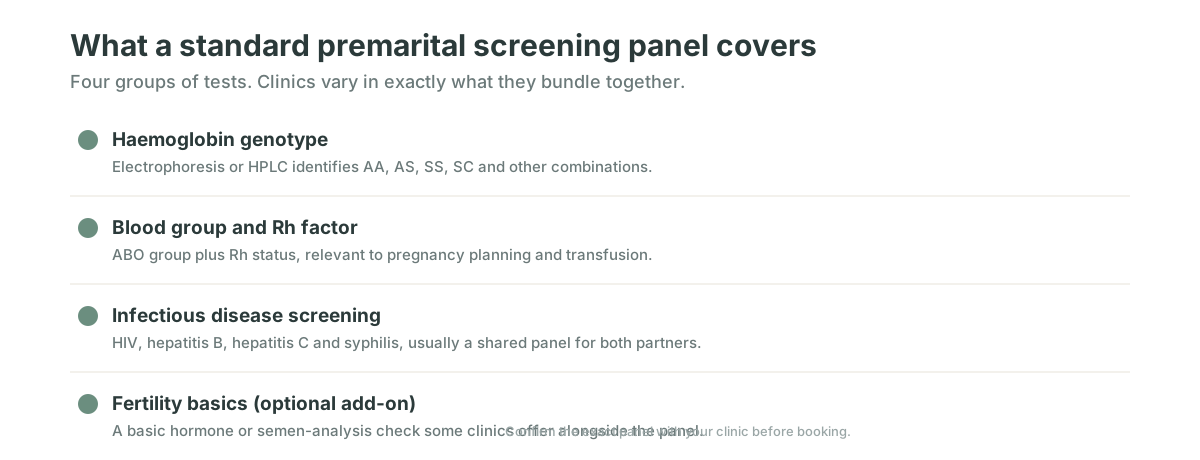
Premarital screening is a set of blood tests, usually covering haemoglobin genotype, blood group and Rh factor, and infectious disease screening, that a couple takes before marriage to understand health risks before starting a family together.
Exact panels vary by clinic and by country, but the core group is fairly consistent across Nigeria and Ghana. Some clinics bundle in basic fertility questions or a hormone check as well, though that is a separate, more involved process than the core panel below.
- Haemoglobin genotype test (electrophoresis or HPLC): identifies AA, AS, SS, SC and other haemoglobin combinations.
- Blood group and Rh factor: your ABO blood group plus whether you are Rh positive or Rh negative.
- Infectious disease screening: usually HIV, hepatitis B, hepatitis C and syphilis, sometimes with others added.
- Fertility basics (optional, clinic-dependent): a basic hormone panel or, less commonly, a semen analysis.
Why premarital screening is becoming more common in Nigeria and Ghana
Premarital screening has become increasingly common in Nigeria and Ghana over the past two decades, actively promoted by religious institutions, community health campaigns, and, in some churches, treated as a step couples are expected to take before a wedding can proceed.
Church-based screening drives were among the earliest large-scale efforts to normalise this, particularly around genotype testing, and the practice has since spread beyond religious settings into general premarital counselling offered by hospitals, private clinics, and community health programmes. The reasoning behind the push is straightforward: sickle cell disease and Rh incompatibility are both preventable causes of serious illness in children, and both can be planned around when a couple knows their status ahead of time.
Screening is about informed choice, not permission
Nothing in a premarital screening result should be read as approval or disapproval of a marriage. It is medical information for a couple to understand and discuss together, on their own terms, ideally with a genetic counsellor or doctor if a result raises a specific risk.
Genotype compatibility: what AA, AS and SS mean for a couple
Genotype compatibility testing shows whether a couple's combination of haemoglobin genes could result in a child with sickle cell disease, and Nigeria has the highest number of children born with sickle cell disease of any country in the world, a burden widely documented in WHO and global public health literature.
The genetics behind this are standard and well established. Everyone inherits one haemoglobin gene from each parent. A genotype of AA means no sickle gene at all. AS, known as sickle cell trait, means one sickle gene and one normal gene, and it usually causes no symptoms. SS, sickle cell disease, means a sickle gene from both parents, and it is a serious, lifelong condition.
- AA + AA, or AA + AS: no child from this pairing can inherit sickle cell disease.
- AS + AS (both partners carry the trait): each pregnancy independently carries roughly a 1 in 4 chance of sickle cell disease, a 1 in 2 chance of the trait, and a 1 in 4 chance of no sickle gene at all.
- AS + SS, or SS + SS: every child inherits at least one sickle gene; some or all pregnancies will result in sickle cell disease depending on the exact combination.
These odds apply independently to every pregnancy, not just the first, and they are the same regardless of how many unaffected children a couple already has. A genotype test alone cannot tell a couple what to do with this information. What it does is turn an unknown risk into a known one, which is what makes genetic counselling and informed choice possible in the first place.
Sickle cell trait testing: the full inheritance odds, explained in detail
Blood group and Rh factor: the pregnancy angle
Blood group and Rh factor testing checks whether partners are Rh compatible, because an Rh-negative mother carrying an Rh-positive baby can develop antibodies that put a later pregnancy at risk if the condition is not monitored and managed.
Rh factor is a protein some people have on their red blood cells (Rh positive) and some do not (Rh negative). If an Rh-negative woman is pregnant with an Rh-positive baby, her immune system can, particularly from a second pregnancy onward, start producing antibodies against the baby's blood type. This is standard obstetric knowledge, and it is also well managed: an injection called anti-D immunoglobulin, given at set points in pregnancy and after delivery, prevents the antibody response in most cases when given on schedule.
Rh incompatibility is manageable, not a reason to panic
Knowing a couple's Rh status ahead of pregnancy lets an antenatal care team plan for it from the first visit rather than discovering it midway through a pregnancy. With appropriate monitoring and, where needed, anti-D injections, Rh-negative women routinely carry healthy pregnancies.
Blood group and Rh factor explained in full, including the transfusion angle
Infectious disease screening: HIV, hepatitis B, hepatitis C, syphilis
Infectious disease screening for HIV, hepatitis B, hepatitis C and syphilis lets a couple know their status before marriage, so they can make informed choices together about treatment, prevention and family planning.
None of these conditions are a reason for stigma, and none of them make marriage or parenthood impossible. HIV is managed with antiretroviral treatment, which for many people on consistent treatment brings the virus down to an undetectable level. Hepatitis B and hepatitis C are both manageable with the right monitoring and, where indicated, treatment, and hepatitis B has an effective vaccine that protects a partner who is not already infected. Syphilis is curable with antibiotics when caught and treated. What matters is knowing the status of both partners early enough to act on it, including protecting a partner and planning safely for pregnancy where relevant.
HIV testing explained: window periods, test types, and reading your result
Hepatitis B test (HBsAg): screening, results, and next steps
Fertility basics some couples add to the panel
Some premarital packages include basic fertility questions or tests, but a full fertility work-up is a separate, more detailed process that goes beyond what a standard premarital panel covers.
A basic add-on might mean a hormone panel or a general reproductive health conversation with a doctor. It is not the same as a full fertility assessment, which typically involves more targeted hormone testing, imaging, and, for men, semen analysis, and is usually pursued separately if a couple has a specific concern or has been trying to conceive without success. If fertility is a specific worry, it is worth raising directly with a doctor rather than assuming the standard premarital panel covers it.
What to do with your premarital screening results
A premarital screening result is information for a couple to discuss together, ideally with a genetic counsellor or doctor if any result raises a specific risk, not an instruction on whether to marry.
- Get tested well before the wedding, not the week of. This gives time to have an unrushed conversation and, if needed, see a genetic counsellor.
- Ask for your confirmed genotype (AA, AS, SS, SC or other) from haemoglobin electrophoresis or HPLC, not just a quick sickling screen, which cannot distinguish trait from disease.
- If both partners carry the sickle cell trait (AS), or if either result is SS or SC, speak with a genetic counsellor or a doctor experienced in sickle cell disease. They can walk through the specific odds for your combination and the options available.
- If either partner is Rh negative, mention it to your antenatal care provider early in any future pregnancy so monitoring and, if needed, anti-D injections can be planned on schedule.
- If an infectious disease result is positive, get it confirmed and start any recommended treatment or monitoring. This protects both partners and any future children, and it does not need to be a barrier to marriage or family planning.
- Keep the results private between the two of you and whoever you choose to involve, such as a counsellor or doctor. This is sensitive medical information, and how it is shared is your decision.
See the premarital screening panel BetterHealth Africa offers
View BetterHealth Africa test pricing
Frequently asked questions
What tests are done before marriage?+
A standard premarital screening panel usually covers a haemoglobin genotype test, blood group and Rh factor, and infectious disease screening for HIV, hepatitis B, hepatitis C and syphilis. Some clinics add basic fertility questions or tests as an optional extra. The exact list varies by clinic, so it is worth confirming before you book.
Why does genotype matter for premarital screening?+
Genotype testing shows whether a couple's combination of haemoglobin genes could result in a child with sickle cell disease. If both partners carry the trait (AS), each pregnancy independently carries roughly a 1 in 4 chance of sickle cell disease. Nigeria has the highest number of children born with sickle cell disease of any country in the world, which is part of why genotype testing is emphasised there.
Can a couple still marry if both have the sickle cell trait?+
Yes. Carrying the sickle cell trait does not prevent a couple from marrying or having children. Knowing the odds ahead of time lets a couple make an informed choice and, if they wish, involve a genetic counsellor or plan for options such as early prenatal testing. The decision belongs to the couple, not to a test result.
Is premarital screening required by law in Nigeria or Ghana?+
No national law in Nigeria or Ghana requires premarital screening, though some religious institutions, particularly certain churches, ask couples to complete it before a wedding ceremony. Its growing use is driven mainly by community and religious promotion rather than legal requirement.
This article is general health education, not medical advice. It is not a substitute for diagnosis, genetic counselling, or treatment by a qualified healthcare professional. Premarital screening results and their implications depend on your specific test results and circumstances. Always discuss your results with your doctor or a qualified genetic counsellor, and remember that no test result should be used to pressure a decision about whether to marry.