Health Screening in Kenya: What to Test and How Often
Kenya's health picture has split in two directions at once. Conditions like high blood pressure and diabetes are climbing as more people move to towns, eat differently and sit more. At the same time, malaria, HIV and other infections that Kenya has spent decades fighting have not disappeared. A useful screening plan has to cover both fronts, not just the one that gets more attention in health campaigns.
Why routine screening matters in Kenya
Kenya carries a double burden of disease: non-communicable conditions such as hypertension and diabetes are rising fast as the country urbanises, while infectious diseases including malaria, HIV and typhoid remain a serious and ongoing concern in many parts of the country.
High blood pressure and high blood sugar rarely cause symptoms until they have already done damage to the heart, kidneys or eyes. That is the same pattern seen worldwide, and it is exactly why screening matters more than waiting to feel unwell. On the infectious disease side, malaria and typhoid can move quickly from mild symptoms to a serious illness, and HIV can go unnoticed for years without a test. Screening is the tool that catches all of these while there is still time to act, whether that means starting treatment early or simply confirming that a fever is not something more serious.
The core screening panel for adults in Kenya
A sensible baseline panel for most Kenyan adults covers blood pressure, blood sugar, cholesterol, a full blood count, HIV testing and cervical screening for women, with malaria and typhoid testing added where regionally or clinically relevant.
- Blood pressure: cheap, quick, and the single highest-value check for heart and stroke risk.
- Blood sugar (fasting glucose and HbA1c): catches prediabetes and diabetes before symptoms appear.
- Lipid profile (cholesterol and triglycerides): a core marker of cardiovascular risk.
- Full blood count: picks up anaemia, infection and a range of blood disorders.
- HIV test: routine, private and worth repeating on a schedule your clinician sets.
- Cervical screening (Pap smear or HPV test) for women: catches slow-growing precancerous changes years before they become cancer.
- Malaria test: relevant if you have a fever or live in or travel through an endemic region.
- Typhoid test: worth considering with persistent fever, especially where water and sanitation are less reliable.
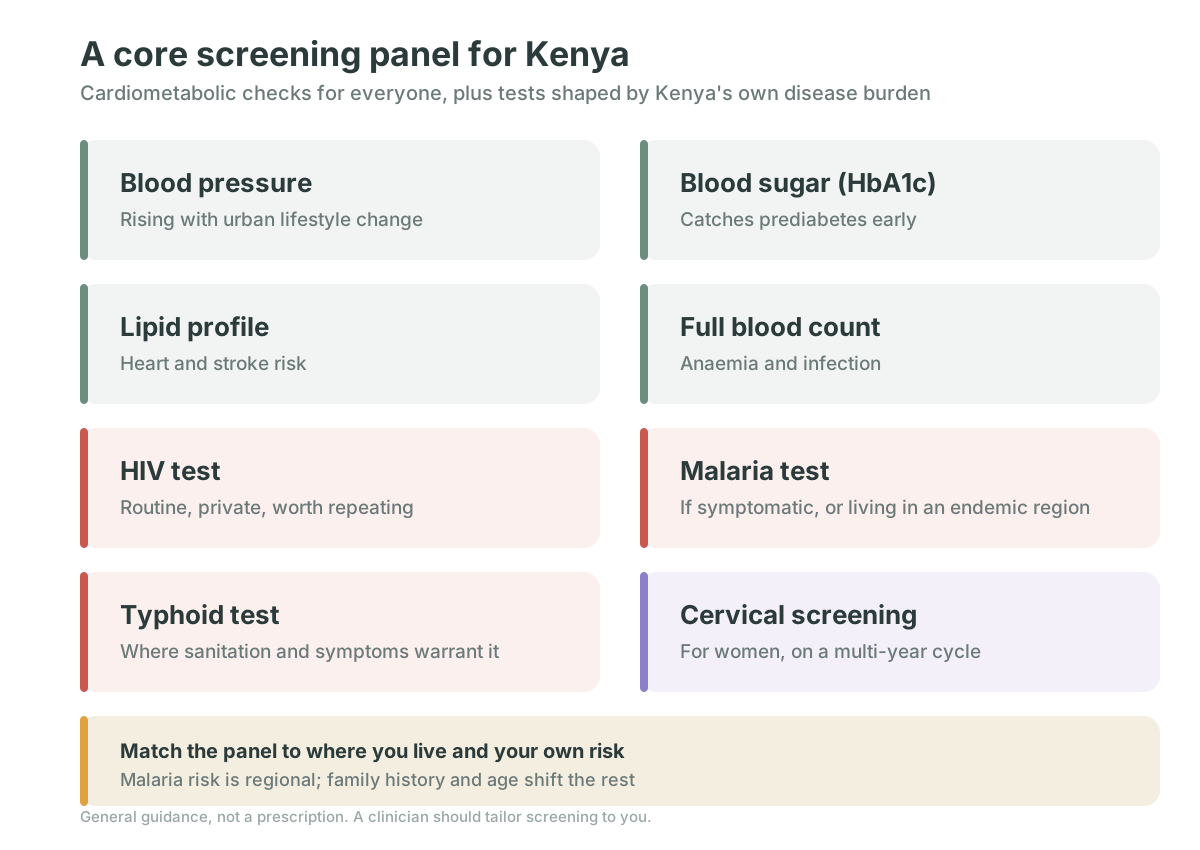
Match the panel to where you live
Not every test on this list applies equally to everyone. Malaria risk in Kenya depends heavily on geography, and family history changes how urgently you should screen for diabetes or hypertension. Use this panel as a starting point for a conversation with a clinician, not a fixed checklist.
Malaria, HIV, typhoid and cervical cancer: conditions with distinctly Kenyan weight
Malaria risk in Kenya depends heavily on where you live: it is endemic in much of western Kenya and along the coast, far less common in the cooler highlands around Nairobi and central Kenya, and this geography should shape whether malaria testing belongs in your routine screening at all.
If you live in or frequently travel to a malaria-endemic area, a rapid diagnostic test or blood film is worth having on hand for any unexplained fever, since malaria can worsen quickly without treatment. If you live somewhere with little to no local transmission, malaria testing matters mainly around travel rather than as a routine screen.
Read next: how malaria testing works and what your result means
HIV testing carries added weight in Kenya given the country's meaningful national HIV prevalence, which is among the higher rates in the region even as new infections have fallen substantially over the past two decades through expanded testing and treatment.
An HIV test is simple, private, and something most adults benefit from repeating periodically rather than taking once and assuming the result still holds years later. Knowing your status early means treatment, where needed, can start before the virus causes lasting damage, and it protects partners too.
Read next: how HIV testing works and what the window period means
Cervical cancer remains one of the most diagnosed cancers among Kenyan women even though it is also one of the most preventable, which is why cervical screening deserves a permanent place on the routine panel for women rather than being treated as optional.
The gap between how preventable cervical cancer is and how often it is still diagnosed late comes down mostly to screening coverage and access to the HPV vaccine, not to anything biological. A Pap smear or HPV test, done on the schedule your clinician recommends, catches the slow cell changes that lead to cervical cancer years before they become dangerous.
Read next: Pap smear and HPV testing explained
Typhoid also deserves a mention. It spreads through contaminated food and water, so it stays a real concern anywhere water and sanitation infrastructure is inconsistent, which includes parts of both urban and rural Kenya. A persistent fever that does not resolve in a day or two is a reasonable trigger for a typhoid test alongside a malaria test, since the two can look similar early on.
How often to screen, by age and risk
Healthy adults in their twenties and thirties generally do well with a baseline screen followed by a repeat every one to three years, while adults over 40, or anyone with a family history of diabetes, hypertension or cancer, should screen earlier and more often.
- Ages 18 to 39 with no known risk factors: a baseline panel, then repeat every two to three years.
- Ages 40 and above: a fuller panel every one to two years, since risk for most non-communicable conditions rises with age.
- Anyone with a family history of diabetes, hypertension, heart disease or certain cancers: screen earlier and more often, guided by a doctor rather than a fixed calendar.
- Women: cervical screening on the multi-year cycle your clinician recommends, starting in your twenties, separate from the general adult panel above.
- Blood pressure specifically: worth checking at least once a year for every adult, since it is quick, cheap and catches a condition that otherwise gives no warning.
Where and how screening happens in Kenya
Kenyans can access health screening through public health facilities, NHIF or SHA-linked care, private hospitals and laboratories, and a growing number of home-collection services, and each route involves a different trade-off between cost, wait time and convenience.
Public facilities remain the most accessible option for many people, though wait times and the depth of the panel on offer can vary widely by county and by facility. Kenya's national health insurance has been shifting from NHIF toward the Social Health Authority, and what preventive screening is actually covered depends on your specific plan and facility, so it is worth confirming directly with your provider rather than assuming a test is included. Private hospitals and standalone laboratories tend to offer faster turnaround and a broader test menu, usually at a higher out-of-pocket cost. Home-collection services, including what BetterHealth Africa offers, are a newer option that brings the blood draw to you and returns results without a clinic visit, which matters most for people who find it hard to take time off work or reach a facility during opening hours.
See the biomarkers and panels BetterHealth Africa tests
Frequently asked questions
What tests should Kenyans get regularly?+
Most adults benefit from a baseline panel covering blood pressure, blood sugar, cholesterol and a full blood count, plus an HIV test on a periodic schedule. Women should add cervical screening, and anyone in a malaria-endemic region or with a persistent fever should have malaria and, where relevant, typhoid testing available.
How often should you get a health checkup in Kenya?+
Healthy adults in their twenties and thirties can usually space a full checkup every one to three years, while adults over 40 or those with a family history of diabetes, hypertension or cancer should screen more often. Blood pressure is worth checking at least once a year regardless of age.
What does a full checkup in Kenya typically involve?+
A full checkup usually starts with a history and physical exam, then blood pressure, a blood draw for glucose, cholesterol and a full blood count, and an HIV test. Women typically have cervical screening added, and malaria or typhoid tests are included if there are symptoms or regional risk. The exact panel varies by provider.
Does NHIF or SHA cover health screening in Kenya?+
Coverage for preventive screening varies by plan, facility and where Kenya's transition from NHIF to the Social Health Authority currently stands, so there is no single answer that applies to everyone. Confirm directly with your insurer or facility what routine screening is included before assuming a test is covered.
Why do cervical cancer and HIV screening matter specifically in Kenya?+
Cervical cancer remains one of the most diagnosed cancers among Kenyan women despite being highly preventable with regular screening, and Kenya's HIV prevalence is among the higher rates in the region, which makes routine testing for both a higher-value habit here than in places where these conditions are rarer.
Is malaria testing something every Kenyan adult needs?+
Not as a routine screen. Malaria risk depends heavily on geography: it is endemic in much of western Kenya and the coast, and far less common in Nairobi and the central highlands. Testing matters most with an unexplained fever or travel to or from an endemic area, rather than as part of a standard annual panel.
This article is general health education, not medical advice. It is not a substitute for diagnosis or treatment by a qualified healthcare professional. Screening choices and intervals should be tailored to your age, history, region and risk factors by a doctor or qualified clinician.