Pap Smear and HPV Testing: Cervical Cancer Screening Explained

A Pap smear and an HPV test are often done on the same visit, sometimes even the same swab, but they are not the same test. One looks at your cervical cells directly. The other looks for the virus that causes most of the cell changes in the first place. Knowing which is which makes your result, and what happens next, much easier to follow.
Cervical cancer screening is one of the clearer wins in preventive health. Caught early, the changes that lead to cervical cancer are slow-growing and highly treatable, which is exactly why regular screening matters more here than it does for cancers that give little warning.
What a Pap smear actually tests for
A Pap smear, also called a Pap test or cervical smear, looks at a small sample of cells taken from the cervix under a microscope, checking for abnormal or precancerous changes before they ever become cancer.
During the test, a clinician uses a speculum to see the cervix and gently collects cells with a small brush or spatula. The sample goes to a lab, where a specialist examines the cells for shape and pattern changes that suggest something worth watching or treating. The procedure itself usually takes a couple of minutes, and mild cramping or spotting afterward is common and normal.
What an HPV test checks for, and how it differs from a Pap smear
An HPV test checks the same cervical sample for the genetic material of high-risk human papillomavirus strains, the infection now established as the cause of almost all cervical cancer, rather than looking at the cells themselves.
HPV itself is extremely common. It is one of the most widespread sexually transmitted infections there is, and most people who are sexually active will come into contact with some strain of it at some point in their lives. Most infections clear on their own within a year or two without ever causing a problem. A small number of high-risk strains, if an infection persists for years, are what can slowly cause the cell changes a Pap smear is designed to catch. Having HPV is not a reflection of anyone's choices or character. It is simply a common virus, and testing for it is a routine, judgment-free part of preventive care.
The difference in one line
A Pap smear looks at your cells. An HPV test looks for the virus. Both matter, and both are usually taken from the same sample.
Co-testing and HPV-primary screening: how the two are used together
Many clinics now run a Pap smear and an HPV test on the same sample, an approach called co-testing, while others use an HPV test as the first-line, or primary, screening tool on its own, with a Pap smear added only if the HPV result comes back positive.
Which approach your clinic uses depends on local guidelines, available lab capacity, and your age. Neither approach is wrong. Both are built around the same idea: find high-risk HPV or the cell changes it can cause early enough that treatment, if needed, is simple.
See the women's health and cervical screening panel BetterHealth offers
How often should you get screened
Screening guidelines generally recommend starting somewhere between the mid-twenties and age thirty, depending on the test used, and repeating every few years based on age, test type, and prior results, though the exact schedule varies by country and by clinic, so the interval that applies to you is worth confirming with your own clinician.
As a rough shape, screening is anchored to age rather than to a life event. The World Health Organization recommends primary HPV-DNA testing from age 30 in the general population, and some national programmes begin cervical screening from around age 25, continuing on a multi-year cycle rather than annually, since cervical cell changes typically develop slowly over many years. Women living with HIV are an important exception, and the guidance is deliberately more cautious for them: WHO advises starting at age 25 and rescreening every three to five years, because a persistent HPV infection is more likely to progress when the immune system is weakened. Your own history, including any past abnormal results or previous HPV infections, can also shorten the interval. There is no single number that fits everyone, so this is a conversation to have with a clinician rather than a rule to look up once and never revisit.
Why cervical cancer is a bigger burden for African women
WHO and global cancer registries report that sub-Saharan Africa carries some of the highest cervical cancer incidence and mortality rates in the world, a gap driven largely by low screening coverage and limited access to the HPV vaccine rather than by any biological difference.
Cervical cancer is one of the most preventable cancers there is when screening and vaccination are both available and used. Where screening programmes are patchy, symptoms often only surface once the disease is already advanced, at which point treatment is harder and outcomes are worse. That gap is closing gradually as more countries, including Ghana, expand access to cervical screening and add the HPV vaccine to national immunisation programmes, but access still varies widely by region and by facility.
Another private, judgment-free screening test worth knowing about: HIV testing explained
Reading your result: normal, unclear, and abnormal
A cervical screening result generally falls into one of three categories, normal, unclear (often labelled ASC-US, short for atypical squamous cells of undetermined significance), or abnormal, and an abnormal result does not mean cancer. It usually means your clinician wants to monitor you more closely or refer you for a closer look called a colposcopy.
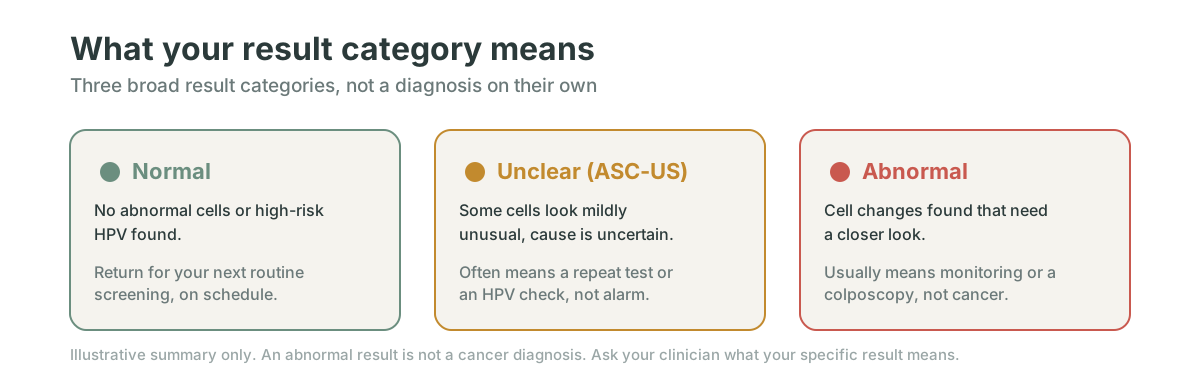
- Normal: no abnormal cells or high-risk HPV were found. Return for your next routine screening on schedule.
- Unclear (ASC-US): some cells look mildly unusual and the cause is not certain. This often means a repeat test in several months, or an HPV test if one was not already done.
- Abnormal: cell changes were found that need a closer look. This usually leads to monitoring at a shorter interval or a colposcopy, a simple procedure where a clinician examines the cervix more closely and may take a small tissue sample.
An abnormal result is not a cancer diagnosis
Most abnormal Pap smear or HPV results reflect changes that a clinician will monitor or treat well before they could ever become cancer. Very few abnormal results turn out to be cancer. A colposcopy or biopsy, not the screening test itself, is what confirms a diagnosis.
The HPV vaccine: prevention before screening is even needed
The HPV vaccine, recommended for adolescents in many national immunisation programmes, prevents infection from the HPV strains that cause most cervical cancer in the first place, which is why prevention and screening work best as a pair, not as substitutes for each other.
Vaccination is generally most effective when given before someone is exposed to HPV, which is why it is typically offered to adolescents. It is still worth asking a clinician about even if you are already sexually active or older than the usual target age, since it can still offer protection against strains you have not yet encountered. Vaccination does not remove the need for regular screening, since it does not cover every high-risk strain.
What to do with your result
- If you have never been screened and you are in the general age range your clinic recommends, book a Pap smear or HPV test rather than waiting for a symptom, since early cervical changes usually cause none.
- If your result is normal, keep it on file and return for your next screening on the interval your clinician sets.
- If your result is unclear (ASC-US), follow up on the timeline your clinician gives you. It is a prompt to recheck, not a cause for alarm.
- If your result is abnormal, ask what it specifically showed and whether a colposcopy is the recommended next step. Abnormal does not mean cancer.
- Ask your clinician whether HPV vaccination makes sense for you or for a younger family member, regardless of age or prior sexual activity.
- Keep a record of your screening dates and results, since your history shapes how often you need to be rescreened.
View BetterHealth Africa test pricing
Frequently asked questions
Does an abnormal Pap smear mean I have cancer?+
No. An abnormal result means some cervical cells looked different from what is expected, which is far more often linked to a manageable HPV-related change than to cancer. It usually leads to closer monitoring or a colposcopy, a simple follow-up examination, not a cancer diagnosis on its own.
What's the difference between a Pap smear and an HPV test?+
A Pap smear examines your cervical cells under a microscope for abnormal changes. An HPV test checks the same sample for high-risk strains of human papillomavirus, the virus that causes most of those changes. Many clinics run both together on one sample, an approach called co-testing.
How often should I get screened?+
Guidelines generally suggest starting between the mid-twenties and age thirty and screening every few years, with the World Health Organization recommending HPV testing from age 30 in the general population and from age 25 for women living with HIV. The exact interval depends on your age, test type, and prior results, and it varies by country. Ask your clinician what schedule fits your own history.
Is the HPV vaccine still useful if I'm already sexually active?+
It can still be worth having. The vaccine works best before exposure to HPV, which is why it is usually offered to adolescents, but it can still protect against strains you have not yet encountered even later in life. It does not replace the need for regular screening.
This article is general health education, not medical advice. It is not a substitute for diagnosis, counselling, or treatment by a qualified healthcare professional. Screening intervals, test choice, and follow-up after an abnormal result depend on your own history and local guidelines. Always discuss your results and next steps with a doctor or a qualified healthcare professional.