Cholera: Symptoms, Testing, and Why Rehydration Comes First
Cholera can look like an ordinary stomach bug for the first few hours and turn into a medical emergency by the end of the day. That is the single most important thing to understand about it. Most people who catch cholera have a mild illness, but the minority who develop severe disease can lose dangerous amounts of fluid within hours, which is why rehydration, not a test result, is the first thing that needs to happen. This article covers what causes cholera, how it spreads, what the symptoms look like at each stage, the warning signs that mean emergency care, and how cholera is actually confirmed.
Cholera is an acute infection caused by the bacterium Vibrio cholerae, and it spreads mainly through water or food contaminated with faecal matter, particularly where sanitation is limited
Cholera is caused by Vibrio cholerae, a bacterium that infects the small intestine and triggers the body to release large amounts of watery fluid into the gut. People pick it up mainly by drinking water or eating food that has been contaminated with faecal matter carrying the bacteria, which is why cholera clusters wherever clean water and proper sanitation are hard to come by rather than spreading evenly through a population.
Kenya's Ministry of Health has reported recurrent cholera outbreaks over the years, often in counties and settlements where flooding, disrupted piped water supply, or crowded living conditions make it easier for contaminated water to reach households. Heavy rains overwhelm drainage and pit latrines, water sources pick up contamination, and cases can rise quickly in the weeks that follow, particularly in informal settlements and areas without reliable piped water. This pattern is not unique to Kenya. It shows up anywhere sanitation infrastructure is stretched, and it is the reason public health messaging around cholera leans so heavily on safe water and handwashing rather than on any single person's individual risk.
Cholera is transmitted mainly through contaminated drinking water and food, not through casual contact with an infected person
Vibrio cholerae leaves the body in the stool of an infected person, and if that stool reaches a water source or a food supply, anyone who then drinks or eats it can become infected. The common routes are fairly specific:
- Drinking water from an unsafe or untreated source, including wells, rivers, or piped supplies contaminated after flooding or a burst sewer line
- Eating raw or undercooked shellfish or seafood harvested from contaminated water
- Eating fruit or vegetables that were washed, grown, or irrigated with contaminated water
- Food prepared or served by someone who has not washed their hands properly after using the toilet
Cholera does not spread through the air, through coughing, or through ordinary social contact the way a cold does. A person sharing a household with someone who has cholera is not at risk simply by being near them. The risk comes specifically from contaminated water or food, which is why handwashing and safe water matter so much more than distancing from an infected person.
Most cholera infections are mild or unnoticed, and when symptoms of cholera do appear they can start within hours of exposure
Symptoms of cholera can begin anywhere from a few hours to about five days after exposure, and most infections stay mild. A large share of people who ingest Vibrio cholerae have no symptoms at all or a short bout of watery diarrhoea that could pass for any other stomach upset. Where symptoms do appear, the early pattern usually includes:
- Watery diarrhoea, often sudden and frequent
- Nausea and vomiting, sometimes before the diarrhoea starts
- Mild abdominal cramps
- Little or no high fever, which is one thing that sets cholera apart from typhoid
For most people, this settles within a few days with rest and fluids. The concern is the smaller share of cases that progress further, and knowing what that looks like is worth far more than memorising the mild symptoms above.
The hallmark of severe cholera is profuse watery diarrhoea that can cause life-threatening dehydration within hours, not days
In severe cholera, diarrhoea becomes frequent and voluminous, often described as looking like cloudy rice water because it carries so little solid matter. Combined with vomiting, this can drain litres of fluid and essential salts from the body in a short space of time. A person who was walking around that morning can become dangerously dehydrated by the afternoon, which is the reason cholera is treated as a race against fluid loss rather than a routine illness to wait out.
This is also why oral rehydration matters from the first loose, watery stool, not after a diagnosis is confirmed. Waiting to see how things develop, or waiting for a test result, is the wrong instinct with a fast-moving fluid loss like this.
Signs of severe dehydration, including sunken eyes, no tears, very little or no urination, extreme thirst, or lethargy, mean a person needs emergency care immediately
Recognising these signs, and acting on them without delay, is the single most useful thing to take from this article.
This is a medical emergency, not a wait-and-see illness
Watery diarrhoea with signs of severe dehydration is an emergency. Sunken eyes, no tears when crying, very little or no urination, extreme thirst, lethargy or confusion, cold clammy skin, and a rapid weak pulse all mean a person needs hospital or clinic care immediately, for IV fluids and close monitoring, not a scheduled appointment. Start oral rehydration on the way if you can, and do not wait for a stool test result before seeking care. Small children, older adults, and anyone with an existing health condition can deteriorate faster than a healthy adult and deserve extra caution.
Cholera and typhoid can both cause serious abdominal illness in Kenya, but they are different infections confirmed with different tests
Cholera and typhoid both spread through contaminated water and food, and both can cause serious illness, which leads people to lump them together. They are not the same disease. Cholera is caused by Vibrio cholerae and typically announces itself with sudden, watery diarrhoea and little fever. Typhoid is caused by Salmonella Typhi and usually builds more gradually, with a fever that climbs over days, headache, and abdominal discomfort rather than the sudden fluid loss cholera causes. Treating either one as a guess rather than getting it tested delays the right response, whichever infection is actually responsible.
Typhoid and the Widal test: what a positive result really means
Cholera is confirmed with a stool sample tested in a laboratory, not simply by symptoms
A doctor who suspects cholera arranges for a stool sample to be sent to a proper microbiology or public health laboratory, where it can be examined by culture or a rapid dipstick test for Vibrio cholerae. Culture remains the more definitive method, since it confirms the specific bacterium and strain, which matters for outbreak response as well as individual treatment. Symptoms alone, even a textbook case of watery diarrhoea, are not enough to confirm cholera on their own.
This is a hospital or clinic matter for someone with active, severe watery diarrhoea, not a routine scheduled home blood draw. If you or someone near you has the warning signs described above, get to care first. Immediate hydration and monitoring matter more than waiting on any test result, and a treating clinician can start rehydration and supportive care while the stool sample is being processed.
Stool tests explained: what ova, parasites, and occult blood reveal
Oral rehydration is the first and most life-saving step in treating cholera, and antibiotics or IV fluids are reserved for specific situations a clinician decides on
Oral rehydration solution, a WHO-formulated mix of clean water, salts, and sugar, replaces fluid and electrolytes faster than plain water alone and is the single intervention that saves the vast majority of people with cholera, provided it is started early and continued in enough volume. This is why cholera treatment protocols the world over lead with rehydration rather than with a specific drug.
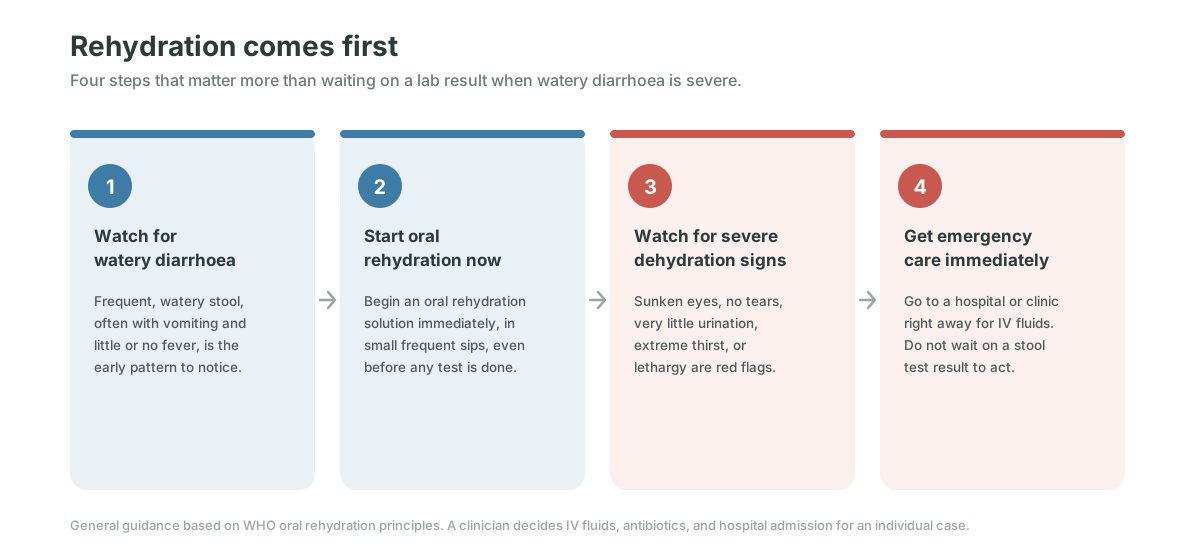
- At the first sign of watery diarrhoea, begin an oral rehydration solution in small, frequent sips, even before any test has been done.
- Keep going with fluids steadily rather than large amounts all at once, since a very unwell stomach may not tolerate a big volume in one go.
- Watch closely for the severe dehydration signs described above over the following hours.
- If severe dehydration develops, or if a person cannot keep fluids down at all, go to a hospital or clinic immediately rather than continuing to manage it at home.
For people who are severely dehydrated or cannot drink enough on their own, a hospital team gives fluids intravenously, which restores volume far faster than drinking alone can manage. Antibiotics have a supporting role too. In moderate to severe cases, a short course can shorten the illness and reduce how much fluid a person loses, but antibiotics are an add-on to rehydration, not a substitute for it, and a clinician decides whether and which antibiotic is appropriate for a given case. Self-medicating with leftover antibiotics is not a safe substitute for that assessment.
Prevention of cholera relies on safe water, sanitation and hand hygiene, and an oral cholera vaccine exists for people in high-risk settings
Most cholera prevention comes down to breaking the water and food contamination chain described earlier in this article, and none of it requires special equipment:
- Drink water that has been boiled, treated with a reliable purification method, or comes from a source you trust
- Wash hands with soap after using the toilet and before handling or eating food
- Wash fruit and vegetables in clean water, and cook seafood thoroughly
- Dispose of human waste safely and away from water sources used for drinking or washing
- During flooding or a known local outbreak, treat water sources with extra caution even if they normally seem safe
Oral cholera vaccines also exist and are used by health authorities in outbreak response and in settings with ongoing high risk, typically given as a course of two doses. A cholera vaccine is not a routine requirement for most people and is not a substitute for safe water and sanitation, but it is a real tool used deliberately where the risk of cholera is elevated. Whether it makes sense for a particular person or community is a decision for public health authorities and a treating clinician, based on local risk, not something to arrange casually on your own.
Recognising cholera symptoms early and starting rehydration immediately gives a person the best chance at a safe recovery
- If you or someone near you develops sudden watery diarrhoea, start an oral rehydration solution right away rather than waiting to see how it develops.
- Watch closely for severe dehydration signs: sunken eyes, no tears, very little or no urination, extreme thirst, lethargy, or a rapid weak pulse.
- If any of those signs appear, or if diarrhoea is frequent and watery and does not let up, go to a hospital or clinic immediately for IV fluids and monitoring.
- Do not wait for a stool test result before seeking care. A clinician can start rehydration and supportive treatment while a sample is processed.
- Once the acute illness has passed, review your household's water source and sanitation, and raise any concerns about local water safety with community health workers.
- For everyday fevers and stomach symptoms that are not this severe, routine testing for common causes can help you and a doctor rule things in or out with an actual result rather than a guess.
See the full range of tests BetterHealth Africa offers
Check BetterHealth Africa test pricing
Frequently asked questions
How is cholera transmitted?+
Cholera spreads mainly through drinking water or eating food contaminated with faecal matter carrying Vibrio cholerae. Common routes include unsafe drinking water, raw or undercooked seafood from contaminated water, produce washed with contaminated water, and food handled by someone who has not washed their hands properly. It does not spread through casual contact, coughing, or being near an infected person.
What are the first symptoms of cholera?+
Early symptoms of cholera can include watery diarrhoea, nausea and vomiting, and mild abdominal cramps, usually with little or no high fever. Symptoms can start within hours of exposure or take up to about five days, and most infections stay mild or go unnoticed entirely.
What does severe cholera look like, and when is it an emergency?+
Severe cholera causes frequent, watery diarrhoea, sometimes described as looking like cloudy rice water, along with vomiting that can drain the body of fluid and salts within hours. It is a medical emergency once dehydration signs appear: sunken eyes, no tears, very little or no urination, extreme thirst, lethargy, or a rapid weak pulse. Go to a hospital or clinic immediately if you see these signs, and start oral rehydration on the way if you can.
How is cholera actually diagnosed?+
A doctor confirms cholera by sending a stool sample to a laboratory for culture or a rapid dipstick test for Vibrio cholerae. Symptoms alone are not enough to confirm it. For someone with active, severe watery diarrhoea, getting to care and starting rehydration matters more than waiting on the test result, since treatment can begin while the sample is processed.
What is the treatment for cholera, and do antibiotics cure it?+
Oral rehydration solution is the first and most important treatment, since it replaces the fluid and salts cholera drains from the body. Severe dehydration needs IV fluids in a hospital setting. Antibiotics can shorten the illness in moderate to severe cases, but they support rehydration rather than replace it, and a clinician decides whether and which antibiotic fits a given case.
Is there a vaccine for cholera?+
Yes. Oral cholera vaccines exist and are typically given as a two-dose course. Health authorities use them in outbreak response and in settings with ongoing high risk. A cholera vaccine is not a routine requirement for most people and does not replace safe water, sanitation, and hand hygiene, but it is a genuine prevention tool used where the risk is elevated.
Does BetterHealth Africa test for cholera?+
Cholera is confirmed with a stool sample sent to a proper microbiology or public health laboratory, and that process belongs to hospital or clinic care for someone with active, severe watery diarrhoea, not a routine home blood draw. If you or someone near you has watery diarrhoea with any severe dehydration signs, go to a hospital or clinic immediately rather than arranging a scheduled test. BetterHealth Africa's home testing is built for routine screening and common conditions, which is the right fit once the acute illness has passed and any follow-up questions come up.
This article is general health education, not medical advice. It is not a substitute for diagnosis or treatment by a qualified healthcare professional. Cholera can cause severe dehydration within hours and can be life-threatening without prompt treatment. If you or someone else has watery diarrhoea with signs of severe dehydration, such as sunken eyes, no tears, very little or no urination, extreme thirst, or lethargy, seek emergency hospital or clinic care immediately and begin oral rehydration if you can, rather than waiting or self-managing at home.