Stool Test: What Ova, Parasites, and Occult Blood Reveal
"Bring us a stool sample" is one of the most common instructions handed out at clinics across Africa, usually with little explanation of what happens to it next. A stool test is not one single test. It is a small family of tests that all use the same sample but look for very different things, from worms to hidden blood to the bacteria behind a stubborn bout of diarrhoea. Knowing which one you have been given, and why, makes the result far easier to understand.
What a stool test checks for
A stool test examines a sample of your faeces in a laboratory to look for parasites, hidden blood, infection, or signs of digestive disease that are not visible to the naked eye.
Your stool carries a surprising amount of information about your digestive system. A trained technician can find parasite eggs and larvae under a microscope, detect blood too faint to see, grow disease-causing bacteria from the sample, or pick up specific markers left behind by an infection. Doctors order stool tests for persistent diarrhoea, unexplained abdominal pain, weight loss, blood in the stool, suspected worms, or as part of a wider work-up when a cause is not obvious from symptoms alone.
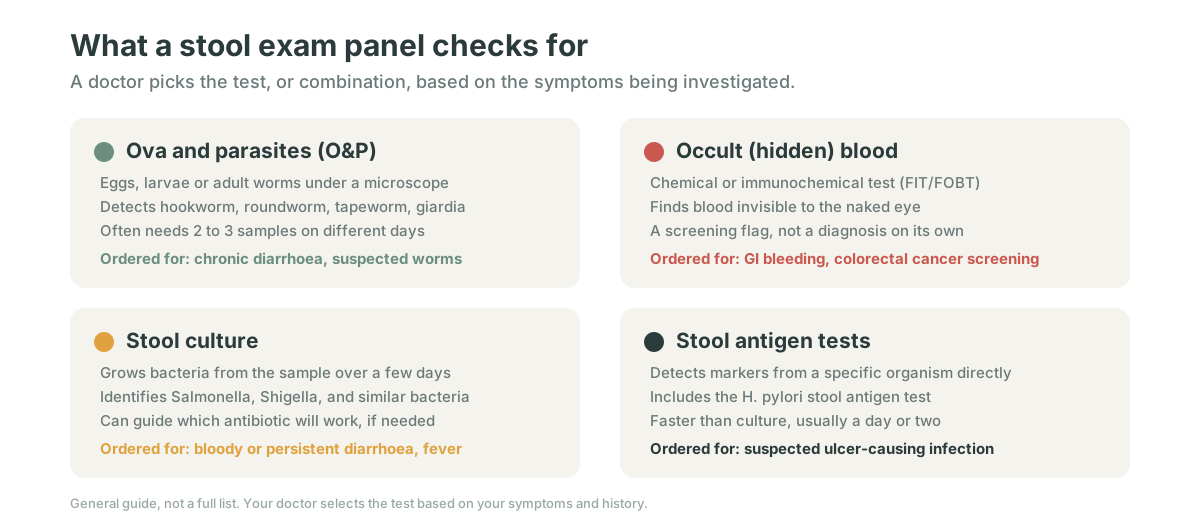
Types of stool tests: ova and parasites, occult blood, culture, and antigen tests
Stool tests fall into a handful of main types, and which one your doctor orders depends on what they are trying to rule in or rule out.
- Ova and parasites (O&P) exam: a technician examines the sample under a microscope for parasite eggs, larvae, or adult worms. Because parasites can shed intermittently, doctors often ask for two or three samples on different days rather than relying on one.
- Occult (hidden) blood test: a chemical or immunochemical test that flags blood in the stool that is not visible to the eye. This is the test behind colorectal cancer screening programmes in many countries.
- Stool culture: the sample is placed in conditions that let disease-causing bacteria grow, which can take a few days but identifies the exact organism responsible for an infection.
- Stool antigen tests: these detect protein markers from a specific organism directly, without needing to grow it. The H. pylori stool antigen test, used to check for the stomach bacterium linked to ulcers, is one well-known example.
- Routine stool examination: a broader look that can include appearance, consistency, pH, and the presence of fat, mucus, or undigested food, alongside a check for parasites.
The H. pylori stool antigen test, explained
How to collect a stool sample properly
A stool sample collected the wrong way, contaminated with urine or water, or left too long before testing, can produce a misleading result no matter how good the laboratory is.
- Use the container your clinic or lab gives you. It is usually a small, clean, wide-mouthed pot with a tight lid, sometimes with a scoop built into the cap.
- Collect the sample without mixing it with urine or toilet water. A common trick is to pass stool onto a clean sheet of plastic wrap laid across the toilet bowl, or into a dry, clean container placed inside the toilet.
- Use the scoop or a clean stick to transfer a small amount, usually about a thumb-sized portion, into the container. For a suspected parasite exam, include any part of the stool that looks unusual, such as visible mucus or blood.
- Close the lid tightly and label the container with your name and the date and time of collection.
- Deliver the sample to the lab as soon as possible, ideally within an hour, since parasites and their eggs can degrade once outside the body. If a delay is unavoidable, ask the lab whether refrigeration or a preservative container is needed.
- Avoid collecting during your period, and tell the lab if you are currently bleeding from haemorrhoids, since either can affect an occult blood result.
Do you need to fast before a stool test?
Most routine stool tests need no fasting and no special diet, though a few tests, particularly occult blood testing, ask you to avoid certain foods or medications beforehand.
For an occult blood test, some labs ask patients to avoid red meat, certain vegetables, and high-dose vitamin C for a few days before the test, and to hold off on aspirin or other drugs that can irritate the stomach lining, since these can occasionally cause a false result on older-style chemical tests. Newer immunochemical (FIT) tests are less affected by diet, but it is always worth asking your lab which type they use and whether any preparation is needed. For a standard ova and parasites exam or a routine culture, you can usually eat and drink normally.
What a positive occult blood result means
A positive occult blood result means the test detected blood in your stool that was not visible to the naked eye, and it is a screening signal that needs follow-up, not a diagnosis on its own.
Blood in the stool can come from many places along the digestive tract, from something as minor as haemorrhoids or a small tear, to inflammation, an ulcer, or, less commonly, a growth that needs further investigation. This is exactly why occult blood testing is used as one of several tools in colorectal cancer screening programmes worldwide: it flags people who need a closer look, most often with a colonoscopy, rather than confirming what is causing the bleeding. A single positive result does not tell you the cause, and a single negative result does not fully rule a problem out either, particularly if bleeding is intermittent.
A positive result is a signal, not a diagnosis
If your occult blood test comes back positive, the next step is a conversation with a doctor about what further testing makes sense, not panic. Many causes are minor and treatable. The point of the test is to catch the less common but more serious causes early, while they are easiest to treat.
Parasites and worms a stool test can detect
A stool ova and parasites exam looks for the eggs, larvae, or adult forms of intestinal parasites, and several of these remain a significant public-health concern across parts of Africa.
Common findings on an O&P exam include soil-transmitted helminths such as hookworm and roundworm, and, depending on the region, schistosomiasis, which can also show up in a stool exam in its intestinal form. The World Health Organization classifies these among the neglected tropical diseases that continue to affect large numbers of people across sub-Saharan Africa, particularly where access to clean water and sanitation is limited. Giardia and other single-celled parasites are also picked up on a standard O&P exam and are a common cause of persistent diarrhoea and bloating. Because different parasites shed eggs at different rates, a doctor may ask for repeat samples before ruling an infection out.
Malaria testing: RDT vs blood film, and how to read the result
Typhoid and the Widal test: what a positive result really means
Persistent fever alongside digestive symptoms is sometimes worked up alongside malaria or typhoid testing too, since infections that affect the gut can overlap with the causes of prolonged fever common across the region.
Stool test results and how long they take
Turnaround time for a stool test depends on what is being tested for, ranging from same-day microscopy to several days for a culture.
A basic ova and parasites exam or occult blood test is often ready within a day, sometimes within hours if the lab is not backed up. A stool culture takes longer, typically two to five days, because it depends on bacteria growing under lab conditions before they can be identified. Antigen tests, including the H. pylori stool antigen test, usually sit somewhere in between, often ready within a day or two. If your symptoms are severe or ongoing, ask your lab or clinic for an expected timeline when you drop off the sample.
What to do with your stool test result
What you do next with a stool test result depends entirely on what it found, and a doctor is the one who decides whether it needs treatment or further testing.
- If parasites or worms are found, let a doctor decide on treatment. Do not self-medicate with deworming drugs based on symptoms alone, since the right treatment depends on which parasite was identified.
- If occult blood is positive, ask your doctor what follow-up they recommend, which may include a colonoscopy or further investigation depending on your age, symptoms, and history.
- If a culture identifies a specific bacterium, ask whether antibiotics are needed at all, since some bacterial gut infections resolve on their own and unnecessary antibiotics can do more harm than good.
- If your result is normal but symptoms continue, say so. A single normal stool test does not rule out every cause of ongoing digestive symptoms, and further testing may be needed.
- Keep a copy of your result for your records, especially if you are being monitored over several tests or samples.
See the full range of tests BetterHealth Africa offers
Frequently asked questions
What does a stool test check for?+
A stool test can check for intestinal parasites and their eggs, hidden (occult) blood, disease-causing bacteria, and specific infection markers such as the H. pylori antigen. Which of these is checked depends on which type of stool test your doctor orders.
Do I need to fast before a stool test?+
Most stool tests need no fasting. Occult blood testing is the main exception, where some labs ask you to avoid red meat, certain vegetables, vitamin C supplements, and aspirin-type drugs for a few days beforehand, though this depends on which type of occult blood test the lab uses.
How do I collect a stool sample properly?+
Use the clean container provided, avoid mixing the sample with urine or toilet water, transfer a small portion with the scoop or a clean stick, seal and label the container, and get it to the lab as soon as possible, ideally within an hour, since parasites and their eggs can degrade quickly once outside the body.
What does a positive occult blood result mean?+
It means the test detected blood in your stool that was not visible to the eye. This is a screening signal, not a diagnosis. It can come from something minor like haemorrhoids or from something that needs closer investigation, and it is one of several tools used in colorectal cancer screening. A doctor decides what follow-up, if any, is needed.
What parasites or worms can a stool test detect?+
A standard ova and parasites exam can detect soil-transmitted worms such as hookworm and roundworm, single-celled parasites such as giardia, and, depending on the region, schistosomiasis. These remain a public-health concern in parts of Africa, particularly where sanitation and clean water access are limited.
How long do stool test results take?+
Basic microscopy or occult blood tests are often ready within a day. Stool culture usually takes two to five days because bacteria need time to grow under lab conditions. Antigen tests, like the H. pylori stool test, are typically ready within a day or two.
Is a stool test the same as a stool routine examination?+
A routine stool examination is a broader check that looks at appearance, consistency, and the presence of parasites, mucus, fat, or undigested food, and is often used as a first-pass screen. More specific tests, like occult blood, culture, or antigen tests, are usually ordered separately or added on based on what the routine exam or your symptoms suggest.
This article is general health education, not medical advice. It is not a substitute for diagnosis or treatment by a qualified healthcare professional. Always discuss your own stool test results, and any recommended treatment or follow-up testing, with your doctor.