Blood Tests and Health Screening in Johannesburg: Your Options
A blood test in Johannesburg can mean a single test ordered during a doctor's visit, a full panel booked directly at a private pathology lab, or a sample collected at home by a visiting phlebotomist. South Africa's health system runs public and private care alongside each other, and that split shapes where people go to get tested, and how they pay for it.
"A blood test in Johannesburg" usually means one of two things: a single test a doctor has ordered, or a self-booked panel at a private lab.
Someone whose GP has flagged a specific concern, tiredness that needs a full blood count, for example, has a different visit ahead of them than someone booking an annual full body checkup on their own initiative. The first is usually folded into a hospital or clinic consultation. The second is typically booked directly with a private pathology lab or a home collection service, without a referral required first.
Johannesburg's testing infrastructure is spread widely across the metro rather than clustered in one area. Sandton, Rosebank, and the Johannesburg CBD carry a dense mix of private hospitals and pathology branches, while public hospitals and community health centres serve residents further from those nodes. Traffic between them, particularly during peak hours, is a real factor in deciding where and when to test, and it is worth building that travel time into your plan rather than treating the test itself as the only variable that matters.
It also helps to be clear with yourself about why you are testing in the first place. A routine annual checkup, a symptom your GP wants investigated, a workplace or insurance requirement, and antenatal blood work all lead to slightly different panels and, often, different places to go. Knowing which of these applies to you before you start looking makes the rest of the decision considerably easier.
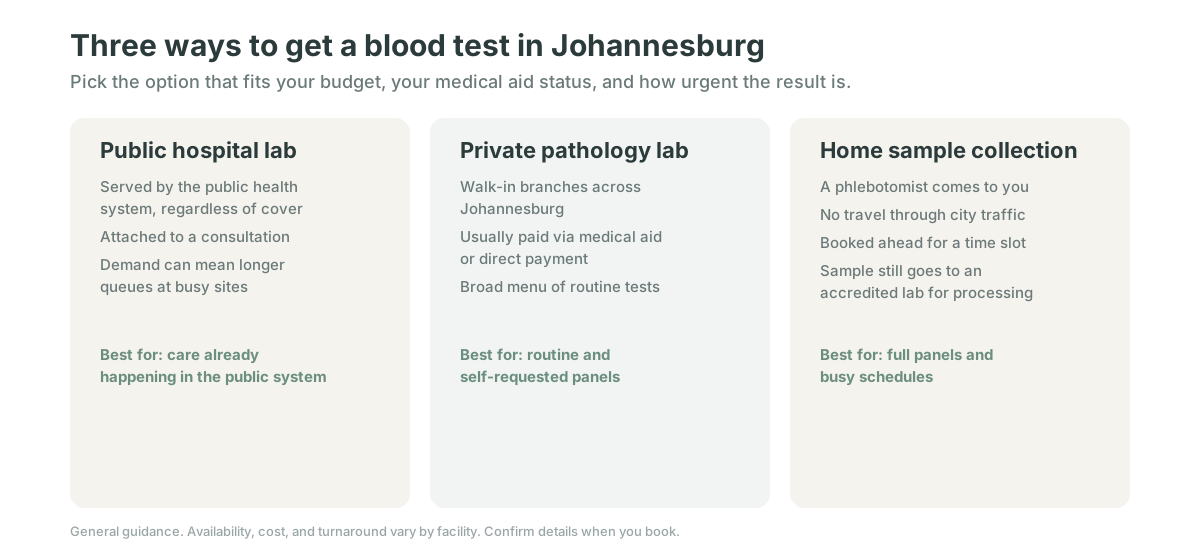
Johannesburg residents can get a blood test at a public hospital, a private pathology lab, or through a home sample collection service, and each route trades off cost, wait time, and convenience differently.
None of the three is the right answer for everyone. The choice depends on whether you already have medical aid or plan to pay out of pocket, how many tests you need done, and how quickly you need the result back.
- Public hospitals: large academic and district hospitals across Johannesburg, such as Chris Hani Baragwanath Academic Hospital in Soweto, one of the largest hospitals in Africa, offer laboratory services as part of outpatient and inpatient care. The public system serves patients regardless of medical aid status, and demand at busy facilities can mean longer waits.
- Private pathology labs: South Africa has a well-established private pathology sector, with lab networks and diagnostic centres operating branches across Johannesburg. Many accept walk-ins for routine tests and can process a self-requested panel without a doctor's referral.
- Private hospital labs: attached to a consultation, useful when a doctor needs to review a result and act on it the same visit. Usually priced as part of the wider consultation rather than as a standalone test.
- Home sample collection: a trained phlebotomist visits your home or office to draw the sample, which then travels to an accredited lab for processing. This has become a genuine option in a city as spread out and traffic-heavy as Johannesburg, not just a convenience add-on.
South Africa's public laboratory services for the public health system are run through the National Health Laboratory Service (NHLS), while private labs operate independently under their own accreditation. It is reasonable to ask any facility, public or private, about the accreditation of the lab processing your sample, particularly one you have not used before.
A standard full body checkup panel in Johannesburg commonly includes blood pressure, blood sugar, a lipid profile, kidney and liver function, a full blood count, and screening for HIV and other locally relevant conditions.
The exact combination varies by provider, so it is worth confirming the specific tests included before paying for anything marketed as a "full body checkup" or "comprehensive screening," since neither term is a fixed, regulated standard.
- Blood pressure: measured directly rather than drawn from a blood sample, but a standard part of any checkup.
- Blood sugar (fasting glucose and often HbA1c): screens for prediabetes and diabetes.
- Lipid profile (cholesterol and triglycerides): a marker of heart and stroke risk.
- Kidney function (creatinine and eGFR): checks how well the kidneys are filtering waste.
- Liver function tests: flags liver strain, including from hepatitis or fatty liver disease.
- Full blood count: screens for anaemia, infection, and other blood disorders.
- HIV and, where clinically indicated, TB-related screening: included given how frequently these are encountered in South Africa, though the exact list depends on the package and your own risk factors.
What a full blood count measures
HIV testing explained: window periods, test types, and reading your result
A public hospital lab, a private pathology lab, and home sample collection each suit a different kind of visit in Johannesburg, and none of the three is universally better.
A public hospital lab suits ongoing care that is already happening in the public system. A private pathology lab suits a routine or self-requested panel where you want to walk in without a referral. Home sample collection suits a full panel, a busy schedule, or avoiding a round trip across the city during peak traffic.
There is no single best option
A private pathology lab suits a quick, self-requested panel. Home sample collection suits a full body checkup or a schedule that makes a clinic visit hard to fit around Johannesburg traffic. A public or private hospital lab suits a situation where a doctor needs to see the result and act on it the same visit. Match the option to the visit, not the other way round.
Several common Johannesburg panel tests, including fasting blood sugar and a full lipid profile, need 8 to 12 hours without food beforehand, so what you eat the night before matters as much as where you go.
Plain water is fine during the fasting window, and most people book an early-morning slot so the fast falls mostly overnight rather than cutting into the working day.
- Fasting usually required: fasting blood sugar, a full lipid profile (cholesterol and triglycerides).
- Fasting usually not required: HbA1c, full blood count, HIV screening, blood pressure.
- Medications: do not stop or delay a regular medication for a blood test without checking with your doctor first, since some tests are read alongside your current treatment, not instead of it.
- Hydration: drink water as normal before the test. Being well hydrated makes the blood draw itself easier for the phlebotomist.
Most private blood testing in Johannesburg is paid for through a medical aid scheme or directly out of pocket, while the public hospital system serves patients regardless of medical aid status.
South Africa's funding model differs from some other African markets in that private health cover through medical aid schemes plays a large role alongside public healthcare. What a specific scheme pays for, whether a co-payment applies, and whether gap cover is relevant to a particular test, all depend on your own plan and the facility you use, so it is worth confirming directly with your scheme rather than assuming a fixed benefit.
South Africa has also been developing National Health Insurance (NHI) reforms intended to change how healthcare, including diagnostic testing, is funded over time. The rollout and timeline continue to evolve, so it is worth checking the current status with an official source rather than assuming any particular stage has already been reached. Prices are not stated here because they vary by facility, by scheme, and by how many tests are bundled into a panel. Ask for a written quote before committing to a full body checkup package.
See the tests BetterHealth Africa offers, including home collection
South Africa carries one of the world's highest HIV and TB burdens alongside a rising rate of hypertension, diabetes, and other non-communicable diseases, and that pattern shapes what a Johannesburg checkup typically screens for.
HIV and TB testing are both well established parts of routine care in South Africa, offered widely and confidentially across public and private facilities, and repeating an HIV test periodically is reasonable rather than something to treat as a one-time check. TB testing is usually guided by symptoms or known exposure rather than included in every routine panel, so ask your provider whether it applies to your situation.
Alongside infectious disease, hypertension and diabetes have been rising across urban South Africa, and both conditions can cause no symptoms for years before doing lasting damage. That combination, a high infectious disease burden sitting alongside a growing non-communicable disease load, is part of why a Johannesburg full body checkup usually screens for both categories rather than just one.
None of this is a reason for alarm, and it is not a judgement on anyone's lifestyle or circumstances. It is the honest reason a comprehensive Johannesburg checkup tends to look broader than a single-issue test, and why a provider might suggest a panel that covers more ground than you first expected when you booked.
Full body checkup: what's included and who needs one
Choosing where to test in Johannesburg comes down to how many tests you need, whether you have medical aid, and how quickly a doctor needs to act on the result.
A short checklist helps narrow the decision down before you book anything.
- Decide whether you need a single test or a full panel. A single test tied to symptoms often points you to a hospital or clinic lab; a full panel makes a private pathology lab or home collection more practical.
- Ask what a package includes. "Full body checkup" is not a fixed, regulated term, so get the specific list of tests in writing before you pay.
- Confirm fasting instructions ahead of time so the trip is not wasted.
- Ask about turnaround time and how you will receive the result.
- Check what your medical aid covers, including any co-payment or gap cover that may apply, and get a written quote for anything you will pay out of pocket.
- For an abnormal or concerning result, book a follow-up with a doctor to interpret it in the context of your health, rather than reading a single number in isolation.
Frequently asked questions
Where can I get a blood test in Johannesburg?+
You can get a blood test at public hospitals such as Chris Hani Baragwanath Academic Hospital, at private hospital labs attached to a consultation, at private pathology labs and diagnostic centres with walk-in branches across the city, or through a home sample collection service that sends a phlebotomist to you. Which one suits you depends on your medical aid status, how many tests you need, and how quickly you need the result.
Do I need medical aid to get a blood test in Johannesburg?+
No. The public hospital system serves patients regardless of medical aid status. Private pathology labs and private hospitals are generally paid for through a medical aid scheme or directly out of pocket. Confirm what your specific scheme covers, including any co-payment, before you book a private test.
What is included in a full body checkup in Johannesburg?+
Most full body checkup packages in Johannesburg cover blood pressure, fasting blood sugar and often HbA1c, a lipid profile, kidney and liver function tests, a full blood count, and HIV screening, with TB-related testing added where clinically relevant. The exact list varies by provider, so confirm it before you book.
Do I need to fast before a blood test in Johannesburg?+
It depends on the test. Fasting blood sugar and a full lipid profile usually need 8 to 12 hours without food, while HbA1c, a full blood count, and HIV screening generally do not require fasting. Water is fine during a fasting window. Confirm the requirement for your specific panel when you book.
Should I use a public hospital or a private lab in Johannesburg?+
A public hospital suits ongoing care that is already happening in the public system, and it serves patients regardless of medical aid status, though demand at busy facilities can mean longer waits. A private pathology lab suits a routine or self-requested panel where you want a quicker, walk-in option and either have medical aid or plan to pay directly.
Can someone collect my blood sample at home in Johannesburg?+
Yes. Home sample collection services send a trained phlebotomist to your home or office to draw the sample, which then travels to an accredited lab for processing. This is a genuine option in Johannesburg specifically because of how much time a round trip across the city can cost once traffic is factored in.
This article is general health education, not medical advice. It is not a substitute for diagnosis or treatment by a qualified healthcare professional. Prices, cover, and services mentioned vary by facility and scheme and may change; confirm current details directly with the provider or your medical aid before you book, and always discuss your own results with a doctor.