Allergy Testing: Skin Prick vs Blood Test, and What Results Mean
An allergy test does not diagnose an allergy on its own. What it actually checks for is sensitization, meaning your immune system has produced antibodies against a specific substance, which is a narrower and more common finding than an allergy itself. Two approaches cover almost all allergy testing in practice: a skin prick test, where a small amount of allergen is introduced just under the skin, and a specific IgE blood test, where a blood sample measures antibody levels against particular allergens. This guide covers how each one works, what they are usually tested for, and what a result actually means once it lands in your hands.
An allergy test checks whether your immune system has built antibodies against a specific substance, not whether that substance will definitely cause a reaction.
Allergies happen when the immune system mistakes a normally harmless substance, an allergen, for a threat and mounts a response against it. That response is driven by an antibody called immunoglobulin E, or IgE. The first time you encounter an allergen your immune system can start producing IgE against it without you noticing anything at all. The next exposure is what can trigger symptoms, because the antibody is already primed and waiting.
Both allergy tests in routine use, skin prick testing and specific IgE blood testing, look for evidence of that IgE response. Neither test reads your symptoms directly. They read the underlying immune signature, which is why the result always has to be interpreted alongside what has actually happened to you physically.
Recurring hives, swelling, digestive upset after specific foods, or breathing symptoms tied to a clear trigger are the signs that usually prompt allergy testing in the first place.
Allergic reactions range from mild and localized to severe and body-wide. Common allergy symptoms include hives or itchy welts on the skin, swelling of the lips, face, tongue or throat, a runny or blocked nose and sneezing with environmental exposure, itchy or watery eyes, nausea, vomiting, stomach cramping or diarrhoea after eating a specific food, and coughing, wheezing or shortness of breath. Symptoms usually appear within minutes to a couple of hours of contact with the trigger, which is often the biggest clue before any test is even done.
Anaphylaxis is a medical emergency, not a testing decision
A history of anaphylaxis, meaning a rapid, severe, whole-body reaction with symptoms such as throat tightness, facial or tongue swelling, difficulty breathing, dizziness or fainting, needs urgent medical care and a referral to a specialist. This is not something to work out through elective allergy testing on your own timeline. If anyone has had a reaction like this, or is having one now, seek emergency care immediately.
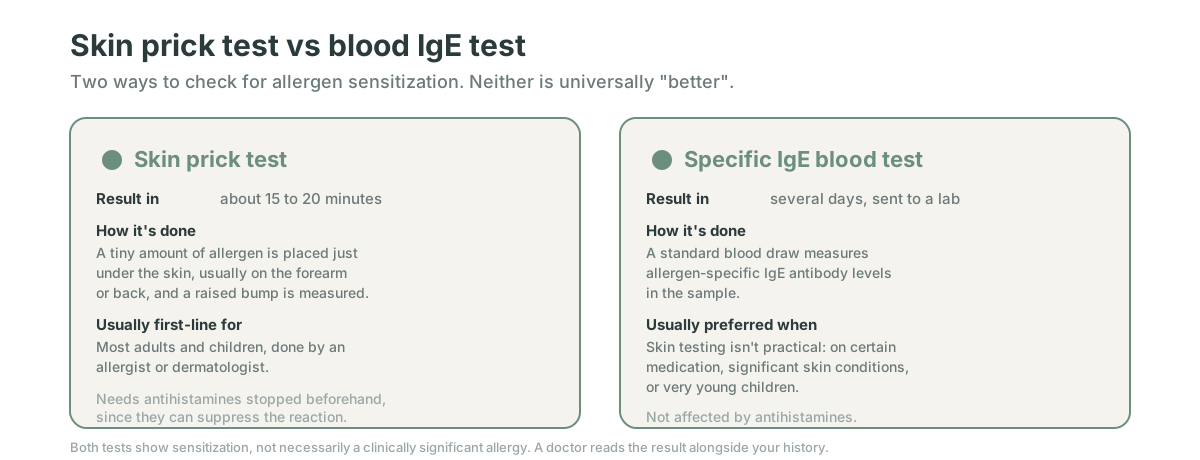
A skin prick test introduces a tiny amount of allergen just under the skin and reads the reaction after about fifteen to twenty minutes.
During a skin prick test, usually performed by an allergist or dermatologist, a small drop of allergen extract is placed on the skin, most often the forearm or upper back, and a tiny prick or scratch lets it just under the surface. Several allergens are tested at once, each in its own spot, alongside a positive control (histamine, which should always produce a reaction) and a negative control (saline, which should not), so the reading can be interpreted against a proper baseline.
A raised, itchy bump called a wheal, surrounded by redness, forming at a test site within fifteen to twenty minutes generally counts as a positive reaction to that allergen. Skin prick testing is usually the first-line approach because it is quick, allows many allergens to be checked in one visit, and gives a result before you leave the room. It does need certain antihistamine medications to be stopped for some days beforehand, since they can suppress the skin's ability to react and produce a false negative.
A specific IgE blood test measures allergen-targeted antibodies in a blood sample and is the usual choice when skin testing is not practical.
A specific IgE blood test, sometimes still called by an older brand name from earlier testing methods, is a standard blood draw sent to a laboratory, where the level of IgE antibody specific to each suspected allergen is measured and reported as a number. Unlike a skin prick test, it does not require stopping antihistamines beforehand, and it takes a few days to come back rather than minutes.
A specific IgE blood test is generally preferred over skin prick testing in a handful of situations: when someone is on medication, such as certain antihistamines or antidepressants, that cannot safely be paused; when a significant skin condition such as widespread eczema makes the skin unsuitable for pricking or hard to read; in very young children, where skin testing can be harder to perform and interpret reliably; or when there is concern that skin testing itself could trigger a severe reaction. Higher IgE levels on this test generally correlate with a greater likelihood of clinical allergy, though the exact number that matters differs by allergen and by laboratory, which is another reason a clinician needs to read it rather than a number in isolation.
Choosing between a skin prick test and a blood allergy test usually comes down to practicality rather than accuracy, since both are useful, established tools.
For most people without a complicating factor, a skin prick test is the practical first choice: fast, able to screen several allergens at once, and inexpensive relative to running the same panel by blood. A specific IgE blood test becomes the better option specifically when the skin test is not workable for the reasons above, or when a doctor wants a numeric baseline to track over time, such as monitoring whether a child's peanut sensitization is rising or falling with age. Many allergists use both at different points for the same patient rather than treating them as competing options.
A food allergy test panel typically screens a shortlist of common triggers rather than testing every food at once, because broad, unfocused panels tend to produce more false positives than useful answers.
Whichever method is used, testing is normally guided by a history of what actually seems to cause symptoms, then confirmed against a focused panel rather than a blanket check of dozens of unrelated foods.
- Common food allergens tested: egg, cow's milk, peanut, tree nuts, shellfish, wheat, and soy
- Common environmental allergens tested: pollen (grass, tree, and weed), house dust mite, pet dander (especially cat and dog), and mould spores
- Testing is usually targeted to suspected triggers based on your history, not run as an unfocused scan of every possible allergen
A positive allergy test result means sensitization has been detected, which is not automatically the same as having a clinically significant allergy.
Sensitization means your immune system has produced IgE against that allergen. A meaningful number of people who test sensitized to a given food or environmental trigger tolerate it perfectly well in daily life, with no symptoms at all on actual exposure. This is one of the most commonly misunderstood parts of allergy testing, and it is why a positive result is a piece of information for a doctor to weigh, not a standalone verdict.
A positive test is a clue, not a diagnosis
A clinically significant allergy is diagnosed by matching a positive test result to an actual history of reproducible symptoms on exposure, sometimes confirmed with a supervised food challenge in a medical setting for food allergies specifically. Testing positive for something you eat or encounter regularly without any symptoms is common and does not, by itself, mean you need to avoid it.
The reverse also matters. A negative skin prick or blood IgE result makes a classic IgE-mediated allergy unlikely for that specific allergen, but it does not rule out every kind of adverse food reaction, since some food intolerances and sensitivities work through mechanisms these tests are not designed to detect at all.
A routine full blood count can show a raised eosinophil count as an incidental clue toward an allergic or parasitic process, but this is not the same as a diagnostic allergy test.
A full blood count (FBC), one of the most commonly ordered blood tests, includes a white cell differential that breaks the white cell count down by type, including eosinophils. Eosinophils are a type of white blood cell that typically rises in allergic conditions and in some parasitic infections. If an FBC done for an unrelated reason comes back with an elevated eosinophil count, it can be a useful incidental signal worth raising with a doctor, especially alongside symptoms that fit an allergic pattern.
It is worth being precise about the limits here. An eosinophil count on an FBC does not identify which allergen is involved, does not confirm an allergy versus a parasitic or other cause, and is not a substitute for skin prick or specific IgE testing when an allergy diagnosis is actually needed. Think of it as a clue that might prompt a conversation, not a result that answers the question on its own.
Allergic conditions and asthma are a real and growing concern in South Africa's urban centres, a pattern seen across many rapidly urbanising populations worldwide.
The World Health Organization and global allergy and asthma organisations have both flagged rising allergic disease as an issue tied to urbanisation, changing exposure patterns, and air quality, and South Africa's growing cities fit that broader global picture rather than standing apart from it. That does not mean everyone with a runny nose or an itchy patch of skin has a formal allergy, but it is part of why allergy testing is a routine, unremarkable part of care in South African clinics and private practice rather than an unusual request.
Testing itself is generally arranged through a GP referral to an allergist or dermatologist, or occasionally directly with a specialist depending on your medical aid plan's referral rules. Cost varies mainly by how many allergens are included in the panel and by provider, and it is worth confirming with your own medical aid scheme or the specific practice what a proposed panel will cost and whether it is covered, rather than assuming a fixed number, since pricing is not standard across providers.
Recurring hives, swelling, digestive symptoms tied to specific foods, or any history of a severe reaction are reasons to see a doctor or allergist rather than self-testing or self-diagnosing.
Allergy testing works best when it is ordered by a clinician who has already taken a careful history of your symptoms and their triggers, rather than as a first step taken alone. A doctor or allergist is the right next call if you notice any of the following on a recurring basis.
- Hives, welts, or itchy skin reactions that keep coming back, especially with an identifiable pattern
- Swelling of the lips, face, tongue, or throat after eating or after any specific exposure
- Digestive symptoms such as cramping, vomiting, or diarrhoea that reliably follow a particular food
- Wheezing, coughing, or shortness of breath tied to a specific trigger such as pollen, dust, or a pet
- Any past history of a severe, whole-body reaction (anaphylaxis), which mandates an urgent specialist referral rather than routine testing on its own
What to do if you suspect an allergy
- Keep a simple record of what you were exposed to or ate, and what symptoms followed and how quickly, before your appointment. This history often matters more than the test itself.
- See a doctor or allergist rather than guessing at a trigger or eliminating whole food groups on your own, particularly if a child is involved.
- Ask which test, skin prick or specific IgE blood testing, fits your situation, and whether any medication needs to be paused beforehand.
- Treat a positive result as a starting point for a conversation about your actual symptoms, not an automatic instruction to avoid that substance for life.
- Seek emergency care immediately for any signs of a severe, whole-body reaction. This is not something to schedule testing around.
- If a routine FBC flags a raised eosinophil count, mention it to your doctor alongside any symptoms you have noticed, understanding that it is a clue and not a diagnosis.
See the blood tests BetterHealth Africa currently offers, including the full blood count
View BetterHealth Africa test pricing
Frequently asked questions
What is the difference between a skin prick test and a blood allergy test?+
A skin prick test introduces a small amount of allergen just under the skin and reads the reaction after about fifteen to twenty minutes, so it gives a same-visit result. A specific IgE blood test measures allergen-targeted antibodies in a blood sample sent to a lab, taking a few days to come back. Both detect the same underlying IgE response; the choice between them usually comes down to your medication, your skin, your age, and what your doctor finds practical.
Does a positive allergy test mean I have that allergy?+
Not necessarily. A positive result means sensitization, meaning your immune system has made antibodies against that substance, which is more common than an actual clinical allergy. Many people test positive to something they tolerate perfectly well in daily life. A doctor confirms a real allergy by matching the test result to an actual history of symptoms on exposure.
What are common allergy symptoms?+
Common signs include hives or itchy skin welts, swelling of the lips, face, tongue or throat, a runny or blocked nose, itchy or watery eyes, digestive symptoms such as cramping or diarrhoea after specific foods, and coughing, wheezing or shortness of breath tied to a trigger. Symptoms usually show up within minutes to a couple of hours of contact with the allergen.
What foods are usually included in a food allergy test?+
Panels are usually built around common triggers rather than every food at once: egg, cow's milk, peanut, tree nuts, shellfish, wheat, and soy account for most food allergy testing. Which specific foods get tested is normally guided by your own history of what seems to cause symptoms.
Can a full blood count detect an allergy?+
Not directly. An FBC includes a white cell differential that can show a raised eosinophil count, a type of white blood cell that tends to rise in allergic and some parasitic conditions. That can be a useful incidental clue worth mentioning to a doctor, but it does not identify the allergen and is not a substitute for skin prick or specific IgE testing when a diagnosis is actually needed.
How much does allergy testing cost in South Africa?+
Cost depends mainly on how many allergens are included in the panel and which provider performs the test, and it is not standardised across practices or medical aid schemes. Rather than relying on a general figure, confirm the price and your medical aid cover directly with the specific practice or scheme before booking.
When should I see a doctor instead of just getting tested?+
See a doctor or allergist if you have recurring hives or swelling, digestive symptoms that follow a specific food, breathing symptoms tied to a trigger, or any past history of a severe, whole-body reaction. A history of anaphylaxis needs an urgent specialist referral, not routine testing arranged on your own timeline.
This article is general health education, not medical advice. It is not a substitute for diagnosis or treatment by a qualified healthcare professional. BetterHealth Africa does not currently offer allergy or specific-IgE testing. Always discuss symptoms, testing choices, and results with a doctor or allergist.