Vitamin D Deficiency: Symptoms, Testing, and What to Do
Vitamin D is the one nutrient most people in Ghana assume they cannot possibly lack. The sun is strong and present almost year-round. Yet study after study across sub-Saharan Africa shows that deficiency and insufficiency are common, affecting a substantial share of apparently healthy adults. The vitamin D blood test is the only way to know where you stand.
Low vitamin D impairs the absorption of calcium and phosphorus, weakens bones, reduces muscle strength, and may affect immune function and insulin sensitivity. Once a test confirms the diagnosis, treatment is straightforward: supplements are inexpensive and widely available.
What the vitamin D test measures
The standard vitamin D blood test measures 25-hydroxyvitamin D, written 25(OH)D. This is the form your liver converts vitamin D into after you absorb it from sunlight, food, or supplements. It is the best indicator of your overall vitamin D status because it reflects all sources combined and stays in the blood long enough to measure accurately.
The result is reported in nanomoles per litre (nmol/L) in most African and European labs, or in nanograms per millilitre (ng/mL) in some US-oriented reports. The two units measure the same thing: 1 ng/mL equals approximately 2.5 nmol/L. This article uses nmol/L throughout.
25(OH)D, not 1,25(OH)2D
There is a second form called 1,25-dihydroxyvitamin D (calcitriol), which is the active hormone form. Doctors sometimes test it in specific kidney conditions. It is not the right test for diagnosing vitamin D deficiency: it can be normal or even high when stores are low, because the kidney upregulates production when parathyroid hormone rises. Always ask for the 25(OH)D test if you want to know your vitamin D status.
Vitamin D ranges: sufficient, insufficient, and deficient
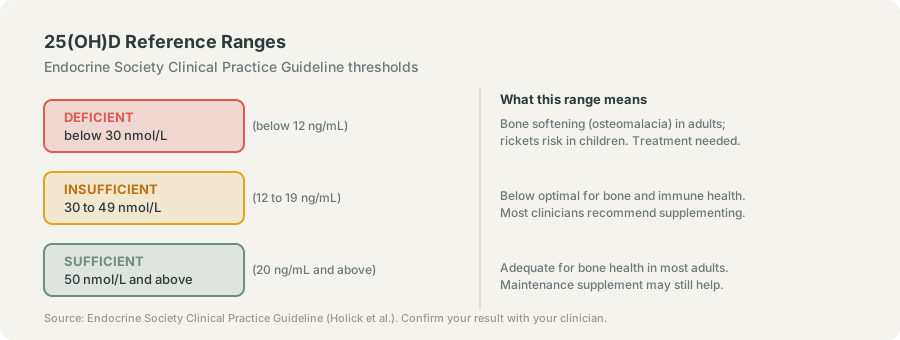
The Endocrine Society Clinical Practice Guideline defines three bands, and most major labs and clinicians use similar thresholds:
- Sufficient: 50 nmol/L or above (20 ng/mL). Enough for bone health in most people.
- Insufficient: 30 to 49 nmol/L (12 to 19 ng/mL). Stores are below optimal; many clinicians recommend supplementing.
- Deficient: below 30 nmol/L (below 12 ng/mL). Treatment is recommended. Severe deficiency can cause rickets in children and osteomalacia in adults.
Higher is not always better
Some sources suggest optimal levels above 75 or even 100 nmol/L, but there is no consistent clinical evidence that pushing beyond 125 nmol/L adds further benefit. At high supplementation doses, vitamin D can become toxic. Toxicity is rare but has been reported with doses above 4,000 IU per day taken long term without monitoring. Testing before supplementing, then retesting after, is the safest approach.
Why Ghanaians can be deficient despite the sun
Sub-Saharan Africa is one of the sunniest regions on earth, yet multiple studies have found that 30 to 60 percent of adults in the region have insufficient or deficient vitamin D levels. This apparent contradiction has several explanations.
- Melanin absorbs UV-B. The pigment that gives skin its colour also absorbs the same UV-B light the skin needs to make vitamin D. Darker skin requires significantly more sun exposure to produce the same amount of vitamin D as lighter skin. This is not a flaw: it is an appropriate adaptation to high-UV environments over evolutionary time. But it means Ghanaians and other dark-skinned populations need longer unprotected sun exposure to maintain adequate vitamin D, particularly if most of that exposure happens through glass, which blocks UV-B.
- Urban and indoor work. Most vitamin D is made when skin is directly exposed to mid-day sun, roughly 10 am to 3 pm. Office workers, drivers, and anyone in an indoor job for most of the day may get far less direct sun than outdoor workers, regardless of the local climate.
- Clothing coverage. Full-sleeve clothing, long trousers, and headscarves substantially reduce the skin surface available for UV-B exposure. This is a factor for some communities in northern Ghana and among those who observe modest dress.
- Low dietary intake. Few foods naturally contain vitamin D in useful amounts. Fatty fish, egg yolks, and liver provide some. Most staple foods in the Ghanaian diet are not significant sources. Vitamin D fortification of foods is not yet routine across Ghana.
Symptoms of vitamin D deficiency
Vitamin D deficiency often produces no symptoms until it becomes severe, which is one reason testing matters. When symptoms do appear, they are non-specific and easily attributed to other causes.
- Bone pain, particularly in the back, hips, or legs. In adults, prolonged deficiency can cause osteomalacia: softening of the bones that produces a deep, aching discomfort.
- Muscle weakness or aching muscles, sometimes described as a general heaviness in the limbs.
- Fatigue and low energy that does not improve with rest.
- Frequent infections, particularly respiratory infections. Vitamin D plays a role in the innate immune response.
- Low mood and depressive symptoms. The relationship between vitamin D and mood is consistently reported in observational studies, though not yet fully understood.
- Impaired wound healing. Some research links low vitamin D to slower recovery from cuts and surgical wounds.
- In children: rickets, which causes bowed legs, delayed tooth eruption, soft skull bones, and stunted growth. Rickets remains a real clinical concern in West Africa.
Symptoms alone cannot confirm deficiency
Fatigue, muscle weakness, and low mood have many causes, including thyroid disorders, anaemia, and depression itself. A 25(OH)D blood test is the only way to confirm vitamin D deficiency. Testing avoids unnecessary supplementation in those who are already sufficient, and avoids missing those who genuinely need treatment.
Who should get a vitamin D test
Testing makes sense for anyone with symptoms above, and for people in these higher-risk groups:
- Older adults, particularly those over 65. Skin efficiency at producing vitamin D falls with age, and older adults are more likely to spend most of the day indoors.
- Pregnant women. Adequate vitamin D is important for the developing baby's bone and immune system. The WHO recommends vitamin D supplementation throughout pregnancy.
- Breastfed infants. Breast milk is a poor source of vitamin D unless the mother's own levels are high. Routine infant supplementation is advised in many countries.
- People with dark skin who work indoors for most of the day.
- Anyone with malabsorption conditions including coeliac disease, Crohn's disease, or a history of bariatric surgery. These reduce vitamin D absorption from the gut.
- People with kidney disease. The kidneys convert 25(OH)D into the active hormone form; kidney impairment can cause functional deficiency even when 25(OH)D appears adequate.
- Anyone taking medications known to reduce vitamin D levels: some anti-seizure drugs, corticosteroids, and antiretroviral therapy fall into this category.
HbA1c explained: how vitamin D, insulin resistance, and your diabetes risk connect
How to raise low vitamin D
If your test confirms deficiency or insufficiency, there are three routes to raising your level: sunlight, diet, and supplements. In practice, supplements are the most reliable, and the approach clinical guidelines rely on.
- Sunlight. Ten to thirty minutes of direct mid-day sun exposure on the arms, legs, or back, three to five days a week, is the general guidance for lighter skin in tropical climates. For darker skin, the exposure needed is substantially longer and harder to quantify. Sunlight alone is rarely enough to correct an established deficiency quickly, and cannot be reliably measured.
- Dietary sources. Fatty fish (mackerel, sardines, tuna), egg yolks, and beef liver provide some vitamin D. These are useful but rarely sufficient on their own to correct deficiency without supplementation.
- Supplements. Vitamin D3 (cholecalciferol) is the preferred supplement form, as it raises 25(OH)D levels more effectively than D2 (ergocalciferol). For adults with confirmed deficiency, typical maintenance doses range from 1,000 to 2,000 IU per day. Some clinicians use higher short-term loading doses for severe deficiency under supervision. Take vitamin D with a meal containing fat, as it is fat-soluble and needs dietary fat for absorption.
Retest after supplementing
A repeat 25(OH)D test after eight to twelve weeks of supplementation confirms whether the dose is working. People absorb supplements at different rates, and some have underlying conditions that limit conversion. Retesting avoids both under-treatment and the small risk of toxicity from sustained high-dose supplementation without monitoring.
What to do with your vitamin D result
- Read your result against the reference interval on your own report. Labs may print slightly different ranges.
- If your result is below 30 nmol/L, discuss treatment with a clinician. Do not start high-dose supplementation without medical advice, particularly if you have kidney disease.
- If your result is between 30 and 49 nmol/L (insufficient), a standard supplement of 1,000 IU per day is a reasonable starting point for most adults. Retest in three months.
- If your result is 50 nmol/L or above, a maintenance supplement of 600 to 1,000 IU per day keeps most people sufficient, particularly if their sun exposure or dietary intake is limited.
- Combine vitamin D supplements with adequate calcium intake. Without enough calcium, vitamin D cannot do its job in the skeleton. The best dietary sources of calcium in Ghana are dairy products, small dried fish eaten whole, and dark leafy vegetables.
- If you are pregnant or breastfeeding, ask your clinician about the appropriate dose. The WHO recommends at least 600 IU per day during pregnancy.
- Retest after eight to twelve weeks if you have changed your supplementation, to confirm your level is moving in the right direction.
Ferritin and iron: how to read your anaemia tests (another common cause of fatigue)
See the vitamin D and bone-health panel BetterHealth Africa offers
View BetterHealth Africa test pricing
Frequently asked questions
What does a vitamin D test measure?+
The standard vitamin D test measures 25-hydroxyvitamin D (25(OH)D) in the blood. This form is produced by the liver from vitamin D you absorb via sunlight, food, or supplements, and it is the best indicator of your overall vitamin D status. The result is usually reported in nanomoles per litre (nmol/L).
What is a normal vitamin D level?+
A result of 50 nmol/L or above is considered sufficient for bone health in most adults. Results between 30 and 49 nmol/L are classified as insufficient, and below 30 nmol/L as deficient, per the Endocrine Society Clinical Practice Guideline. Reference ranges differ slightly between labs, so always check the interval printed on your own report.
Can you be vitamin D deficient in a sunny country like Ghana?+
Yes. Studies across sub-Saharan Africa consistently find that 30 to 60 percent of adults have insufficient or deficient vitamin D. Darker skin requires more sun exposure to produce the same amount of vitamin D as lighter skin, and urban indoor work compounds the problem. Sunlight alone is often not enough, particularly for office workers with limited mid-day exposure.
What are the symptoms of vitamin D deficiency?+
Vitamin D deficiency often causes no symptoms until it is severe. When symptoms occur, they include bone pain (particularly back, hips, and legs), muscle weakness or aching, persistent fatigue, frequent respiratory infections, low mood, and impaired wound healing. In children, severe deficiency causes rickets. Because these symptoms overlap with many other conditions, a blood test is needed to confirm the diagnosis.
How do you treat vitamin D deficiency?+
Confirmed deficiency is treated with vitamin D3 (cholecalciferol) supplements. A typical starting dose for adults is 1,000 to 2,000 IU per day; some clinicians use higher short-term loading doses for severe deficiency under supervision. Take the supplement with a meal containing fat, as vitamin D is fat-soluble. Retest after eight to twelve weeks to confirm the level is recovering. Sunlight and dietary sources help but are rarely enough to correct established deficiency on their own.
Do I need to fast before a vitamin D test?+
No. A vitamin D (25(OH)D) test does not require fasting. You can have it done at any time of day. It is often run alongside other biomarker panels, some of which do require fasting, so check with the lab if you are having multiple tests at the same time.
This article is general health education, not medical advice. It is not a substitute for diagnosis or treatment by a qualified healthcare professional. Vitamin D ranges and supplement doses vary by age, health status, and clinical context. Always discuss your blood test results and any supplementation with your doctor before starting treatment.