Uric Acid Test and Gout: Reading Your Result and Lowering It

For most people, the word uric acid only comes up after a gout attack, when a joint has already swollen up overnight and every step hurts. A uric acid test can catch the problem earlier than that, and reading the result correctly is the first step toward doing something about it.
What uric acid is
Uric acid is a waste product left over when the body breaks down purines, compounds found naturally in your own cells and in certain foods. Your body makes purines as part of normal cell turnover, and you also take in purines from what you eat. Both sources end up broken down into uric acid, which travels in the blood and is normally filtered out by the kidneys and passed out in urine.
In small, steady amounts this process causes no trouble at all. Problems start when uric acid is produced faster than the kidneys can clear it, or when the kidneys clear it more slowly than usual, and the level in the blood starts to climb.
What a raised uric acid result means
A raised uric acid level, known as hyperuricaemia, means the body is producing more uric acid than it can clear, or clearing it more slowly than usual, and it raises the risk of two specific problems: gout and kidney stones.
When uric acid builds up in the blood, it can form sharp, needle-shaped crystals that settle in joints, most classically at the base of the big toe. Those crystals trigger sudden, intense inflammation, which is what a gout attack actually is. The same crystals can also form in the kidneys, where they show up as a type of kidney stone.
Not everyone with a raised uric acid level develops gout or stones. Some people carry a high level for years without a single symptom. But the higher the level and the longer it stays raised, the greater the risk becomes, which is why a raised result is worth acting on even before any pain shows up.
A raised result on its own isn't a diagnosis
Gout is diagnosed from the combination of a raised uric acid level and a clinical picture, ideally including how a joint looks and behaves during an attack. Some people with gout have a normal uric acid level at the time of the attack, and some people with a high level never develop gout at all. A doctor reads the number alongside your symptoms and history.
How the uric acid test is done
A uric acid test is a simple blood draw, usually processed the same day, with no special preparation required beyond what the lab or doctor requests. A small sample is taken from a vein, typically in the arm, and sent for measurement. Some clinicians ask patients to avoid alcohol and unusually heavy meals the day before, since both can temporarily push the level up, but check with your own lab or doctor for their specific instructions.
The test is often ordered on its own after a suspected gout attack, or bundled into a broader metabolic or kidney panel as part of routine screening, particularly for people with risk factors such as obesity, high blood pressure, or a family history of gout.
Uric acid normal range
Normal uric acid ranges differ slightly by lab and by sex, so the reference range printed on your own lab report, not a number from an article, is the one that applies to your result. Men generally run somewhat higher than women, and the exact cutoffs a lab uses can vary depending on the equipment and method it runs.
Rather than memorising a single figure, look at where your result sits relative to the range printed next to it on the report. A result flagged as high, or one that sits close to the top of the range alongside gout symptoms, is worth discussing with a doctor even if it technically falls inside the reference interval.
Creatinine and eGFR: how kidney clearance is measured, and why it matters here too
What causes raised uric acid
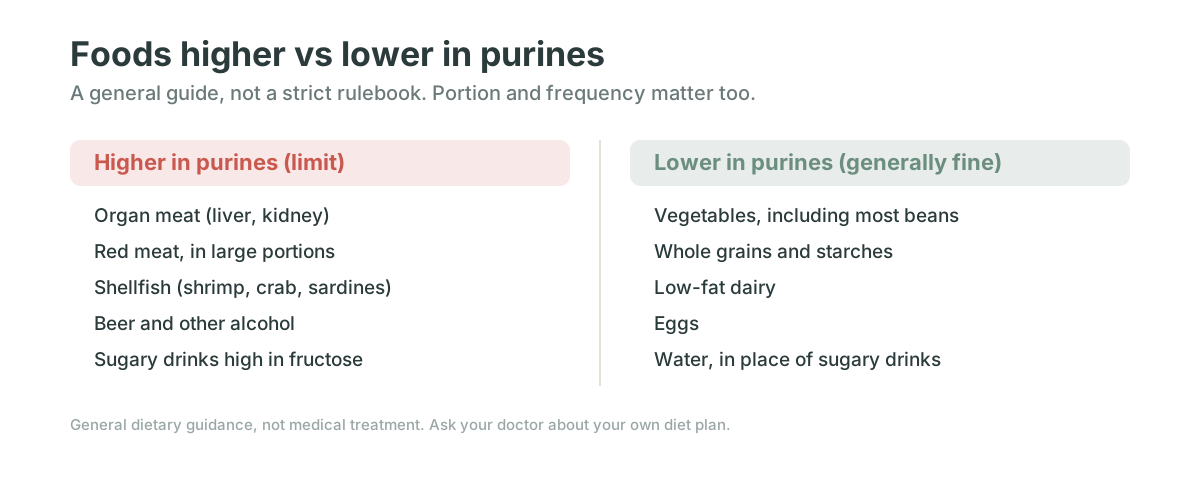
Diet high in purines, alcohol (especially beer), sugary drinks high in fructose, reduced kidney clearance, certain diuretic medications, obesity, and genetic factors are the main drivers of a raised uric acid level.
- Purine-rich foods: red meat, organ meat such as liver and kidney, and shellfish all contribute a heavier purine load than most other foods.
- Alcohol, especially beer: alcohol both raises purine breakdown and interferes with how efficiently the kidneys clear uric acid.
- Sugary drinks and fructose: fructose is metabolised in a way that generates extra uric acid as a byproduct.
- Reduced kidney clearance: since the kidneys are what remove uric acid from the blood, anything that slows kidney function tends to raise uric acid alongside it.
- Certain medications: some diuretics (water pills), commonly used for high blood pressure, can raise uric acid as a side effect.
- Obesity: carrying excess weight is linked to both higher uric acid production and reduced clearance.
- Genetic factors: some people simply produce more uric acid, or clear it less efficiently, regardless of diet, and gout can run in families.
Fatty liver disease: another condition that shares the same metabolic risk factors
Diet and lifestyle steps that can help
Cutting back on purine-rich foods and alcohol, staying hydrated, and managing weight are general lifestyle steps that can help lower uric acid, though they are not a substitute for medical treatment when it's needed.
- Reduce, rather than fully eliminate, purine-rich foods: smaller and less frequent portions of red meat, organ meat, and shellfish tend to matter more than cutting them out entirely.
- Cut back on beer and other alcohol, and limit sugary drinks, since both raise uric acid through different mechanisms.
- Stay well hydrated with water, which supports the kidneys in clearing uric acid.
- Work toward a healthy weight gradually. Very rapid weight loss can actually raise uric acid temporarily, so a steady pace is generally better than a crash approach.
- Stay active with regular movement, which supports overall metabolic health alongside uric acid control.
Diet helps, but it isn't the whole story
Diet and lifestyle changes can meaningfully lower uric acid for some people, but genetics and kidney function also play a large role, so diet alone does not bring every raised result back into range. If your level stays high despite these changes, or if you have had a gout attack, a doctor can discuss whether medication is appropriate.
What a gout attack feels like
A gout attack typically comes on suddenly, often overnight, with intense pain, swelling, warmth, and redness in a single joint, classically the base of the big toe. The pain can be severe enough that even the weight of a bedsheet feels unbearable. Other joints, including the ankle, knee, wrist, and fingers, can also be affected, though the big toe is the most common first site.
An attack usually peaks within 12 to 24 hours and then gradually eases over several days to a couple of weeks, even without treatment, though treatment can shorten and ease it considerably. Attacks can recur, and repeated episodes over years, left unmanaged, can lead to joint damage.
When to see a doctor
Recurrent joint pain or swelling, a suspected gout attack, or a significantly raised uric acid result on a lab report are all reasons to see a doctor rather than manage the problem alone.
- If you have sudden, severe joint pain and swelling, especially in the big toe, get it assessed. A doctor can confirm whether it is gout or something else that needs different treatment.
- If your uric acid result comes back flagged as high, or sits near the top of your lab's reference range, discuss it with a doctor, even if you have no symptoms yet.
- If you have had more than one gout attack, ask about longer-term management. Recurrent attacks are usually a sign that the underlying uric acid level needs addressing, not just the individual flare.
- If you have a family history of gout or kidney stones, mention it to your doctor when discussing your own results, since genetics play a real role here.
- If diet and lifestyle changes have not brought a raised result down after a reasonable period, ask whether medication is appropriate for you.
See the panels BetterHealth Africa tests, including uric acid
View BetterHealth Africa test pricing
Frequently asked questions
What foods should I avoid with high uric acid?+
Organ meat, red meat in large portions, shellfish, beer and other alcohol, and sugary drinks high in fructose are the foods most linked to raised uric acid. This does not mean eliminating them entirely for most people. Smaller, less frequent portions, alongside good hydration, are usually the more sustainable approach than a strict ban.
Can high uric acid cause kidney damage?+
Yes, chronically raised uric acid can contribute to kidney stones, and in some cases to longer-term kidney damage, partly because reduced kidney function and raised uric acid feed into each other. If you have both a raised uric acid result and any signs of reduced kidney function, a doctor should look at the two together.
What does a gout attack feel like?+
A gout attack typically starts suddenly, often overnight, with intense pain, swelling, warmth, and redness in a single joint, most classically the base of the big toe. The pain can be severe enough that even light pressure, such as a bedsheet, is hard to bear. It usually peaks within a day and eases over one to two weeks.
Can uric acid levels be lowered without medication?+
For some people, yes. Reducing purine-rich foods and alcohol, staying hydrated, and managing weight gradually can lower uric acid meaningfully. For others, especially where genetics or reduced kidney function play a large role, lifestyle changes alone are not enough and medication is needed. A doctor can help determine which situation applies to you.
This article is general health education, not medical advice. It is not a substitute for diagnosis or treatment by a qualified healthcare professional. Uric acid results and gout risk depend on individual factors including diet, kidney function, medications, and genetics. Always discuss your own results and symptoms with your doctor.