Typhoid and the Widal Test: What a Positive Result Really Means
The Widal test is one of the most requested, and most misread, lab tests across West and East Africa. A single positive result gets handed to patients as if it were a typhoid diagnosis on its own, when the test was never designed to work that way. A Widal titer shows something narrower than that, and the number by itself often means less than people assume.
What the Widal test measures
The Widal test measures antibodies your immune system has made against Salmonella Typhi, the bacterium that causes typhoid fever, not the bacterium itself.
When your body is exposed to Salmonella Typhi, whether from an active infection, a past infection, or in some cases a typhoid vaccine, your immune system produces antibodies against two parts of the bacterium: the O (somatic) antigen and the H (flagellar) antigen. The Widal test mixes your blood serum with these antigens in the lab and reports how diluted your serum can be before it stops reacting, expressed as a titer such as 1:80 or 1:160. A higher titer means more antibody is present, but presence of antibody only proves exposure at some point, not necessarily a current infection.
Why a single Widal titer is not a reliable stand-alone diagnosis
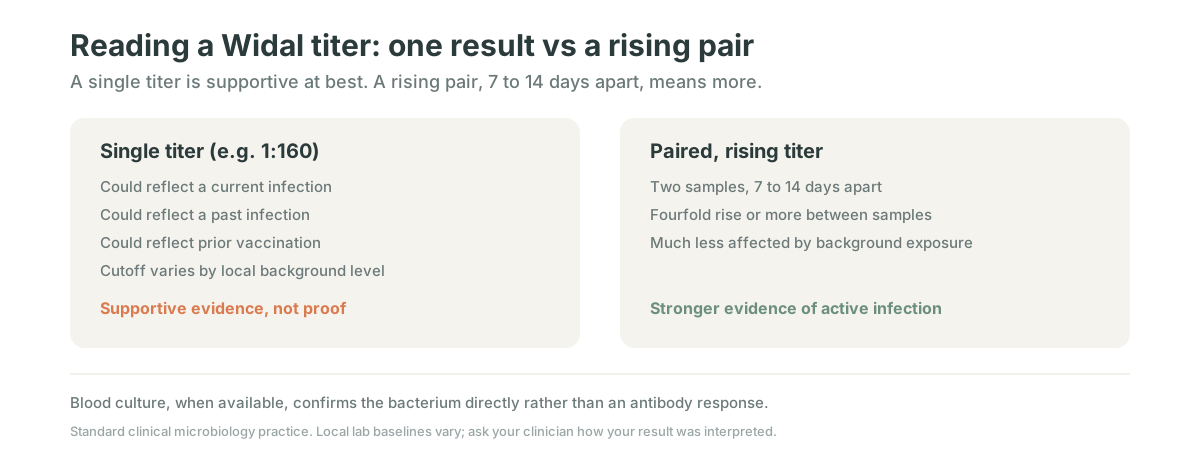
A single Widal reading is not a reliable stand-alone diagnosis, because past typhoid infection, prior vaccination, and other infections can all raise the same antibody titers.
- A past typhoid infection, sometimes years earlier, can keep antibody levels raised long after the infection cleared
- Typhoid vaccination raises the same antibodies the test is measuring
- Other infections and even some non-infectious conditions can cause cross-reacting antibodies that raise the titer
- Background antibody levels differ from one population to another, since typhoid exposure is more common in some areas than others
This is why clinical microbiology teaching generally treats a single Widal titer as, at best, supportive evidence rather than proof. A rising titer across two samples taken about 7 to 14 days apart, showing at least a fourfold increase, is far more informative than one high reading on one day.
What "1:80" or "1:160" means, and why the cutoff is not universal
The titer level often quoted as "positive," such as 1:80 or 1:160, is not a universal cutoff, because background antibody levels vary from one population to another.
In an area where typhoid is common, a meaningful share of healthy people already carry some background titer from past exposure, which pushes the local baseline higher. A cutoff of 1:160 that would flag an infection in one country or region can sit well within the normal background range in another. Ideally, a laboratory establishes its own local baseline titer from healthy people in the area it serves, though in practice many labs default to a standard cutoff without that local calibration. That gap is exactly why the same titer can mean different things in different clinics.
"Positive Widal" is not the same as "confirmed typhoid"
If you are told your Widal test is positive, ask whether it was a single sample or a paired, rising titer, and whether a blood culture was also taken. A single positive Widal alongside a compatible fever is a reasonable starting point for treatment in many settings, but it is not the same as a confirmed diagnosis.
Blood culture: the more reliable (if slower) alternative
Blood culture is the more reliable confirmatory test, though it takes several days and becomes less sensitive once antibiotics have started.
Rather than measuring antibodies, blood culture attempts to grow the actual Salmonella Typhi bacterium from a blood sample, which confirms an active infection directly. Its main drawbacks are practical: it usually takes two to five days to give a result, needs proper laboratory facilities, and its sensitivity drops significantly if antibiotics have already been started before the sample was taken. Where it is available and turnaround time allows, blood culture is the test that confirms typhoid rather than merely suggesting it.
Typhoid symptoms, and why they overlap with malaria
Typhoid fever causes a prolonged, gradually rising fever that overlaps heavily with malaria symptoms, which is why clinicians in typhoid-endemic areas often test for both.
- A fever that often rises gradually over several days rather than spiking suddenly
- Headache, general body aches, and fatigue
- Abdominal pain or discomfort, sometimes with constipation or, less often, diarrhoea
- Loss of appetite
- In more advanced or untreated cases, a rash of small flat pink spots, or a slowed heart rate relative to how high the fever is
Malaria testing: RDT vs blood film, and how to read the result
What to do with your result
- Ask whether your Widal result is a single sample or a paired, rising titer, since the two carry very different weight.
- Ask whether a blood culture was also taken, particularly if this is a first fever illness with no prior typhoid history.
- Mention any previous typhoid infection or typhoid vaccination, since both can raise your baseline titer independent of a current infection.
- If fever persists despite typhoid treatment, or the diagnosis feels uncertain, ask about testing for malaria and other causes of prolonged fever.
- Complete the full course of any antibiotic prescribed for confirmed or strongly suspected typhoid, even after you start feeling better.
- Seek prompt medical attention for a high, persistent fever lasting more than three to five days, or for severe abdominal pain, confusion, or signs of bleeding.
See the infectious disease panel BetterHealth Africa tests
View BetterHealth Africa test pricing
Frequently asked questions
What does a Widal test of 1:160 mean?+
It means your blood serum still reacted with the test antigens at a 1-in-160 dilution, indicating a fairly high antibody level. Whether that counts as significant depends on your local lab's baseline cutoff, your symptoms, and whether it is a single reading or part of a rising pair. It is not, on its own, a confirmed typhoid diagnosis.
Can a Widal test be positive without typhoid?+
Yes. Past typhoid infection, typhoid vaccination, and cross-reacting antibodies from other infections can all produce a positive Widal result in someone who does not currently have typhoid. This is the main reason a single Widal reading is treated cautiously.
Is blood culture always better than Widal?+
Blood culture is more specific because it looks for the bacterium directly rather than an antibody response, but it takes longer and is less sensitive once antibiotics have started. In practice, many clinicians use Widal alongside symptoms as an early guide and reserve blood culture for cases where confirmation matters most or the picture is unclear.
How soon after infection does a Widal test turn positive?+
Antibody levels typically take about a week to rise to detectable levels after infection begins, which is why a Widal test done very early in the illness can be falsely negative. A repeat test 7 to 14 days later, looking for a rising titer, is more informative than a single early result.
This article is general health education, not medical advice. It is not a substitute for diagnosis or treatment by a qualified healthcare professional. Typhoid fever can become serious if untreated. Always have a persistent or high fever assessed by a qualified healthcare provider, and discuss your own test results and treatment with your doctor.