Prediabetes: The Warning Window Before Diabetes Develops
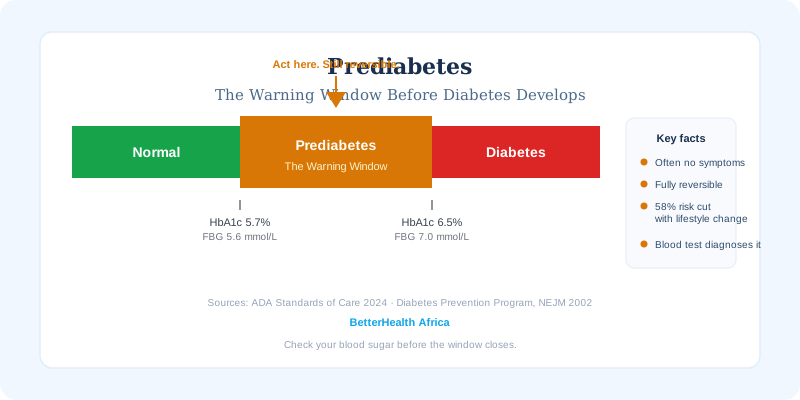
Prediabetes is the stage where blood sugar has climbed above normal but has not yet crossed the threshold for a type 2 diabetes diagnosis. It rarely causes noticeable symptoms. That is both the problem and the opportunity: most people who have it do not know, but it is also the one stage where a modest effort consistently reverses the trajectory.
Blood sugar does not jump from healthy to diabetic overnight. It climbs gradually, and prediabetes is the window during that climb when intervention works best. The International Diabetes Federation estimates that for every person with diagnosed type 2 diabetes in Ghana, several more have prediabetes and are unaware.
What prediabetes means
Prediabetes is a state where blood sugar is chronically higher than normal but not yet at the threshold for a diabetes diagnosis, and it is fully reversible with lifestyle changes in most people. A prediabetes result tells you where your blood sugar stands while there is still time to act on it.
Your body produces insulin to move glucose from the bloodstream into cells, where it is burned for energy. In prediabetes, cells have become less responsive to insulin's signal. The pancreas tries to compensate by producing more insulin, but over time the system is overwhelmed and blood glucose stays elevated. This process is called insulin resistance.
Why most people with prediabetes have no symptoms
Most people with prediabetes have no noticeable symptoms at all. The mild blood sugar elevation is not high enough to cause the classic signs of diabetes such as extreme thirst or frequent urination. Energy metabolism is slightly impaired, but rarely enough to feel obvious in daily life.
This is why prediabetes is missed. People feel well, so they do not seek testing. Testing is also not a routine part of most primary care visits in Ghana, even for adults with clear risk factors. The result is that most cases sit undetected until blood sugar has already crossed into the diabetes range.
Subtle signs that can appear
A small number of people with prediabetes develop subtle signs including darkened skin patches (acanthosis nigricans), tingling in the feet, and unusual fatigue, though none of these are specific enough to diagnose prediabetes on their own.
- Darkened, velvety skin in skin folds such as the neck, armpits, and groin. This is called acanthosis nigricans and is a visible sign of insulin resistance. It does not itch or hurt, but it warrants a blood sugar check.
- Tingling or numbness in the feet or hands. Nerve endings are sensitive to elevated glucose. Mild neuropathy can begin in the prediabetes stage, though it is more common once blood sugar has been elevated for some years.
- Fatigue that is out of proportion to your activity level. When cells are insulin-resistant, they receive glucose less efficiently and energy production is slightly impaired.
- Increased thirst and slightly more frequent urination than usual. These are milder versions of the symptoms that become pronounced in full diabetes.
- Blurred vision, intermittently. Raised blood sugar changes the fluid balance in the lens of the eye, causing focus to shift.
- Cuts and bruises that heal more slowly than they used to.
None of these symptoms confirm prediabetes
Darkened skin, fatigue, and tingling in the feet all have multiple causes. You cannot diagnose prediabetes from symptoms alone. The only way to know is a blood test. If any of these signs are familiar to you, that is a reason to get tested, not a diagnosis in itself.
Prediabetes symptoms in females
Women with polycystic ovary syndrome (PCOS) or a history of gestational diabetes are at significantly higher risk of prediabetes and should be screened proactively, because both conditions involve insulin resistance at their core.
PCOS affects up to 10% of women of reproductive age and is driven in large part by insulin resistance. Many women with PCOS have undiagnosed prediabetes. Gestational diabetes during pregnancy is another strong signal: women who develop it have a substantially higher lifetime risk of progressing to type 2 diabetes, and prediabetes is a common finding in the years that follow.
Women who are overweight, have a family history of diabetes, or belong to a high-risk ethnic background (including West African ancestry) face compounding risk. Hormonal changes during the menstrual cycle and perimenopause also affect insulin sensitivity, which is one reason blood sugar control can shift in ways that are difficult to predict without regular testing.
The diagnostic ranges: what your blood test result means
Prediabetes is defined as an HbA1c of 5.7% to 6.4%, a fasting blood glucose of 5.6 to 6.9 mmol/L, or a 2-hour glucose of 7.8 to 11.0 mmol/L on an oral glucose tolerance test. These are the ADA 2024 criteria used widely in Ghanaian labs.
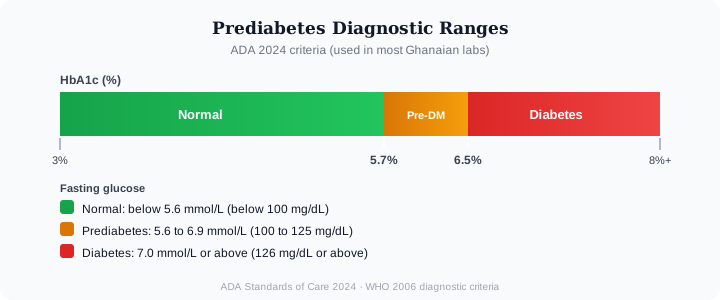
- HbA1c (3-month average): Normal below 5.7%. Prediabetes 5.7% to 6.4%. Diabetes 6.5% or above.
- Fasting blood glucose (ADA): Normal below 5.6 mmol/L. Prediabetes 5.6 to 6.9 mmol/L. Diabetes 7.0 mmol/L or above.
- 2-hour oral glucose tolerance test (OGTT): Normal below 7.8 mmol/L. Prediabetes 7.8 to 11.0 mmol/L. Diabetes 11.1 mmol/L or above.
A note on lab criteria: WHO defines impaired fasting glucose as starting at 6.1 mmol/L rather than the ADA's 5.6 mmol/L. If your lab report uses different categories than the ones above, ask your clinician which criteria were applied.
HbA1c explained: how your 3-month blood sugar average is measured and what the ranges mean
Fasting blood sugar: normal range and what your result means
How prediabetes becomes type 2 diabetes without action
Without intervention, around 15 to 30% of people with prediabetes develop type 2 diabetes within five years. The proportion varies by how high the blood sugar is at diagnosis, body weight, and whether any action is taken.
The mechanism is straightforward. The pancreas produces extra insulin to compensate for insulin resistance. Over time, that extra output strains the beta cells that make insulin, and they begin to fail. When beta cell capacity drops enough that blood sugar can no longer be held below the diabetes threshold, the diagnosis changes from prediabetes to type 2 diabetes.
The prediabetes window matters because beta cells can recover some function when the glucose load is reduced. Once a significant proportion of beta cells are damaged, that window narrows considerably. Acting at the prediabetes stage preserves more insulin-producing capacity.
How to reverse prediabetes: the evidence
Losing 5 to 7% of body weight, exercising for 150 minutes a week, and reducing refined carbohydrates can cut the risk of progressing to diabetes by more than half, according to the Diabetes Prevention Program (DPP), a large US trial published in the New England Journal of Medicine in 2002.
The DPP followed over 3,000 people with prediabetes. Those who achieved the weight and exercise targets reduced their risk of progression to diabetes by 58%, compared to 31% for those taking metformin alone. The lifestyle approach outperformed medication across all ages and ethnic backgrounds studied.
- Reduce refined carbohydrates. White rice, refined flour, sugary drinks, and processed snacks cause rapid blood sugar spikes. Replacing even one refined-carb meal per day with whole grains, vegetables, or legumes makes a measurable difference over weeks.
- Increase fibre. Fibrous foods slow glucose absorption and support better insulin sensitivity. Yams, beans, plantain (less ripe), and leafy vegetables are practical local choices.
- Walk 30 minutes a day, five days a week. This meets the 150-minute target. Exercise improves insulin sensitivity directly, and the benefit lasts for 24 to 48 hours after each session.
- Lose 5 to 7% of body weight if you are overweight. For a 90 kg adult, that is 4.5 to 6.3 kg. Even this modest loss has a substantial effect on prediabetes reversal.
- Limit alcohol. More than one drink a day consistently worsens insulin resistance and is high in calories.
- Prioritise sleep. Sleeping fewer than six hours impairs insulin sensitivity and drives hunger hormones that make dietary change much harder to sustain.
Prediabetes is not a life sentence
Many people fully reverse a prediabetes diagnosis and return to a normal HbA1c or fasting glucose level. The evidence is strong: moderate lifestyle change works better than most medications, and it has no side effects. A recheck in three to six months will show you whether the changes are working.
Ghana context: why prediabetes goes undetected
Diabetes now affects an estimated 4 to 5% of Ghanaian adults according to the International Diabetes Federation, and the undetected prediabetes burden is far larger because routine glucose screening is not standard practice in most primary care settings.
Several things drive the detection gap. Urban dietary patterns have shifted toward refined carbohydrates, sugary drinks, and processed food, particularly in Accra and Kumasi. Physical activity has fallen with desk and driving work. Obesity rates are rising. And family history of diabetes, which is common in many Ghanaian families, raises individual risk substantially.
Most adults also only visit a health facility when they are unwell. Preventive blood tests are not yet routine. By the time a diabetes diagnosis is made, the prediabetes window has typically long passed.
One additional caveat for Ghana: around one in four Ghanaians carries the sickle cell trait. This affects how long red blood cells survive and can make the HbA1c test read falsely high or low. Fasting blood glucose or an OGTT may be more reliable for people with known haemoglobin variants. A clinician familiar with your blood picture will advise on which test to use.
What to do next
- Get a fasting blood glucose or HbA1c test if you have not had one in the past year and you carry any risk factor: family history of diabetes, overweight, over 35 years old, history of gestational diabetes, or PCOS.
- If your result is in the prediabetes range, start lifestyle changes the same week. Do not wait for a follow-up appointment. Reduce refined carbohydrates and add 30 minutes of walking to your daily routine.
- Recheck in three to six months. A falling blood sugar number is one of the clearest measures of real health progress.
- Ask your doctor whether a fasting glucose test or OGTT is more appropriate if your HbA1c is borderline and you have sickle cell trait or any other haemoglobin variant.
- Book a metabolic panel that checks blood sugar, HbA1c, and cholesterol at the same time. Insulin resistance rarely travels alone, and raised blood sugar and raised cholesterol often co-exist.
See the metabolic and diabetes screening panel BetterHealth Africa offers
View BetterHealth Africa test pricing
Frequently asked questions
What are the symptoms of prediabetes?+
Most people with prediabetes have no symptoms at all. That is what makes it so easy to miss. A small number develop darkened, velvety skin patches in skin folds (acanthosis nigricans), mild tingling or numbness in the feet, fatigue, or slightly increased thirst. None of these are specific to prediabetes, and the only way to confirm it is a blood test.
What is the prediabetes blood sugar range?+
Using ADA 2024 criteria, prediabetes is an HbA1c of 5.7% to 6.4%, a fasting blood glucose of 5.6 to 6.9 mmol/L, or a 2-hour oral glucose tolerance test result of 7.8 to 11.0 mmol/L. WHO criteria differ slightly: the fasting glucose threshold for impaired fasting glucose starts at 6.1 mmol/L. Ask your clinician which criteria your lab report uses.
Can prediabetes be reversed?+
Yes. Prediabetes is reversible, and many people return to a normal blood sugar level with lifestyle changes. The Diabetes Prevention Program found that losing 5 to 7% of body weight and walking 150 minutes a week reduced the risk of progressing to type 2 diabetes by 58%. The earlier you act, the better the response.
What are the symptoms of prediabetes in females?+
Women with prediabetes experience the same symptoms as men, which is to say very few. However, women with PCOS (polycystic ovary syndrome) or a history of gestational diabetes are at much higher risk and often develop prediabetes without any obvious symptoms. Any woman with PCOS or a past gestational diabetes diagnosis should have regular blood sugar checks, even when feeling well.
What should I eat if I have prediabetes?+
The most effective dietary change is reducing rapidly absorbed carbohydrates: white rice, white bread, sugary drinks, and processed snacks. Replace them with whole grains, legumes, vegetables, and less-ripe plantain where you can. Adding fibre to meals slows glucose absorption. You do not need a special diet plan, just a consistent shift toward less refined carbohydrate and more whole food.
How long does it take for prediabetes to turn into diabetes?+
Without any action, around 15 to 30% of people with prediabetes develop type 2 diabetes within five years. Some progress faster, especially with higher blood sugar levels, obesity, and no lifestyle changes. Others remain in the prediabetes range for many years. With a consistent lifestyle intervention, many people never progress at all and return to a normal range.
This article is general health education, not medical advice. It is not a substitute for diagnosis or treatment by a qualified healthcare professional. If you have concerns about your blood sugar or diabetes risk, always discuss them with your doctor.