Home vs In-Lab Blood Tests: Which Is Right for You?
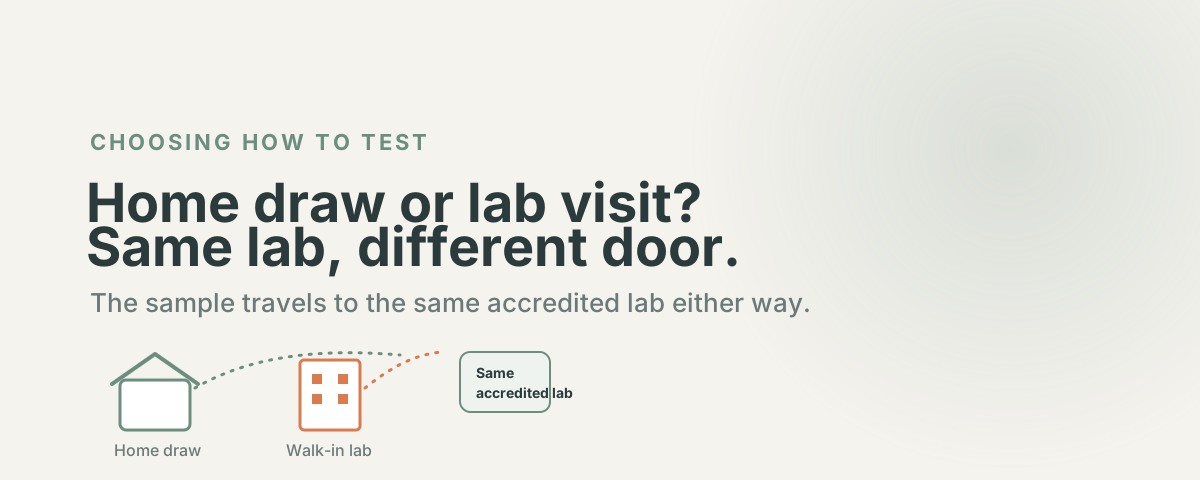
Booking a blood test now usually means choosing between two doors: a phlebotomist who comes to your home or office, or a walk-in visit to a lab or hospital. Both are legitimate ways to get tested, and the choice comes down to what you are testing for, your schedule, and your comfort, not which option gives you a more trustworthy result. This guide walks through what a home blood draw involves, where accuracy does and does not change, which tests travel well and which do not, and how to decide.
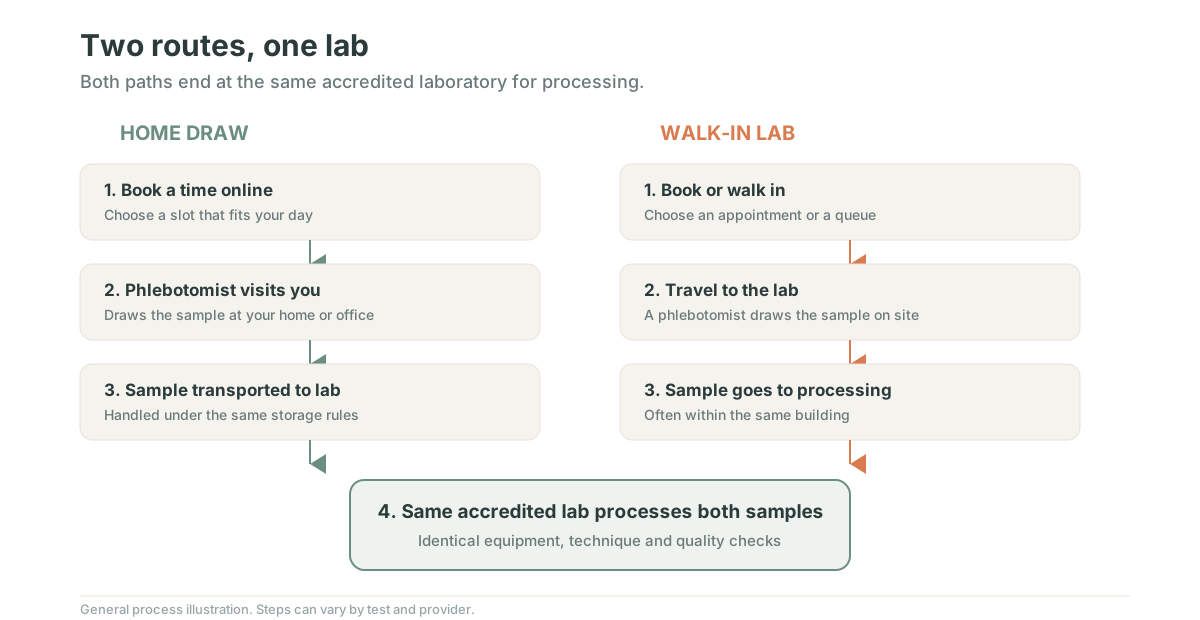
A home blood draw sends a trained phlebotomist to collect your sample at your home or office, using the same needles, tubes and technique used in a walk-in lab
A home blood draw service works much like booking any other appointment. You choose a time slot online, a trained phlebotomist arrives with the same sterile needles, vacuum tubes and cold-chain packaging a lab uses, and the draw itself takes a few minutes. The phlebotomist labels your sample, records the collection time, and carries it to the lab for processing, usually the same day.
A walk-in lab visit follows a similar sequence with one difference: you travel to the facility instead of the phlebotomist travelling to you. You may wait in a queue, then sit for the draw in a clinical room, and the sample goes straight to the lab attached to or near that facility. The clinical steps, sterile equipment, labelling and handling, are the same in both cases. What changes is the location where the needle goes in and who does the travelling.
Your sample is processed at the same accredited laboratory whether it was drawn at home or at a walk-in clinic, so the lab science behind your result does not change
Most people want this question answered before they book: is a home blood draw as accurate as going into a lab? The collection location itself has no bearing on accuracy. A blood test is accurate or not based on the technique used to draw it, how the sample is stored and transported, and the equipment and quality controls at the laboratory that processes it. A reputable home draw service uses trained phlebotomists and the same cold-chain handling a lab uses, and the sample lands on the same analysers, run by the same technicians, against the same reference ranges, as a sample collected in the building next door.
Where accuracy can suffer is poor technique or poor handling, not the address where the draw happened. A rushed or badly trained phlebotomist can produce a haemolysed sample or an underfilled tube in a clinic just as easily as at home. That is why the credential that matters is the provider's training and the lab's accreditation, not whether you saw a building with a sign on it.
What protects accuracy
Ask any provider, home or lab, whether their phlebotomists are trained and certified and which laboratory processes the samples. A trained phlebotomist and an accredited lab are what protect your result. The address where the needle goes in is not a clinical variable.
Most routine blood tests travel well from a home draw to the lab, but a handful of tests need handling, timing or equipment that a walk-in facility is better placed to provide
The large majority of common tests are entirely practical for home collection. A full blood count, a lipid profile, fasting glucose, HbA1c, kidney and liver function panels, thyroid tests and most infectious-disease screens are drawn with a standard needle and tube and need to reach the lab within the expected window. These make up most of what people book a screening panel for.
- Straightforward at home: full blood count, fasting glucose, HbA1c, lipid profile, kidney and liver function, thyroid panel, most infectious-disease antibody or antigen screens.
- Usually better suited to a lab or clinic visit: tests that need immediate spinning or processing on site, tests bundled with a procedure a doctor performs in person (such as a physical exam alongside the draw), timed tests that involve multiple draws over a few hours (like some glucose tolerance tests), and any test your clinician specifically flags as needing lab-based handling.
- Sometimes either, depending on the provider: tests that need very tight temperature control in transit. A well-run home draw service manages this with proper packaging, but it is worth confirming with your provider for a specific test rather than assuming.
A full blood count is a good example of a test that suits home collection well: it needs a single standard draw and no special same-day procedure, which is why it is one of the most commonly booked home-draw tests.
Read next: what a full blood count measures
Fasting requirements are set by the test, not by where the needle goes in, so an eight to twelve hour fast still applies to a home draw exactly as it would at a lab
If a test requires fasting, such as fasting glucose or a full lipid profile, that requirement does not disappear because a phlebotomist is coming to you instead of you going to them. You still need to go without food for the hours your provider specifies before the appointment, water is still fine to drink, and you still need to book a slot that fits around that fasting window. The one practical advantage of a home draw here is scheduling: an early morning slot at your own address, right as you wake up, can make an overnight fast easier to manage than getting dressed and travelling to a lab before breakfast.
Learn what fasting blood sugar tests require
Home blood draw trades a queue and a commute for a scheduled visit at your own address, which matters most if you have mobility limits, a packed schedule, needle anxiety or privacy concerns
Convenience is where the two options diverge. A home draw removes travel time, waiting-room queues and the need to take extended time off work, which matters for anyone juggling a demanding schedule, caring for young children, or living with a mobility limitation that makes a clinic visit harder. It also offers more privacy: no waiting room, no chance of running into a neighbour or colleague, and a setting you control.
A walk-in lab visit has its own advantages. You are already in a clinical environment if anything unexpected comes up during the draw, staff are on hand for a wider range of same-visit services, and some people feel more reassured by a formal clinical setting than by having a stranger draw blood in their living room. Neither preference is wrong. Confidentiality is maintained in both settings: your results are handled under the same privacy standards regardless of where the sample was collected, and a home draw does not mean your results are shared with anyone beyond you and your clinician.
- Choose home draw if travel, queues or time off work are the real barrier to getting tested at all.
- Choose home draw if privacy or needle anxiety make a busy clinic setting stressful.
- Choose a lab or clinic visit if your test needs on-site processing, a same-day procedure, or multiple timed draws.
- Choose a lab or clinic visit if you would feel more reassured being in a clinical environment for the draw itself.
The right choice usually comes down to which tests you need, your schedule and your comfort with either setting, not which option is inherently better
Start with the test itself. If you already know what you need tested and it falls into the straightforward category above, a home draw is a reasonable default that removes friction without giving anything up on accuracy. If your clinician has recommended a test that needs same-day lab handling, multiple timed draws, or an in-person procedure alongside it, book the lab or clinic visit instead.
- Check which tests you need and whether any of them require lab-based handling. Ask your provider if you are unsure.
- Weigh your schedule. If getting to a lab during opening hours is the main obstacle to testing at all, a home draw removes that barrier.
- Think about comfort. Some people prefer the reassurance of a clinical setting; others prefer the privacy of home.
- Confirm current options and details before booking, since panels and services can change.
Whichever you choose, the result comes from the same accredited laboratory, read against the same reference ranges, by the same quality process. The decision is about what fits your life, not about which option protects your health information or your accuracy better.
See the full panel of tests BetterHealth offers
Frequently asked questions
Is a home blood draw as accurate as going to a lab?+
Yes, when the phlebotomist is trained and the sample is handled correctly. Accuracy depends on collection technique, storage and transport, and the accredited laboratory that processes the sample, not on the address where the needle went in. Both a home draw and a walk-in visit typically send the sample to the same type of accredited lab.
Which blood tests can be done at home, and which can't?+
Most routine tests, including full blood count, fasting glucose, HbA1c, lipid profile, kidney and liver function, and thyroid panels, are well suited to home collection. Tests that need immediate on-site processing, an in-person procedure alongside the draw, or multiple timed draws over several hours are usually better done at a lab or clinic. Ask your provider if a specific test you need is suitable for home collection.
Do I still need to fast before a home blood draw?+
Yes. Fasting requirements come from the test itself, not from where you are tested. If your test needs an eight to twelve hour fast, that applies whether a phlebotomist visits your home or you go to a lab. Water is fine to drink during a fast either way.
Is a home blood draw more expensive than a lab visit?+
Pricing varies by provider and by test, and it can change over time, so this article will not quote a figure. Check current pricing for both home draw and in-lab options on BetterHealth's pricing page before you book.
Is my information private and confidential with a home blood draw?+
Yes. Your results are handled under the same confidentiality standards regardless of whether the sample was collected at home or at a lab. Only you and the clinicians you authorise see your results. Many people choose home draw specifically for the added privacy of not being seen in a clinic waiting room.
How fast are results with a home draw versus a lab visit?+
Turnaround time is set mainly by the test itself and the laboratory's processing schedule, not by where the sample was collected, since both routes typically reach the lab on the same day. Check the expected turnaround for your specific test when you book.
This article is general health education, not medical advice. It is not a substitute for diagnosis or treatment by a qualified healthcare professional. Always discuss which tests you need, and how to interpret your results, with your doctor.