Diabetes Tests Explained: Fasting Glucose, HbA1c, and OGTT Compared
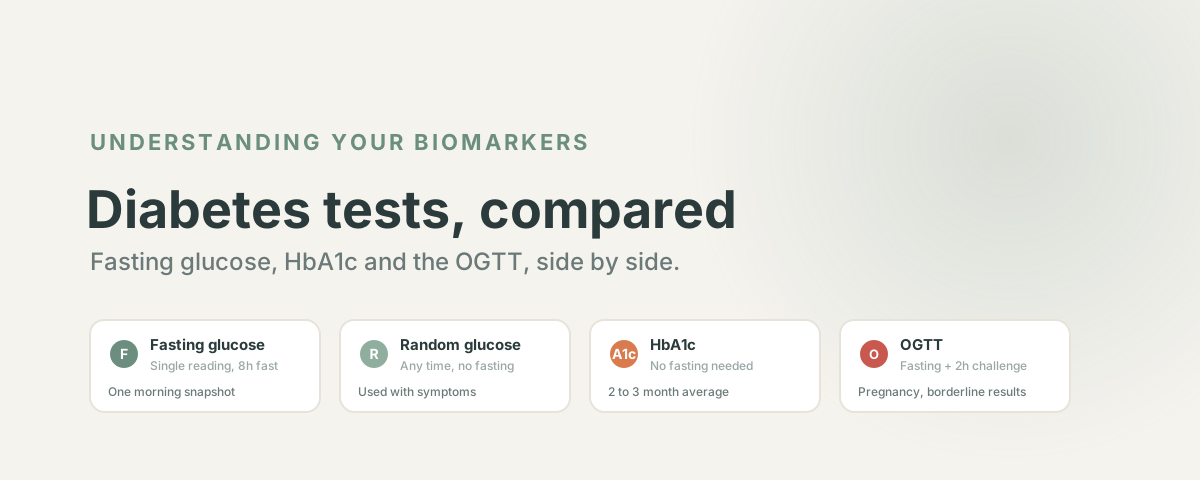
There is no single diabetes test. Doctors use four different blood sugar tests, fasting blood sugar, random blood glucose, HbA1c, and the oral glucose tolerance test (OGTT), and each one answers a slightly different question. Knowing which test you were given, and why, makes the result on your lab slip far easier to read.
This guide compares all four side by side: what each one measures, the diagnostic cutoff a doctor checks your result against, and when one is ordered instead of another. It also covers home glucose testing, since a finger-prick reading at home answers a different question than a lab test does, and the two are often confused.
There are four main types of blood sugar test used to diagnose diabetes: fasting plasma glucose, random blood glucose, glycated haemoglobin (HbA1c), and the oral glucose tolerance test (OGTT).
Each test name describes what it measures or how it's taken, and a lab slip will usually use one of these exact terms rather than the general phrase "diabetes test." Fasting plasma glucose and random blood glucose both measure the sugar circulating in your blood at a single moment, one after a fast, one at any time of day. HbA1c is different: it measures how much sugar has attached to your red blood cells over roughly the past two to three months, so it reflects a trend rather than a moment. The OGTT is a challenge test: it measures how your body clears a measured dose of glucose over two hours, rather than giving a single static number.
The difference between a snapshot, an average, and a challenge test is the whole story here. A fasting or random reading can be normal on the day of the test and still miss a problem that shows up on other days. HbA1c smooths that out by averaging months of exposure. The OGTT goes further and stresses the system to see how well it copes.
A fasting blood sugar test (fasting plasma glucose) measures your glucose after at least eight hours without food, and it's the test most commonly used for a first diabetes check in Ghana.
Because eating raises blood sugar temporarily, a fasting sample gives a cleaner baseline reading than one taken after a meal. A result of 7.0 mmol/L (126 mg/dL) or higher on two separate occasions is diagnostic for diabetes, and a result between 5.6 and 6.9 mmol/L falls in the prediabetes range. This test is quick, cheap, and widely available, which is why it's usually the first one ordered when there is no urgency. The full range breakdown, including both the ADA and WHO cutoffs and what a borderline result means, is covered in our dedicated fasting blood sugar guide.
Fasting blood sugar explained: normal range and what your result means
A random blood glucose test measures glucose at any time of day without fasting, and it's mainly used when someone already has clear diabetes symptoms and a doctor needs a fast answer.
Because what you last ate affects the result, a random test on its own is not a reliable way to screen someone without symptoms. Paired with classic symptoms, unusual thirst, frequent urination, unexplained weight loss, a random glucose of 11.1 mmol/L (200 mg/dL) or higher is enough to confirm the diagnosis without waiting for a fasted appointment. It's a practical way to act quickly when someone is clearly unwell, not the preferred test for a routine, symptom-free check-up.
HbA1c measures your average blood sugar over the past two to three months rather than a single point in time, which is why it doesn't require fasting.
A result of 6.5% or higher is diabetes, 5.7% to 6.4% is prediabetes, and below 5.7% is considered normal. Because HbA1c reflects an average, it smooths out the day-to-day swings that a single glucose reading can miss entirely, catching patterns that come and go between appointments. It has a caveat worth knowing: HbA1c can read falsely high or low in people with certain blood conditions, including sickle cell trait, which is common in Ghana. Our HbA1c guide covers the full range breakdown and that caveat in more depth.
What is HbA1c? Your 3-month blood sugar average, explained
The oral glucose tolerance test (OGTT) measures how your blood sugar responds over two hours after drinking a measured glucose solution, and it's the test doctors reach for in pregnancy or to confirm a borderline result.
For an OGTT, you fast overnight, give a baseline blood sample, drink a glucose solution (typically 75g), then have blood drawn again at two hours, sometimes with an extra sample at one hour depending on the protocol your lab follows. A two-hour reading of 11.1 mmol/L (200 mg/dL) or higher is diabetes. A two-hour reading of 7.8 to 11.0 mmol/L is impaired glucose tolerance, a form of prediabetes. Below 7.8 mmol/L at two hours is considered normal.
The OGTT takes longer and is more involved than a single blood draw, which is why it isn't used for routine screening. It comes into play in two situations mainly. It is the standard test for gestational diabetes screening in pregnancy, usually done between 24 and 28 weeks, because pregnancy hormones can raise blood sugar in ways a fasting test alone can miss. It is also used to confirm a diagnosis when a fasting glucose or HbA1c result sits in a borderline or conflicting zone, giving a doctor a clearer answer before deciding on treatment.
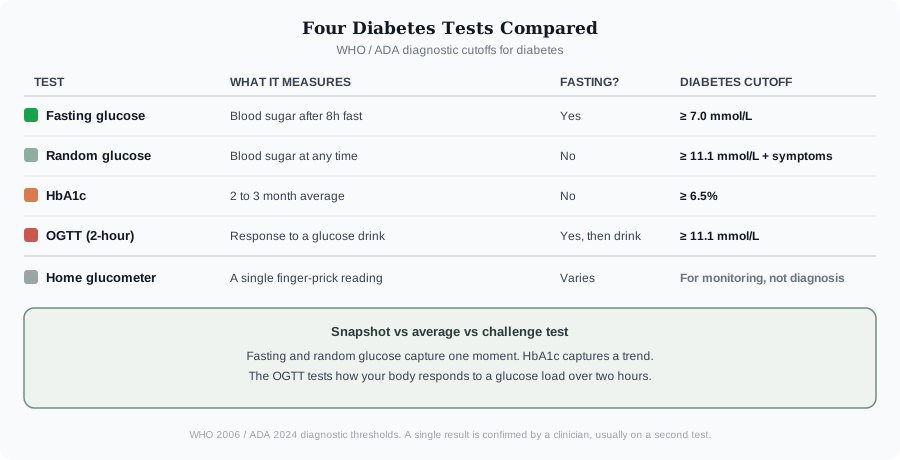
The right diabetes test depends on the situation: fasting glucose or HbA1c for routine screening, a random test when symptoms are already present, and the OGTT for pregnancy or a borderline result.
- Routine screening, no symptoms: fasting blood sugar or HbA1c
- Clear diabetes symptoms and a doctor needs a fast answer: random blood glucose
- Pregnant, being screened for gestational diabetes: oral glucose tolerance test (OGTT)
- An earlier fasting glucose or HbA1c came back borderline or the two disagree: OGTT, to confirm one way or the other
- Already diagnosed with diabetes, tracking day-to-day control: home glucometer, used alongside lab tests, not instead of them
Prediabetes: the warning window before diabetes develops
A home glucometer is useful for tracking day-to-day blood sugar once you already have a diabetes diagnosis, but a single finger-prick reading cannot diagnose diabetes on its own.
Home glucometers measure capillary blood glucose from a finger-prick, and they are accurate enough for someone managing known diabetes to see how a meal, a walk, or a missed dose of medication is moving their sugar through the day. That is useful information, and it is exactly what home testing is designed for.
What a home glucometer does not do is replace a lab-based diagnostic test. A diagnosis needs a venous blood sample analysed in a lab, using fasting glucose, HbA1c, or an OGTT, because these are the tests validated against the WHO and ADA diagnostic cutoffs. A glucometer reading can vary with the device, the strip batch, how the finger was cleaned, and even room temperature, which is fine for tracking a trend but not precise enough to hang a diagnosis on. If a home reading looks unusually high or low, that is a reason to book a proper lab test, not a reason to assume you already have your answer.
A home reading is a prompt, not a diagnosis
If a finger-prick reading at home looks abnormal, treat it as a signal to get a lab test done, not as a diagnosis in itself. Fasting glucose, HbA1c, and the OGTT are the tests that confirm diabetes.
See the diabetes and metabolic panels BetterHealth Africa offers
If you are due for a diabetes check, start with a fasting glucose or HbA1c test, and let your doctor decide whether an OGTT or repeat test is needed from there.
- If you have no symptoms and just want a routine check, a fasting glucose or HbA1c test is the usual starting point.
- If you have symptoms such as excessive thirst, frequent urination, or unexplained weight loss, tell your doctor. A random glucose test can confirm a diagnosis quickly without waiting for a fasted appointment.
- If you are pregnant, keep to your scheduled antenatal visits. The OGTT for gestational diabetes screening is usually done between 24 and 28 weeks.
- If a result comes back borderline, or two tests disagree, ask your doctor whether an OGTT would give a clearer answer.
- If you already use a home glucometer, keep using it to track your day-to-day control, but don't treat a single reading as a diagnosis or a reason to stop a scheduled lab test.
Frequently asked questions
Which diabetes test is most accurate?+
No single test is universally the most accurate, since each one measures something different. HbA1c is the most stable because it reflects a two-to-three month average rather than one moment, but it can be unreliable in people with certain blood conditions, including sickle cell trait. Fasting glucose and the OGTT measure blood sugar directly and remain the reference tests doctors fall back on when HbA1c is in doubt. In practice, doctors often use two tests together to confirm a diagnosis rather than relying on one alone.
Do I need to fast for a diabetes test?+
It depends on which test. Fasting blood sugar and the OGTT both require fasting for at least eight hours beforehand, water is fine. HbA1c and a random blood glucose test do not require fasting and can be taken at any time of day.
Can a home glucometer diagnose diabetes?+
No. A home glucometer is useful for monitoring blood sugar day to day once diabetes has already been diagnosed, but a single finger-prick reading cannot confirm a diagnosis on its own. Diagnosing diabetes needs a lab test, fasting glucose, HbA1c, or an OGTT, interpreted by a doctor against the standard diagnostic cutoffs.
How is the OGTT different from a normal blood sugar test?+
A fasting or random glucose test is a single measurement taken at one moment. The OGTT is a challenge test: you drink a measured glucose solution and your blood sugar is checked again two hours later to see how your body clears it. This makes the OGTT more sensitive for catching diabetes and gestational diabetes that a single fasting reading can miss, though it takes longer and requires more time at the lab.
How often should I get tested for diabetes?+
Adults without risk factors are generally screened every one to three years from around age 35 to 45, depending on local guidance. If you have risk factors, such as being overweight, a family history of diabetes, or a previous prediabetes result, your doctor may recommend yearly testing or more often. Someone already diagnosed with diabetes follows a different schedule set by their clinician, often testing HbA1c every three to six months.
What is the diabetes test called?+
There isn't one name, because there are four different tests: fasting plasma glucose (FPG), random blood glucose (RBG), glycated haemoglobin (HbA1c), and the oral glucose tolerance test (OGTT). A lab request or result slip will usually show one of these exact names rather than the general term "diabetes test."
This article is general health education, not medical advice. It is not a substitute for diagnosis or treatment by a qualified healthcare professional. Diabetes test results depend on individual factors including fasting status, medications, pregnancy, and underlying health conditions such as haemoglobin variants. Always discuss your results with your doctor.