How Much Does a Full Health Check Cost in Ghana?
There is no single, honest answer to what a full health check costs in Ghana, and any article that gives you one flat figure is guessing or already out of date. What you can learn, and what helps you budget, is the small set of choices that move the price up or down: how many tests you bundle together, whether you go public or private, and whether the sample is drawn at home or in a lab. Once you understand those levers, any quote you receive makes sense, and you can compare providers properly instead of anchoring on a number you saw once online.
A full health check in Ghana usually means a bundled panel of blood tests grouped by body system and ordered together in one visit, not one test booked at a time.
When people ask about a "full health check" or a "full body checkup", they are usually describing a package: a set list of blood tests, sometimes paired with a blood pressure reading and basic measurements, sold together as one appointment. This is different from walking into a lab and asking for a single test, such as a fasting blood sugar or a lipid panel, on its own.
Providers build these packages around common concerns such as diabetes risk, heart health, kidney and liver function, and general wellness. The exact contents differ from one provider to the next, which is precisely why the panel you choose matters more to your final cost than any general price you might read online.
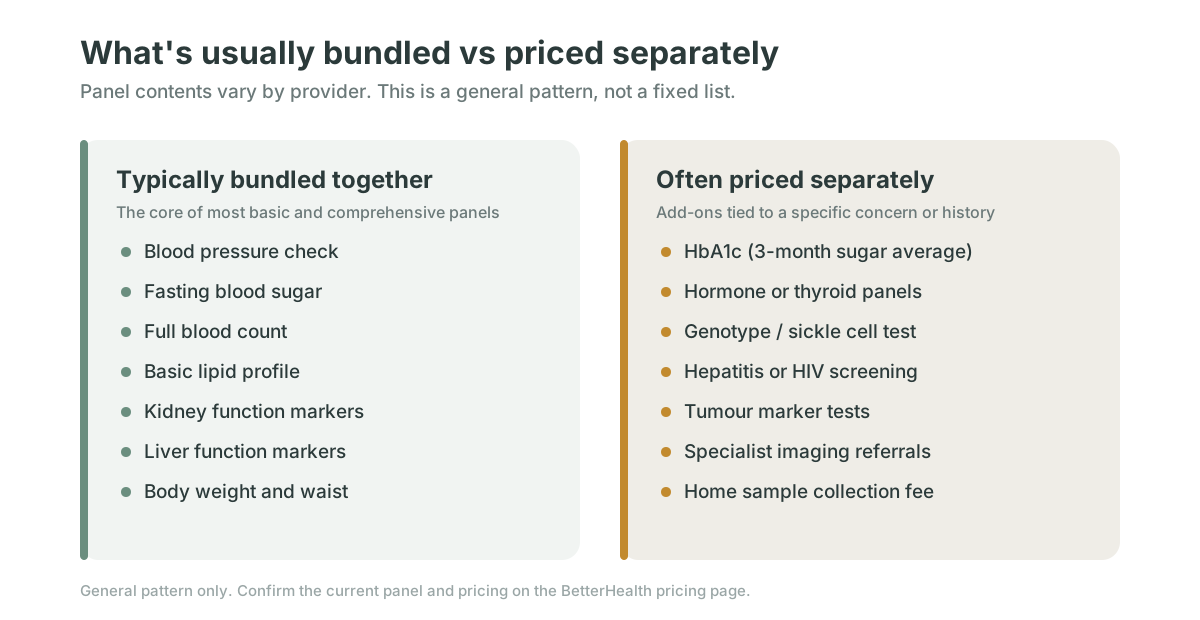
A basic screening panel typically covers blood pressure, blood sugar and a full blood count, while a comprehensive panel adds kidney, liver, lipid and sometimes hormone markers on top of that base.
Most providers offer at least two tiers, even if they use different names for them. A basic or entry-level panel tends to cover the tests that catch the most common silent conditions cheaply:
- Blood pressure measurement
- Fasting blood sugar
- Full blood count (to flag anaemia, infection and related issues)
- Body weight and waist measurement
A comprehensive or full panel builds on that base by adding markers that need more laboratory processing, and therefore usually cost more per test:
- HbA1c, your three-month blood sugar average
- A full lipid profile (cholesterol and triglycerides)
- Kidney function markers such as creatinine and eGFR
- Liver function tests
- Sometimes thyroid or other hormone markers, genotype testing, or infectious disease screening, depending on the package
See the full baseline screening list and how often to repeat it
Four variables mostly decide what a health check costs in Ghana: whether you buy a bundle or single tests, whether the provider is public or private, whether the sample is drawn at home or in a lab, and how many biomarkers the panel covers.
It helps to separate these out, because they do not move together. A private hospital and a home-collection service can both be "private", for instance, but price very differently once you account for the convenience and logistics involved. Understanding each driver on its own is what lets you read a price list sensibly instead of guessing at why one quote is higher than another.
Buying a bundled panel is almost always cheaper per test than ordering the same tests one at a time, because bundling spreads a lab's fixed processing costs across more results.
Every blood test carries a fixed cost before the lab even looks at your sample: staff time to draw and label it, the tube and consumables, and the administrative work of logging and reporting a result. When a lab runs several tests from one draw, that fixed cost is shared across all of them, which is why packages are usually priced below the sum of each test bought separately.
This does not mean the biggest bundle is automatically the best deal for you. If a comprehensive panel includes several tests you do not need this year, based on your age, history and risk, a smaller, targeted panel plus one or two individual tests can work out better value even if the headline number looks less impressive.
Public and government-linked facilities are generally the lower-cost route for routine tests in Ghana, while private clinics and home-collection services price in convenience, speed and staff time.
This is a straightforward trade-off, not a judgement on quality. Public hospitals and clinics generally offer routine blood tests at a lower cost, but often with longer waits, fixed clinic hours, and results that can take longer to reach you. Private labs and hospitals typically charge more, in exchange for shorter waits, more flexible booking, and sometimes a wider menu of tests in one place.
Home sample collection sits on top of this trade-off rather than replacing it. Sending a phlebotomist to your home or office adds a service fee on top of whatever the underlying tests cost, because it is paying for someone's time and travel, not for a different or better test. For someone who cannot easily take time off work, that convenience premium is often worth it. For someone with a flexible schedule near a lab, it may not be.
See current BetterHealth Africa pricing and panels
The cheapest option is not automatically the best one; what should decide it is whether the lab is accredited, the result reaches you on time, and someone qualified is available to explain it.
A low price on a test that comes back inaccurate, late, or unexplained is not cheap in the end, because you may end up paying for a repeat test anyway, or making a decision on bad information. Before comparing numbers across providers, it is worth checking a few things that do not show up on a price list.
- Is the laboratory accredited, and does it run internal quality checks?
- How long does it take to get your result back, and how is it delivered to you?
- Is a clinician or a qualified health professional available to help you understand what an out-of-range result means?
- Is the exact list of tests in the panel stated clearly before you pay, not just a category name like "full body checkup"?
- Can you add or drop individual tests, or is the panel fixed?
Example: what a single lipid profile test measures
Ghana's National Health Insurance Scheme covers a limited set of diagnostic tests tied to a diagnosed illness or condition, and it does not generally cover routine preventive screening chosen by someone who feels well.
NHIS is built primarily around treating diagnosed conditions, not funding elective, preventive testing for people without symptoms. In practice, this means a blood test ordered by a doctor as part of investigating a specific complaint is more likely to be covered than the same test bought voluntarily as part of a general wellness panel. Coverage details change and are set by NHIS policy, so if this matters to your decision, confirm current coverage rules directly with NHIS or your scheme administrator rather than assuming either way.
Private health insurance and employer health plans vary even more, since each policy sets its own rules on preventive care. Some plans reimburse an annual screening panel in part or in full; many do not. Check your specific policy document, or call your insurer, before you book, so you know whether you are paying out of pocket or claiming back.
Prices change; this article intentionally does not quote any
Every provider's pricing moves over time, and any specific figure printed here would be stale before long and potentially misleading. For the actual, current cost of any BetterHealth panel or individual test, check the pricing page directly rather than relying on a number from an article.
The most reliable way to budget for a health check in Ghana is to decide which panel fits your age and risk first, then compare current, live pricing across a couple of providers, since list prices move and any printed figure goes stale fast.
Working backward from a specific number you saw somewhere online tends to lead to either overpaying for tests you did not need, or under-buying and missing something that mattered. A steadier approach starts from your own situation.
- Start with your age, family history and any symptoms to work out roughly what you need: a basic panel, a comprehensive one, or specific add-on tests.
- Decide how you want the sample collected: at a lab, or at home for a convenience fee.
- Compare current pricing on two or three providers' own pages, not a figure from a blog post or a social media comment, since prices change.
- Ask each provider exactly which tests are included in a named package. "Full body checkup" means different things at different places.
- Check whether NHIS or your private insurance covers any part of it before you assume you are paying the full amount out of pocket.
- Book with time to fast if any of your tests require it, so you do not need to repeat the visit.
Browse the full list of biomarkers BetterHealth tests
Frequently asked questions
What affects the price of a health screening in Ghana?+
Four things mainly move the price: how many tests are bundled into one panel, whether the provider is public or private, whether the sample is collected at home or in a lab, and how many biomarkers the panel covers. Compare current pricing on a provider's own page rather than a figure from an article, since prices change.
Is a bundled panel cheaper than ordering the same tests individually?+
Usually, yes, per test. Bundling spreads a lab's fixed processing costs, such as staff time and sample handling, across more results, so a package is typically priced below what the same tests would cost booked one at a time. A bundle is only good value, though, if you need most of the tests in it.
Does NHIS or private health insurance cover routine health screening?+
NHIS mainly covers diagnostic tests tied to a diagnosed illness or a doctor's specific investigation, not routine preventive screening chosen by someone who feels well. Private insurance and employer health plans vary by policy, some reimburse a wellness panel and many do not, so check your specific coverage before you book.
How often should I get a full health check?+
For most healthy adults, a baseline panel followed by a repeat every one to three years is a reasonable starting point, screening more often with age or a stronger family history of conditions like diabetes, hypertension or kidney disease. A clinician can help tailor the frequency to your own risk.
Is a home blood draw more expensive than going to a lab?+
Generally yes, since home collection adds a service fee for a phlebotomist's time and travel on top of the underlying test cost. It is not a different or better test, just a convenience you are paying for. Whether that is worth it depends on how easily you can get to a lab yourself.
What is typically included in a basic vs a comprehensive health check?+
A basic panel commonly covers blood pressure, fasting blood sugar, a full blood count, and body measurements. A comprehensive panel usually adds HbA1c, a full lipid profile, kidney and liver function markers, and sometimes hormone or other specialised tests. Exact contents vary by provider, so always confirm the specific list before you pay.
This article is general health and cost-literacy education, not medical or financial advice. It does not state specific prices because pricing changes over time and by provider; check a provider's current pricing page for real figures. For questions about which tests you personally need, talk to a qualified healthcare professional.