Blood Tests and Health Screening in Nairobi: Your Options
A blood test in Nairobi can mean a single walk-in check ordered by a doctor, or a full body checkup covering a dozen or more markers booked on your own. The city has grown a wide mix of places to get either done, from public hospitals to standalone diagnostic labs to services that send someone to draw your blood at home.
What people mean by "a blood test in Nairobi"
A blood test in Nairobi can mean anything from a single walk-in check to a full body checkup covering a dozen or more markers, and the facility that suits you depends on which one you need. Someone whose doctor ordered a single fasting blood sugar test has different needs from someone booking an annual full body checkup on their own initiative.
Nairobi's testing options are spread across the city rather than concentrated in one place. The central business district, Upper Hill, Westlands, and Kilimani carry a dense cluster of hospitals and private labs, while public hospitals and smaller clinics serve neighbourhoods further out. Which part of town you are in, and how much time you have, both shape the practical answer to where you should go.
Where to get a blood test in Nairobi
Nairobi residents can draw blood at public hospitals, private hospitals, standalone diagnostic labs, and home draw services, and each option trades off cost, wait time, and convenience differently. None of them is the right answer for everyone; the choice depends on your budget, how many tests you need, and how quickly you need the result.
- Public hospitals: Kenyatta National Hospital (KNH), the country's main public referral hospital, along with county and sub-county hospitals across Nairobi, offer laboratory services alongside outpatient and inpatient care. Costs are generally lower, though queues at busy public facilities can be longer.
- Private hospitals: labs attached to a consultation, useful when a doctor needs to review a result and act on it the same visit. Typically priced higher than a standalone lab for the same single test.
- Standalone diagnostic labs: walk-in branches spread across the city that focus on testing rather than consultations, often a middle ground on price and speed for routine tests.
- Home blood draw: a trained phlebotomist visits you to collect the sample, an option a growing number of labs and health services in Nairobi now offer, usually booked a day or more in advance.
In Kenya, the professionals who run diagnostic laboratories and the technologists who staff them are registered under statutory bodies that set training and practice standards. It is reasonable to ask any facility about the registration of the staff drawing and processing your sample, particularly for a lab you have not used before.
What a full body checkup in Nairobi usually covers
A full body checkup in Nairobi typically bundles blood pressure, blood sugar, cholesterol, kidney and liver function, a full blood count, and screening for locally common infections into one visit. The exact panel varies by provider, so it is worth confirming the specific tests included before you pay for a package labelled "full body checkup" or "comprehensive screening."
- Blood pressure: measured directly, not a blood draw, but a standard part of any checkup.
- Blood sugar (fasting glucose and often HbA1c): screens for prediabetes and diabetes.
- Lipid profile (cholesterol and triglycerides): a marker of heart and stroke risk.
- Kidney function (creatinine and eGFR): checks how well the kidneys are filtering.
- Liver function tests: flags liver strain, including from hepatitis or fatty liver.
- Full blood count: screens for anaemia, infection, and other blood disorders.
- Infectious disease screening: malaria, typhoid, HIV, and hepatitis B are commonly included given how frequently they are encountered in Kenya, though the exact list depends on the package.
What a full blood count measures
Malaria testing explained: rapid test vs blood film
Walk-in lab, home draw, or hospital lab: how they compare
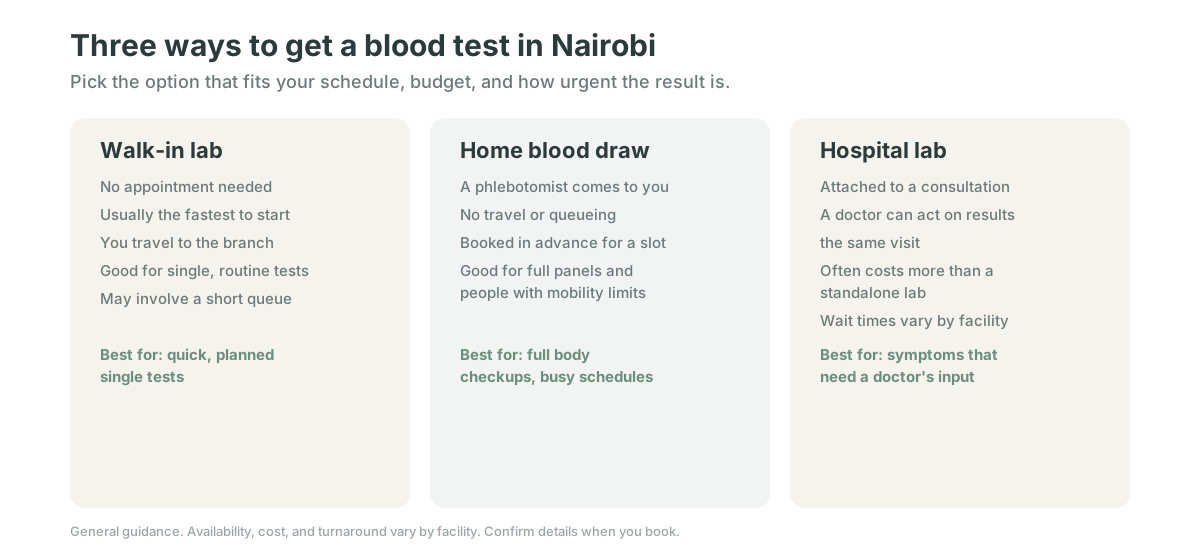
Walk-in labs are usually the fastest way to get a single common test done in Nairobi, home draw saves the trip for a full panel, and a hospital lab is the right call when a doctor needs to see the result the same day. None of the three is universally better; each suits a different kind of visit.
There is no single best option
A walk-in lab suits a quick, planned single test. Home draw suits a full body checkup or a busy schedule that makes a clinic visit hard to fit in. A hospital lab suits a situation where symptoms need a doctor's read on the result right away. Match the option to the visit, not the other way round.
Fasting and preparing for a blood test in Nairobi
Several of the most common tests in a Nairobi panel, including fasting blood sugar and a full lipid profile, need 8 to 12 hours without food beforehand, so what you eat the night before matters as much as where you go. Plain water is fine during the fasting window, and most people book an early-morning slot so the fast falls mostly overnight.
- Fasting usually required: fasting blood sugar, a full lipid profile (cholesterol and triglycerides).
- Fasting usually not required: HbA1c, full blood count, malaria test, HIV and hepatitis B screening, blood pressure.
- Medications: do not stop or delay a regular medication for a blood test without checking with your doctor first, since some tests are read alongside your current treatment, not instead of it.
- Hydration: drink water as normal before the test. Being well hydrated makes the blood draw itself easier for the phlebotomist.
Paying for a blood test in Nairobi: NHIF/SHA and out-of-pocket
Kenya's national health cover has been shifting from the National Hospital Insurance Fund (NHIF) to the Social Health Authority (SHA), and how much of a blood test that covers depends on the facility, the specific panel, and your registered plan. Because this transition has been ongoing, the safest step is to confirm your current cover and what it pays for directly with the facility or your scheme before you book, rather than assuming last year's terms still apply.
Many Nairobi residents still pay out of pocket for routine screening, particularly a single walk-in test, while employer health schemes and private insurance cover some or all of a checkup for others. Prices are not stated here because they vary widely by facility and by how many tests are bundled into a panel. Ask for a written quote before you commit to a full body checkup package.
See the tests BetterHealth Africa offers, including home collection
How long blood test results take in Nairobi
Turnaround for a Nairobi blood test ranges from the same day for common tests like a full blood count or blood sugar to several days for more specialised panels, and the lab should tell you the expected time when you book. A single common test at a walk-in lab is often back within hours. A full body checkup with several specialised markers can take a few working days to compile into one report.
If a result is urgent, such as one tied to acute symptoms, say so when you book. Facilities can often prioritise a small number of time-sensitive tests even when a fuller panel takes longer.
Choosing where to test in Nairobi
The right place to test in Nairobi depends on how many tests you need, how quickly you need the result, and whether a doctor needs to interpret it with you the same day. A short checklist helps narrow it down before you book anything.
- Decide whether you need a single test or a full panel. A single test often points you to a walk-in lab; a full panel makes home draw or a scheduled hospital visit more practical.
- Ask what the package includes. "Full body checkup" is not a standard, regulated term, so get the specific list of tests in writing.
- Confirm fasting instructions ahead of time so the trip is not wasted.
- Ask about turnaround time and how you will receive the result.
- Check what your NHIF/SHA cover or private insurance pays for, and get a quote for anything you will pay out of pocket.
- For an abnormal or concerning result, book a follow-up with a doctor to interpret it in the context of your health, rather than reading a single number in isolation.
How often to screen: a general guide to preventive health checkups
Frequently asked questions
Where can I get a blood test in Nairobi?+
You can get a blood test at public hospitals such as Kenyatta National Hospital, at private hospitals, at standalone diagnostic labs with walk-in branches across the city, or through a home blood draw service that sends a phlebotomist to you. Which one suits you depends on your budget, how many tests you need, and how quickly you need the result.
What is included in a full body checkup in Nairobi?+
Most full body checkup packages in Nairobi cover blood pressure, fasting blood sugar and often HbA1c, a lipid profile, kidney and liver function tests, a full blood count, and screening for common local infections such as malaria, typhoid, HIV, and hepatitis B. The exact list varies by provider, so confirm it before you book.
Do I need to fast before a blood test in Nairobi?+
It depends on the test. Fasting blood sugar and a full lipid profile usually need 8 to 12 hours without food, while HbA1c, a full blood count, and infection screening generally do not require fasting. Water is fine during a fasting window. Confirm the requirement for your specific panel when you book.
How much does a blood test cost in Nairobi?+
Cost varies widely by facility, by whether it is a single test or a bundled panel, and by whether NHIF/SHA cover or private insurance applies. Rather than assume a fixed price, ask the facility for a written quote before you book, especially for a full body checkup package.
How long do blood test results take in Nairobi?+
Common single tests, such as a full blood count or blood sugar, are often ready the same day at a walk-in lab. A full body checkup with several specialised markers can take a few working days to compile into one report. The lab should confirm the expected turnaround when you book.
Is a home blood draw or a walk-in lab better in Nairobi?+
Neither is better in every situation. A walk-in lab suits a quick, single, planned test. A home blood draw suits a full body checkup or a schedule that makes a clinic visit difficult, since a phlebotomist comes to you at a booked time instead.
This article is general health education, not medical advice. It is not a substitute for diagnosis or treatment by a qualified healthcare professional. Prices, cover, and services mentioned vary by facility and may change; confirm current details directly with the provider before you book, and always discuss your own results with a doctor.